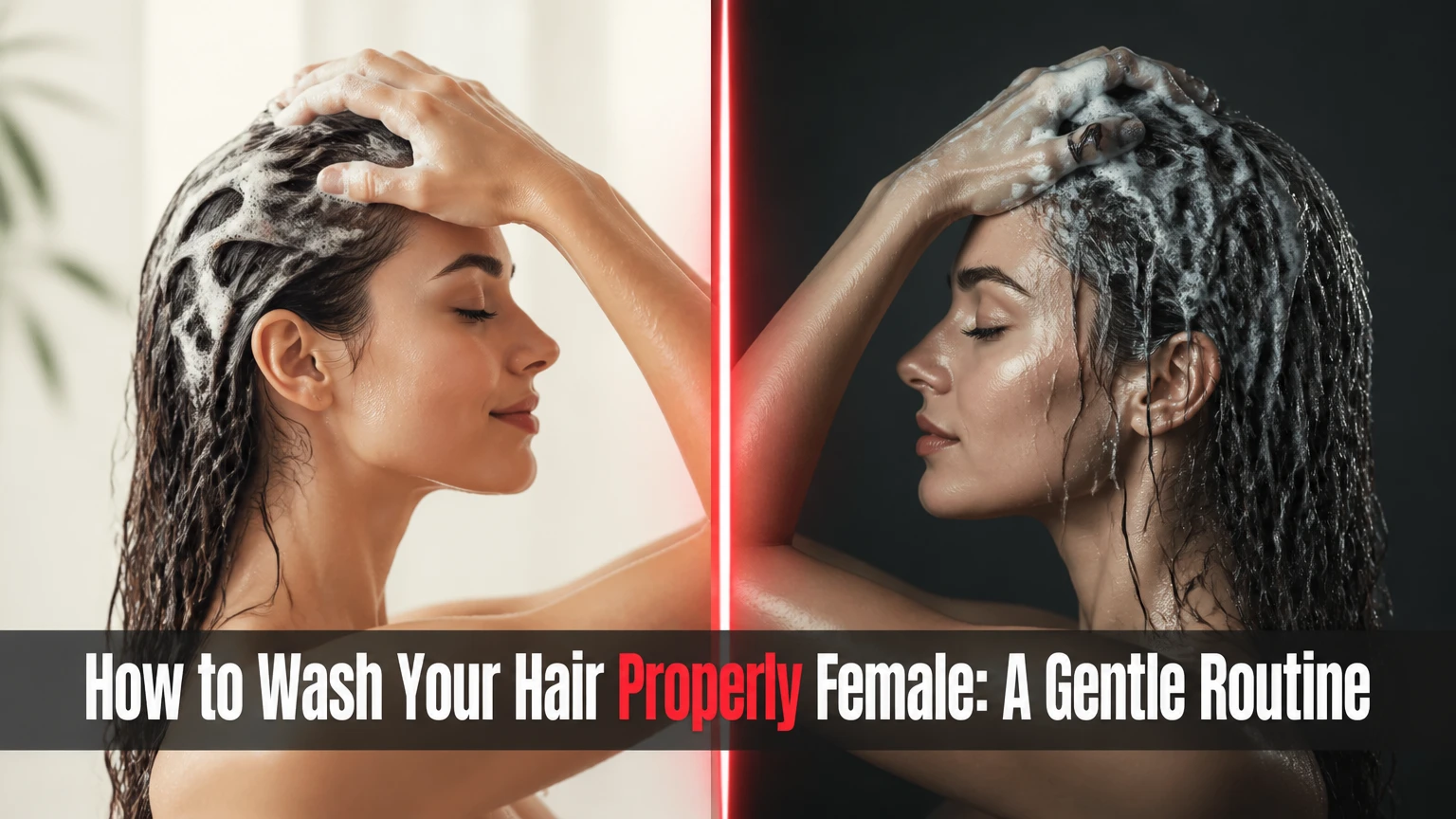
To wash your hair properly as a woman, cleanse the scalp with lukewarm water and shampoo, rinse thoroughly, condition the lengths, and dry without friction. A complete routine usually takes 10-15 minutes, but the correct frequency depends mainly on scalp oil, sweat, hair texture, chemical treatment, and styling-product buildup.
Key Facts at a Glance
- Shampoo belongs primarily on the scalp because sebum, sweat, skin flakes, and product residue collect near the roots.
- A 60-90-second pre-rinse removes loose debris and helps shampoo spread with less product.
- Most people need one shampoo application; a second wash is useful after heavy styling products, oil, swimming, or infrequent washing.
- Conditioner reduces friction and tangling on the mid-lengths and ends, but it does not need to be kept off every scalp.
- Cool water may feel comfortable after washing, but cold water does not seal or close the hair cuticle.
- Hair should be blotted or squeezed dry because wet hair stretches more easily and breaks under rough towel rubbing.
What Should a Proper Hair Wash Accomplish?
A proper hair wash removes scalp oil and residue while limiting unnecessary friction on the hair shaft. Shampoo surfactants surround oily soil so water can carry it away, whereas conditioner deposits lubricating ingredients that make wet and dry hair easier to comb.
The scalp is living skin; the visible hair fiber is made of nonliving keratin. That difference determines the routine. Shampoo should contact the scalp thoroughly, while conditioner should target the areas that need slip, usually the lengths and ends.
The American Academy of Dermatology Association states, “How often you wash your hair depends on how much oil your scalp produces.” That principle is more reliable than a universal daily or weekly schedule. A woman with an oily scalp and fine hair may need frequent washing, while a woman with tightly coiled hair may need less frequent cleansing because sebum travels less easily along the bends.
Hair washing is not a treatment for every scalp problem. Shampoo can remove oil and cosmetic buildup, but persistent itching, painful bumps, thick scale, or sudden shedding may require a dermatologist’s assessment.
Before You Start
Gather the products and tools before turning on the water. Preparation reduces the temptation to scrub quickly, use excessive shampoo, or leave conditioner on the scalp because the shower is ending.
| Item | Typical amount | Typical time | Selection rule |
|---|---|---|---|
| Shampoo | 5-10 mL for short or fine hair | 60-90 seconds | Match formula to scalp condition |
| Conditioner | 5-15 mL for shoulder-length hair | 2-5 minutes | Match formula to ends and texture |
| Lukewarm water | Full saturation | 60-90 seconds | Avoid painful heat |
| Wide-tooth comb | 1 tool | 2-5 minutes | Use on conditioned hair |
| Microfiber towel or cotton T-shirt | 1 item | 5-10 minutes | Blot instead of rubbing |
| Clarifying shampoo | 5-10 mL when needed | Every 2-6 weeks | Use for confirmed buildup, not routine dryness |
Typical product cost ranges from $8-$35 for shampoo and $8-$40 for conditioner in the United States. A salon-quality routine can cost more, but higher price does not guarantee better scalp compatibility.
How to Wash Your Hair Properly, Step by Step
A reliable female hair-washing routine has five stages: saturate, shampoo, decide whether to repeat, condition, and rinse. The factor that most determines success is not the number of lather cycles; it is complete scalp coverage with minimal mechanical force.
Step 1: Saturate the Hair Completely
Stand under lukewarm water for 60-90 seconds and separate dense hair into sections so water reaches the scalp. Fully wet hair allows shampoo to distribute more evenly and prevents you from compensating for dry patches with extra product.
Tilt the head forward or backward according to comfort, then use your fingers to lift the hair at the crown, temples, nape, and behind the ears. These areas often retain dry shampoo, sweat, sunscreen, and styling residue.
You will know it worked when: water runs through the entire thickness of the hair and the roots feel uniformly wet.
Common mistake: applying shampoo to partially wet hair. That creates concentrated spots of cleanser and encourages aggressive rubbing.
Step 2: Apply Shampoo to the Scalp
Place approximately 5 mL of shampoo in your palm for short or fine hair and up to 10 mL for long or dense hair. Add water to your hands, spread the shampoo between your palms, then press it onto the scalp in several zones instead of placing one large blob at the crown.
Massage with the pads of your fingers for 45-60 seconds. Use small movements across the hairline, temples, crown, sides, and nape; do not rake with fingernails or twist the hair into a tight knot.
The first lather often looks weak when the scalp contains substantial oil. Weak foam does not automatically mean poor cleaning, because surfactants can be occupied by oil before producing visible lather.
You will know it worked when: the scalp feels evenly coated and the fingers can move across the skin without painful scraping.
Common mistake: scrubbing the lengths. Shampoo runoff cleans much of the surface hair, while direct rubbing increases tangling and cuticle friction.
Step 3: Decide Whether a Second Shampoo Is Necessary
Rinse the first application for 30-60 seconds, then assess the scalp before repeating. Use a second, smaller application of approximately 2-5 mL when the first wash followed heavy oiling, silicone-rich styling, swimming, intense exercise, or more than five days without cleansing.
A second shampoo is not mandatory for every wash. Repeating cleanser at every shower can make bleached, curly, or fragile hair feel rough, especially when the first application already removed oil and residue.
Focus the second application on the scalp and hairline. A 30-45-second massage is generally sufficient; shampoo does not need to sit on the scalp for several minutes unless the product label gives a treatment contact time.
You will know it worked when: the scalp feels clean but not tight, burning, squeaky, or unusually dry.
Common mistake: treating a rich lather as proof that the scalp needs repeated scrubbing. Foam volume depends on formulation, water chemistry, and oil load, not cleanliness alone.
Step 4: Condition the Hair Where It Needs Slip
Squeeze excess water from the lengths before applying conditioner. Use approximately 5 mL for fine shoulder-length hair and 10-15 mL for thick, long, curly, or highly porous hair.
Start around chin level for fine hair, shoulder level for oily hair, or closer to the roots when the lengths are very dry and the scalp is healthy. Work conditioner through the mid-lengths and ends with your fingers, then detangle from the ends upward using a wide-tooth comb if the hair is curly, textured, or prone to knots.
Conditioner does not “seal” the cuticle permanently. It temporarily reduces friction by coating and lubricating the fiber, which improves combability and lowers the force needed to separate tangles.
You will know it worked when: the lengths feel slippery enough to separate without pulling and the ends remain flexible after rinsing.
Common mistake: applying a heavy mask to fine roots and then blaming the shampoo for greasiness. Product weight near the scalp can flatten hair even when the scalp is clean.
Step 5: Rinse Thoroughly With Comfortable Water
Rinse until no visible conditioner remains on the scalp or lengths, usually for 30-60 seconds. Lukewarm or cool water is appropriate; cold water is optional and does not close the cuticle like a physical lid.
Hair fibers swell in water, and temperature changes can influence comfort, oil removal, and cosmetic feel. However, claims that a cold rinse locks in moisture or permanently closes cuticles are overstated. Hair shine depends more on fiber alignment, surface condition, product film, and drying technique.
Use a longer rinse for dense or curly hair because product can remain at the nape and underneath the canopy. A brief final cool rinse may reduce scalp discomfort for some people, but it should never be painful.
You will know it worked when: the roots feel clean without residue and the lengths feel conditioned rather than coated.
Common mistake: ending the rinse as soon as the top layer feels clean. Residue left underneath can cause itching, dullness, or rapid oiliness.
How Often Should Women Wash Their Hair?
Women should wash hair according to scalp oil and activity, not gender alone. Fine, oily hair may require daily or every-other-day cleansing, while dry, curly, coily, or tightly textured hair may remain comfortable for several days between washes.
| Scalp and hair situation | Typical starting frequency | Shampoo characteristic | Adjustment signal |
|---|---|---|---|
| Fine hair with oily scalp | Every 1-2 days | Lightweight, non-heavy cleanser | Wash sooner if roots look oily by evening |
| Normal scalp with straight hair | Every 2-4 days | Balanced daily-use shampoo | Extend interval if scalp remains comfortable |
| Dry, wavy, or curly hair | Every 3-7 days | Moisturizing, low-friction cleanser | Wash sooner after sweat or visible residue |
| Coily or tightly textured hair | Every 5-10 days | Gentle cleanser with rich conditioning | Shorten interval for scalp odor or itching |
| Color-treated hair | Every 2-4 days | Color-safe, gentle formula | Use cooler water and protect ends |
| Heavy exercise or swimming | Same day or next morning | Cleansing shampoo after exposure | Condition lengths after every exposure |
A scalp that feels greasy, itchy, odorous, or coated is signaling that the interval may be too long. A scalp that feels tight, flaky, burning, or tender after washing may be receiving too much cleanser, too much heat, or too much friction.
Daily washing is not inherently damaging when the cleanser is mild and the technique is gentle. Infrequent washing is not automatically healthier if sweat, sebum, and styling residue remain on the scalp.
Which Shampoo Method Fits Your Hair?
Standard shampooing is the most dependable method for removing scalp oil and styling residue. Co-washing can reduce dryness in curly or coily hair, while reverse washing may help fine hair, but both alternatives have narrower uses and weaker cleansing power.
| Method | Best starting use | Cleansing strength | Main limitation |
|---|---|---|---|
| Standard shampoo, one wash | Most scalp types | Moderate | May not remove heavy buildup in one pass |
| Standard shampoo, two washes | Oiled, sweaty, product-heavy hair | High | Can dry fragile hair if repeated unnecessarily |
| Co-washing | Dry curls and coils between shampoos | Low to moderate | May leave waxes, oils, or heavy silicones |
| Reverse washing | Fine, limp hair with dry ends | Moderate | Ends may need additional detangling |
| Clarifying shampoo | Mineral, oil, or styling buildup | Very high | Can increase dryness and tangling |
Should You Co-Wash Curly or Coily Hair?
Co-washing can suit curly or coily hair that becomes brittle with frequent conventional shampoo, but it should not replace effective scalp cleansing indefinitely. Use a cleansing conditioner between shampoo washes, then use a gentle shampoo when the scalp feels coated, itchy, or odorous.
Co-washing is not the same as rinsing with water. Cleansing conditioners contain mild surfactants and conditioning agents, so they remove some soil while leaving more lubrication behind. That residue can help curl definition but may flatten fine curls or irritate a scalp prone to folliculitis.
Is Reverse Washing Good for Fine Hair?
Reverse washing can help fine hair by placing conditioner on the ends before shampoo removes excess surface weight. Apply a small amount of conditioner to the lower half of the hair, rinse briefly, shampoo the scalp, and rinse again.
Reverse washing is not a repair treatment. It may improve root volume, but severely dry or bleached ends can still require regular conditioning after shampooing.
How Should You Choose Hair-Washing Products?
Choose shampoo by scalp need and conditioner by fiber need. A dry scalp does not always require an oily-hair shampoo, and dry ends do not automatically mean the scalp needs a rich cream cleanser.
| Need | Useful ingredient or feature | Avoid as first choice | Typical use |
|---|---|---|---|
| Oily scalp | Mild surfactants, niacinamide, occasional salicylic acid | Heavy oils at the roots | Every 1-2 days as tolerated |
| Dry or fragile lengths | Glycerin, fatty alcohols, cationic conditioners | Frequent strong clarifiers | Conditioner every wash |
| Curly or coily hair | Cream cleanser, glycerin, fatty alcohols | High-friction scrubbing | Shampoo every 3-10 days |
| Product buildup | Chelating or clarifying formula | Daily clarifying | Every 2-6 weeks |
| Dandruff | Ketoconazole, zinc pyrithione where available, selenium sulfide | Cosmetic shampoo alone | Follow the label contact time |
| Color-treated hair | Color-safe, mildly acidic formula | Very hot water and frequent clarifying | Every 2-4 days |
Salicylic acid can help loosen scale and oil, but it is not suitable for every irritated scalp. Dandruff shampoos are treatment products, so follow the label rather than improvising longer contact times.
Sulfate-free does not automatically mean gentle, and sulfate-containing does not automatically mean harmful. The full formula, concentration, wash frequency, scalp sensitivity, and mechanical technique matter more than one ingredient label.
What Changes for Different Hair Situations?
Different hair situations require changes in timing, product placement, or frequency rather than an entirely new washing system. The five-stage sequence remains useful, but the balance between cleansing and conditioning changes.
Fine or Oily Hair
Use less conditioner and place it lower on the hair. A second shampoo may be appropriate after dry shampoo, oil treatments, or intense sweating, but daily double cleansing often removes more surface oil than necessary.
Fine hair benefits from thorough rinsing because residue occupies more of the visible fiber’s volume. A lightweight conditioner, applied from the ears downward, usually provides enough slip without flattening the roots.
Dry, Curly, or Coily Hair
Wash in sections and detangle while conditioner is present. Sectioning improves scalp access without requiring vigorous scrubbing, while conditioner reduces the force needed to separate curls.
Avoid stretching the interval solely to preserve a hairstyle if the scalp is uncomfortable. Sweat, occlusive gels, and accumulated sebum can irritate skin even when the ends look moisturized.
Color-Treated or Bleached Hair
Use lukewarm water, cleanse the scalp rather than aggressively rubbing the lengths, and condition every wash. Bleached hair has higher porosity and generally needs more friction control than untreated hair.
Clarifying shampoo can remove mineral or styling residue, but it may fade color and increase dryness. Use it only when buildup is evident, then follow with a rich conditioner or mask.
After Exercise or Swimming
Rinse hair promptly after chlorinated or salt water exposure, then shampoo if the scalp feels coated or the hair has a noticeable chemical or mineral smell. Apply conditioner to the lengths because repeated wetting, rinsing, and tying can increase tangling.
A swim cap reduces exposure but does not eliminate it. Wetting hair with clean water before swimming can reduce how much pool water the fiber absorbs.
During Pregnancy or After Giving Birth
Pregnancy and postpartum changes can alter oiliness, sensitivity, and shedding patterns. A routine should remain gentle, but sudden patchy loss, scalp pain, or shedding that feels excessive should be discussed with a healthcare professional.
The American Academy of Dermatology Association notes that losing approximately 50-100 hairs per day can be normal. Hair in the drain alone cannot diagnose abnormal shedding because wash frequency changes how many loose hairs appear at once.
How Should You Dry and Detangle Hair After Washing?
Blot or squeeze wet hair with a microfiber towel or cotton T-shirt, then detangle from the ends toward the roots. Avoid twisting wet hair tightly or rubbing it with a rough towel because wet fibers are more vulnerable to stretching and surface damage.
| Drying method | Typical friction level | Best use | Main risk |
|---|---|---|---|
| Air-drying loose | Low | Fragile or curly hair | Prolonged wetness and shape loss |
| Microfiber blotting | Low | Most hair types | Over-twisting if wrapped tightly |
| Cotton T-shirt blotting | Low to moderate | Curly and textured hair | Requires frequent washing |
| Towel rubbing | High | Not recommended | Frizz, tangling, mechanical breakage |
| Blow-drying at low heat | Moderate | Faster styling | Heat damage if held too close |
| Blow-drying at high heat | High | Rapid drying only | Cuticle damage and dryness |
Detangle ends first, then move upward in 2-5 cm sections. A leave-in conditioner can reduce combing force, but excessive leave-in product may create buildup on fine hair.
Use a hair dryer at low or medium heat, keep it moving, and hold it approximately 15 cm from the hair. Heat protectant lowers thermal stress but does not make unlimited high-temperature styling safe.
Common Mistakes and How to Fix Them
The most damaging washing mistakes involve friction, residue, or an incorrect match between scalp and product. Correct the technique before buying a stronger shampoo.
| Mistake | Likely result | Immediate fix | Prevention |
|---|---|---|---|
| Using fingernails | Scratches and irritation | Rinse and stop scrubbing | Use finger pads |
| Washing lengths aggressively | Tangling and frizz | Apply conditioner and detangle gently | Shampoo scalp only |
| Rinsing too quickly | Greasy roots and residue | Add 30-60 seconds of rinsing | Lift dense sections |
| Double washing every time | Dryness and rough ends | Use one wash next time | Repeat only for heavy buildup |
| Conditioner on fine roots | Flat, greasy appearance | Rinse thoroughly | Start below the ears |
| Very hot water | Tight, irritated scalp | Lower temperature | Use lukewarm water |
| Rubbing with a towel | Frizz and breakage | Blot and leave loose | Use microfiber or T-shirt |
A tight, squeaky feeling after washing is not a reliable sign of superior cleanliness. It often indicates that the cleanser or technique removed too much surface lubrication.
An oily scalp with dry ends is a split problem, not a contradiction. Clean the scalp at the necessary frequency, then protect the lengths with conditioner, leave-in product, and reduced heat.
When Should You Use Clarifying Shampoo?
Use clarifying shampoo when ordinary washing no longer removes a persistent coated, waxy, dull, or unusually heavy feel. A typical starting interval is every 2-6 weeks, although swimmers, frequent stylers, and people in hard-water areas may need it more often.
Clarifying products can remove styling polymers, excess oil, and some mineral deposits. They are not automatically better cleansers for daily use, and they cannot repair split ends or reverse chemical damage.
Hard water can leave calcium and magnesium deposits that make hair feel rough or reduce lather. A chelating shampoo is more appropriate for mineral buildup than simply increasing shampoo quantity.
When Is a Scalp Problem More Than a Washing Problem?
Persistent dandruff, redness, pain, pus-filled bumps, thick plaques, or sudden hair loss warrants medical advice rather than more aggressive washing. Scrubbing harder can worsen irritation and make the scalp barrier less comfortable.
For mild flaking, an anti-dandruff shampoo may help when used according to its label. If symptoms continue after several weeks of correct use, or if the scalp becomes painful, a dermatologist can distinguish seborrheic dermatitis, psoriasis, contact dermatitis, fungal infection, and folliculitis.
Do not apply essential oils, undiluted acids, or household products to an irritated scalp. “Natural” does not mean non-irritating, especially when skin is already inflamed.
The Bottom Line
The best answer to how to wash your hair properly female is a scalp-first, low-friction routine: saturate for 60-90 seconds, shampoo with finger pads for about one minute, repeat only when buildup requires it, condition the lengths, rinse completely, and blot dry. Adjust frequency to oil, sweat, texture, treatment history, and scalp comfort rather than following a fixed gender-based rule.
Frequently Asked Questions
Should I wash my hair before or after working out?
Wash after exercise when sweat, salt, or styling products remain on the scalp. If the workout is light and the scalp feels clean, a water rinse followed by drying may be enough, but repeated sweat exposure can justify shampooing every other day or more often.
Can I wash my hair every day if my scalp is oily?
Yes, daily washing can be appropriate for an oily scalp when the shampoo is mild and the lengths are conditioned. Use one careful scalp cleanse first; add a second wash only after oil, dry shampoo, styling products, or pollution still remain.
Should conditioner touch the scalp?
Conditioner may touch a healthy scalp when the hair is very dry, coarse, or tightly textured, but heavy application near fine or oily roots can flatten hair. Apply a small amount near the roots only when the scalp tolerates it and rinse thoroughly.
Why does my hair get greasy immediately after washing?
Immediate greasiness commonly results from incomplete rinsing, heavy conditioner at the roots, styling residue, or an oily scalp that naturally produces sebum quickly. It does not necessarily mean shampoo failed; change product placement and rinsing before increasing scrubbing.
Is cold water necessary for shiny hair?
Cold water is not necessary and does not permanently close the hair cuticle. A comfortable cool or lukewarm final rinse is sufficient; shine depends more on smooth fiber alignment, conditioner, reduced friction, and controlled heat styling.
How long should shampoo stay on my hair?
Most ordinary shampoos need about 45-60 seconds of scalp massage followed by thorough rinsing. Medicated shampoos may require a specific contact time printed on the label, so follow that instruction rather than applying a universal waiting period.