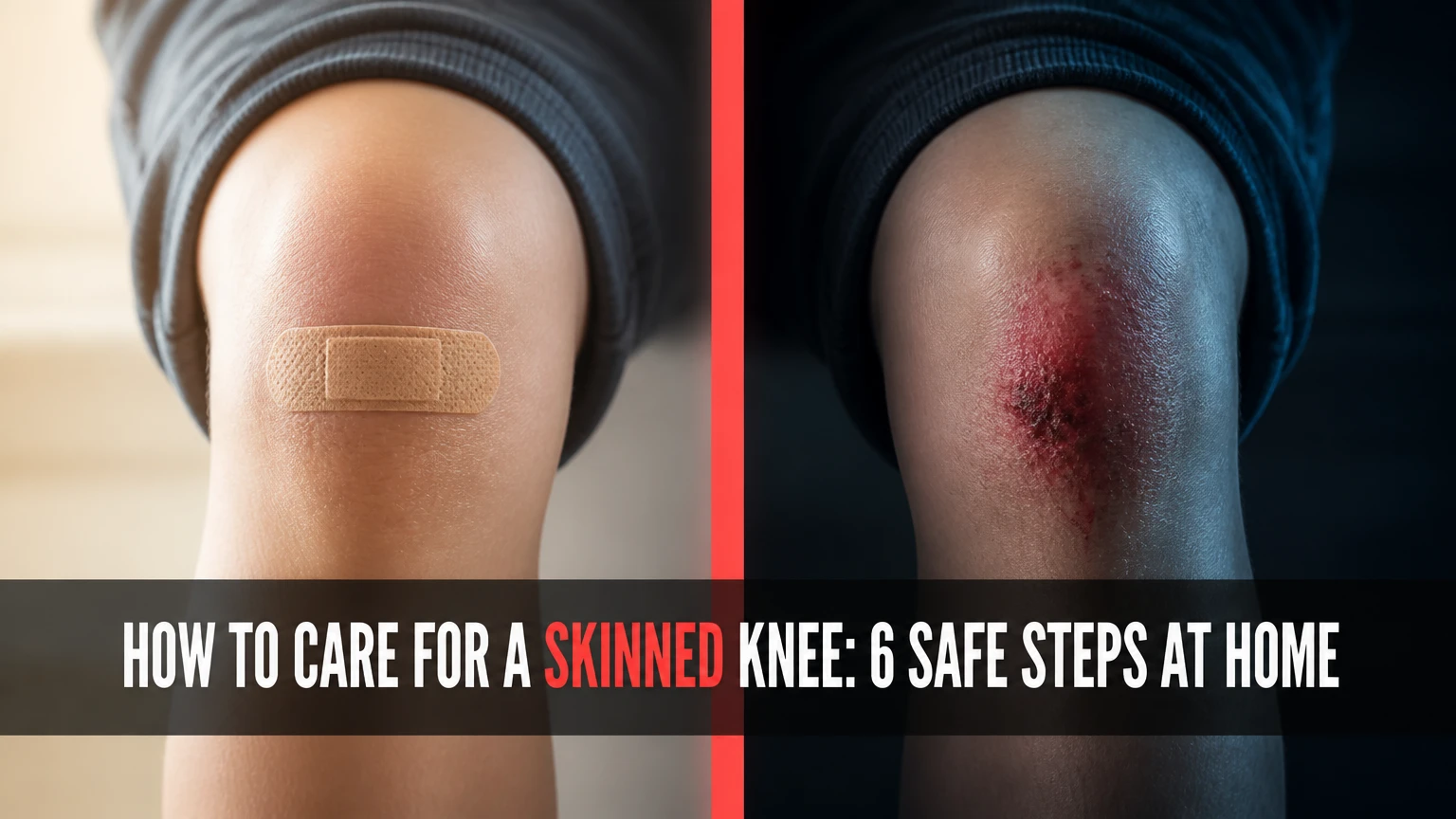
To care for a skinned knee, wash your hands, control bleeding, rinse away dirt with clean running water, remove only loose visible debris, apply a thin layer of petroleum jelly, and cover the abrasion with a non-stick dressing. Repeat gentle cleaning and dressing changes daily until the surface closes, usually within 3-10 days for a minor scrape.
Key facts at a glance
Clean tap water is suitable for rinsing most uncomplicated knee abrasions.
Firm, uninterrupted pressure for 10-15 minutes usually controls minor bleeding.
Petroleum jelly keeps a scrape moist and avoids the antibiotic resistance and rash concerns associated with unnecessary topical antibiotics.
Do not pour hydrogen peroxide, rubbing alcohol, iodine, or strong antiseptics into an open abrasion.
Replace a wet, dirty, loose, or soaked dressing as soon as practical.
Seek medical care for spreading redness, pus, fever, uncontrolled bleeding, deep tissue exposure, or grit that remains embedded.
What a Skinned Knee Is
A skinned knee is an abrasion, meaning friction has scraped away part of the epidermis and sometimes the superficial dermis. Asphalt, concrete, artificial turf, carpet, and playground surfaces commonly cause abrasions, which may sting, ooze clear fluid, and bleed from many small surface vessels.
Knee abrasions need special attention because bending stretches the injured skin and clothing repeatedly rubs the area. A shallow scrape can therefore reopen even when the original injury looked minor. Cleaning the wound promptly reduces retained dirt, while a flexible dressing limits friction during walking.
How deep is the abrasion?
The appearance and function of the wound determine whether home care is reasonable. A superficial abrasion has raw pink or red skin without visible yellow fat, white tendon, muscle, or bone. A deep, gaping, heavily contaminated, or numb wound needs professional assessment.
| Wound finding | Likely depth or concern | Typical action | Expected timeframe |
|---|---|---|---|
| Pink, shallow surface scrape | Superficial abrasion | Home cleaning and dressing | 3-7 days |
| Oozing abrasion with embedded gravel | Contaminated abrasion | Rinse, gentle removal, assess retained grit | 5-14 days |
| Yellow fat or white tendon visible | Deep tissue injury | Same-day medical evaluation | Clinician-directed |
| Redness spreading beyond wound | Possible infection | Prompt medical assessment | Do not wait for closure |
What to Gather Before Cleaning
Prepare clean water, mild soap, clean gauze, petroleum jelly, and a non-stick dressing before touching the wound. Typical home-treatment cost is $3-$15 when basic supplies are already available, and the first cleaning takes about 10-20 minutes.
You do not need sterile saline for an ordinary household abrasion if drinkable tap water is available. Use sterile saline when water quality is uncertain, the person is medically vulnerable, or a clinician has specifically recommended it.
| Supply | Typical quantity | Purpose | Better alternative |
|---|---|---|---|
| Clean tap water | 500-1,000 mL | Flush loose soil and grit | Sterile saline |
| Mild liquid soap | 1-2 mL | Clean hands and surrounding skin | Fragrance-free cleanser |
| Gauze pads | 2-4 pads, 10 x 10 cm | Pressure and gentle drying | Clean lint-free cloth |
| White petroleum jelly | 1-2 g per change | Moisture barrier | Clinician-recommended ointment |
| Non-stick dressing | 1 per change | Protect wound surface | Hydrocolloid for a shallow, low-drainage scrape |
| Medical tape or flexible bandage | 10-20 cm | Secure dressing | Knee-sized adhesive dressing |
What should not go inside the scrape?
Hydrogen peroxide and rubbing alcohol should not be poured into an open knee abrasion because their cytotoxic effects can irritate tissue and delay epithelial repair. Rubbing alcohol is appropriate for cleaning some tools or intact skin, not for disinfecting the wound bed.
Mild soap may contact the abrasion briefly while the surrounding area is washed, but vigorous scrubbing is the problem. Running water removes particles mechanically without grinding them deeper into newly exposed tissue.
How to Care for a Skinned Knee Step by Step
Follow six steps: wash hands, stop bleeding, irrigate, remove accessible debris, apply a moisture barrier, and cover the knee. The factor that most affects recovery is complete removal of surface contamination without repeated trauma.
Step 1: Wash Your Hands
Wash both hands with soap and running water for at least 20 seconds, including the fingertips and under the nails. Dry them with a clean towel before handling gauze, ointment, or the dressing.
If running water is unavailable, alcohol-based hand sanitizer is a temporary option when hands are not visibly dirty, but wash with soap and water before the next dressing change. Gloves can reduce contamination, although gloves do not replace handwashing.
Success checkpoint: Clean hands touch only clean supplies and the wound.
Common mistake: Handling the scrape first and washing afterward.
Step 2: Stop the Bleeding
Sit down and press clean gauze directly against the abrasion with firm, steady pressure for 10 minutes without lifting the pad to inspect it. Elevate the leg if comfortable, but direct pressure matters more than elevation for a superficial knee injury.
If blood saturates the first pad, place another pad on top and continue pressing. Do not repeatedly peel away gauze, because that can remove a developing clot.
Success checkpoint: Bleeding has stopped or has reduced to minor surface oozing.
Common mistake: Checking every 30 seconds and restarting the clock.
Seek urgent care if brisk bleeding continues after 10-15 minutes of uninterrupted pressure, blood spurts with the heartbeat, or the person takes anticoagulants and bleeding is difficult to control.
Step 3: Rinse the Abrasion Thoroughly
Hold the knee under clean, lukewarm running water for several minutes, using a gentle stream rather than a forceful jet. Direct water across the entire scrape until visible soil, dust, and loose gravel are gone.
Wash intact skin around the wound with mild soap. If a small amount of soap briefly enters the abrasion, rinse it away; the priority is avoiding harsh chemicals and friction, not maintaining an unrealistic soap-free boundary.
Success checkpoint: The wound surface contains no loose dirt, and rinse water no longer carries visible particles.
Common mistake: Using a rough washcloth to scrub asphalt from raw tissue.
Step 4: Remove Only Loose, Visible Debris
Use clean tweezers to lift visible gravel or splinters that sit on the surface and come away easily. Clean the tweezer tips with alcohol before use, allow them to dry completely, and avoid digging into the tissue.
Stop home removal if debris is deeply embedded, widespread, painful to extract, or still present after careful rinsing and a brief attempt. Retained asphalt can cause a permanent gray or blue mark called traumatic tattooing, while aggressive probing creates additional tissue damage.
Success checkpoint: Loose particles are gone without digging, increased bleeding, or tearing.
Common mistake: Spending 15 minutes scraping at one embedded stone.
Arrange same-day or prompt medical care when grit remains embedded, especially after a fall on asphalt, because a clinician may need better lighting, local anesthetic, irrigation, or debridement.
Step 5: Apply Petroleum Jelly
Pat the surrounding skin dry with clean gauze, leaving the wound itself slightly moist. Spread a thin layer of plain white petroleum jelly across the abrasion, using enough to prevent sticking but not enough to make the dressing slide.
The American Academy of Dermatology Association states, “Research shows that moist wounds heal faster than dry wounds.” Petroleum jelly supports that moist environment and reduces painful dressing adhesion.
| Topical option | Main benefit | Main drawback | Typical use |
|---|---|---|---|
| White petroleum jelly | Low-irritation moisture barrier | Can feel greasy | First-line minor abrasion care |
| Bacitracin ointment | Antibacterial activity | Allergic contact dermatitis risk | Short clinician-advised use |
| Triple-antibiotic ointment | Covers several bacteria | Neomycin rash risk | Not routinely needed |
| Hydrogen peroxide | Foaming visual effect | Tissue irritation and delayed repair | Do not use in wound |
| Rubbing alcohol | Surface disinfectant | Painful, tissue-toxic when open | Tool or intact-skin use only |
Routine antibiotic ointment is not automatically better than petroleum jelly for a clean minor scrape. Stop an antibiotic ointment if itching, a new rash, blistering, or worsening redness develops, then wash gently and use plain petroleum jelly unless a clinician advises otherwise.
Success checkpoint: The abrasion looks lightly coated, not submerged in ointment.
Common mistake: Applying a thick layer that loosens the dressing and macerates surrounding skin.
Step 6: Cover the Knee With a Non-Stick Dressing
Place a non-stick pad over the entire abrasion and secure it with flexible tape or a knee-sized adhesive dressing. Leave enough flexibility for the knee to bend without pulling the wound open, but do not leave exposed edges where dirt can enter.
Change the dressing at least once daily and sooner if it becomes wet, dirty, loose, or soaked through. A hydrocolloid dressing can suit a shallow, clean, low-drainage scrape, but it is a poor choice for infection, heavy drainage, or a wound that still contains grit.
Success checkpoint: The dressing stays in place while walking and the wound remains covered.
Common mistake: Placing ordinary dry gauze directly on the raw surface, where it can bond to dried fluid.
Which Dressing Is Best for a Knee Abrasion?
A non-stick pad with petroleum jelly is the most broadly useful option for a fresh knee abrasion because it protects the surface while allowing painless changes. Hydrocolloid dressings can reduce friction for selected shallow wounds, whereas ordinary adhesive strips often fail across a bending knee.
| Dressing type | Best wound condition | Change interval | Typical retail cost |
|---|---|---|---|
| Non-stick pad plus tape | Fresh or draining abrasion | 1 day | $0.50-$2 |
| Large adhesive dressing | Small, shallow scrape | 1-2 days | $1-$4 |
| Hydrocolloid sheet | Clean, shallow, low drainage | 2-3 days | $2-$6 |
| Silicone contact layer | Fragile or painful wound surface | 1-3 days | $3-$10 |
| Dry woven gauze alone | Temporary backup only | Same day | $0.25-$1 |
The dressing should protect against friction, not trap an untreated infection. Increasing warmth, pain, swelling, or pus requires assessment rather than a more sophisticated bandage.
How Long Does a Skinned Knee Take to Heal?
A small superficial knee abrasion typically closes within 3-10 days, while a larger road-rash injury may need 1-3 weeks. Healing takes longer when dirt remains, the wound repeatedly cracks over the joint, smoking reduces circulation, or diabetes and vascular disease impair tissue repair.
| Healing stage | Typical timing | Normal appearance | Appropriate care |
|---|---|---|---|
| Initial response | 0-24 hours | Stinging, mild redness, clear ooze | Rinse, coat, cover |
| Early closure | 1-3 days | Less drainage, pink new tissue | Daily dressing change |
| Surface repair | 3-10 days | Thin pink or red surface | Protect from friction |
| Residual color change | 2-12 weeks | Pink, brown, or darker mark | Sunscreen after closure |
| Persistent scar or tattoo | More than 3 months | Raised scar or embedded pigment | Dermatology review |
A thin scab is not an emergency, but picking it can reopen the surface and extend healing. Once the skin has fully closed, use broad-spectrum SPF 30 or higher on exposed skin to reduce persistent darkening.
Common Mistakes and How to Fix Them
The most damaging home-care errors are chemical irritation, aggressive debridement, dry dressing changes, and premature return to friction-heavy activity. Each mistake has a safer correction.
| Mistake | Why it causes trouble | Fix now | Seek care when |
|---|---|---|---|
| Peroxide in the wound | Irritates viable cells | Rinse with clean water | Pain or tissue damage persists |
| Scrubbing with cloth | Reopens fragile tissue | Irrigate gently and coat | Deep contamination remains |
| Dry gauze on raw skin | Fibers stick to exudate | Soak before removal | Bleeding resumes heavily |
| Thick antibiotic layer | Moisture and rash risk | Switch to thin petroleum jelly | Rash spreads or blisters |
| Picking the scab | Reopens the barrier | Cover and leave intact | Wound repeatedly reopens |
| Exercising through friction | Sweat and rubbing delay closure | Use a secure dressing and reduce impact | Pain, drainage, or redness increases |
How do you remove a stuck bandage?
Do not pull stuck gauze away dry. Wet the dressing thoroughly with clean lukewarm water or saline for several minutes, then peel it slowly in the direction of hair growth; add more water if resistance causes pain or bleeding.
Do not use rubbing alcohol to dissolve adhesive on the wound. If only the adhesive edge is stuck to intact skin, an oil-based adhesive remover can help, but keep it away from the open abrasion.
When Should You Get Medical Care?
Get medical care for deep tissue exposure, uncontrolled bleeding, embedded debris, a large contaminated abrasion, animal or human bites, or symptoms of infection. People with diabetes, poor circulation, reduced sensation, immune suppression, or medicines that impair clotting should seek advice earlier because minor wounds can deteriorate unnoticed.
Infection warning signs
Expected early inflammation usually remains close to the abrasion and gradually improves over 24-48 hours. Infection is more concerning when redness expands, pain increases after initial improvement, warmth and swelling spread, pus develops, or fever and red streaking appear.
| Sign | More consistent with | Recommended response | Time threshold |
|---|---|---|---|
| Mild edge redness | Normal inflammation | Continue cleaning and covering | Monitor 24-48 hours |
| Increasing warmth and swelling | Possible infection | Contact clinician | Same day |
| Thick yellow or green drainage | Possible infection | Medical evaluation | Same day |
| Fever or red streaks | Spreading infection concern | Urgent medical care | Immediately |
| Numbness or pale, cold skin | Nerve or circulation concern | Urgent assessment | Immediately |
Tetanus protection
A clinician should review tetanus vaccination after a dirty, soil-contaminated, deep, or puncture-associated injury. CDC wound guidance commonly uses a 10-year booster interval for clean minor wounds and a 5-year interval for dirty or major wounds when the primary series is complete, while unknown or incomplete vaccination requires individualized advice.
A superficial scrape from a clean indoor surface is lower risk than asphalt contaminated with soil or animal feces. Do not delay care while trying to reconstruct an uncertain vaccination history.
Situational Variations
Different mechanisms change the cleaning burden and the threshold for evaluation. A child with a small playground scrape usually needs the same basic protocol, while road rash, a contaminated fall, or a wound over a prosthetic joint warrants more caution.
What should you do for road rash?
Rinse road rash under clean running water and remove loose particles without digging. Large asphalt abrasions often need professional cleaning because retained grit can pigment the skin, and broad dressings may be difficult to keep secure across the knee.
Avoid cycling, running, kneeling, or contact sports while movement repeatedly cracks the wound. A clinician may recommend specialized non-adherent dressings for a broad abrasion.
How should you treat a child’s scraped knee?
Have the child sit still, wash the child’s hands or your own hands, rinse the abrasion, and use a simple non-stick dressing. Explain each action before doing it, because sudden restraint can cause movement and make cleaning less safe.
Seek care if the child cannot tolerate irrigation, the scrape contains gravel, bleeding continues, or the injury came from a bite. Do not use numbing creams inside the wound unless a healthcare professional recommends a specific product.
Can you shower, swim, or exercise?
A brief shower is generally acceptable after the initial dressing, provided the wound is rinsed gently and covered again afterward. Avoid pools, lakes, hot tubs, and open-water swimming until the skin has closed because water exposure introduces microorganisms and can loosen dressings.
Light walking is usually reasonable when the dressing stays dry and movement does not reopen the abrasion. Delay running, kneeling, cycling, and contact sports if friction causes pain, bleeding, or drainage.
What Does Home Treatment Cost and How Long Does It Take?
Basic treatment typically costs $3-$15 and takes 10-20 minutes initially, followed by 3-5 minutes per dressing change. Costs rise to roughly $15-$40 when specialized hydrocolloid or silicone dressings are needed, excluding clinic fees.
| Care level | Supplies | Initial time | Typical direct cost |
|---|---|---|---|
| Basic home care | Water, gauze, petroleum jelly, tape | 10-20 minutes | $3-$15 |
| Specialized dressing | Hydrocolloid or silicone layer | 10-15 minutes | $15-$40 |
| Urgent-care assessment | Examination and cleaning | 30-90 minutes | Location-dependent |
| Deep debridement | Local anesthetic and clinician care | 30-120 minutes | Location-dependent |
These are typical consumer ranges, not a quoted medical bill. Insurance, country, clinic type, wound size, and tetanus vaccination needs can change professional-care costs substantially.
FAQ
Should I let a skinned knee dry out overnight?
No. A thin layer of petroleum jelly and a clean dressing usually protect a superficial abrasion better than deliberate drying. Moisture supports surface-cell movement and prevents gauze from bonding to the wound, but excessive fluid, a soaked dressing, or worsening drainage requires a change and possibly medical review.
Is Neosporin better than Vaseline for a scraped knee?
Usually not for a clean minor abrasion. Plain petroleum jelly provides a moisture barrier without common antibiotic ingredients that can cause allergic contact dermatitis. An antibiotic ointment may be appropriate when a clinician recommends it for a particular contaminated wound, but routine use is not automatically superior.
Can I put a liquid bandage on an open knee scrape?
Liquid bandage products are generally intended for small, superficial cuts with minimal drainage and clean edges. A broad, wet, contaminated, or actively bleeding knee abrasion is a poor candidate because the film can trap contamination and make later cleaning difficult.
Why does my knee scrape keep reopening?
Knee abrasions commonly reopen because bending stretches newly formed tissue and clothing or exercise creates friction. Use a flexible non-stick dressing, limit kneeling and impact activity, and keep the surface lightly coated until closed. Repeated reopening, increasing pain, or persistent drainage justifies clinical assessment.
Should I cover a skinned knee at night?
Cover a skinned knee at night when the wound remains open, drains fluid, or may contact bedding. A clean non-stick dressing reduces friction and contamination. If the skin is fully closed, dry, and free of drainage, continued coverage is optional unless clothing or sleep movement irritates the area.
Will a skinned knee leave a scar?
A superficial abrasion often heals without a prominent scar, although temporary pink, brown, or darker discoloration can last weeks or months. Retained asphalt, deep tissue loss, picking, infection, and sun exposure increase the chance of a lasting mark. Protect fully closed skin with SPF 30 or higher.
The Bottom Line
To care for a skinned knee, rinse away contamination, remove only loose debris, apply petroleum jelly, and use a flexible non-stick dressing. Change the covering daily or whenever dirty or wet, avoid peroxide and aggressive scrubbing, and obtain medical care for embedded grit, uncontrolled bleeding, infection signs, deep injury, or uncertain tetanus protection.