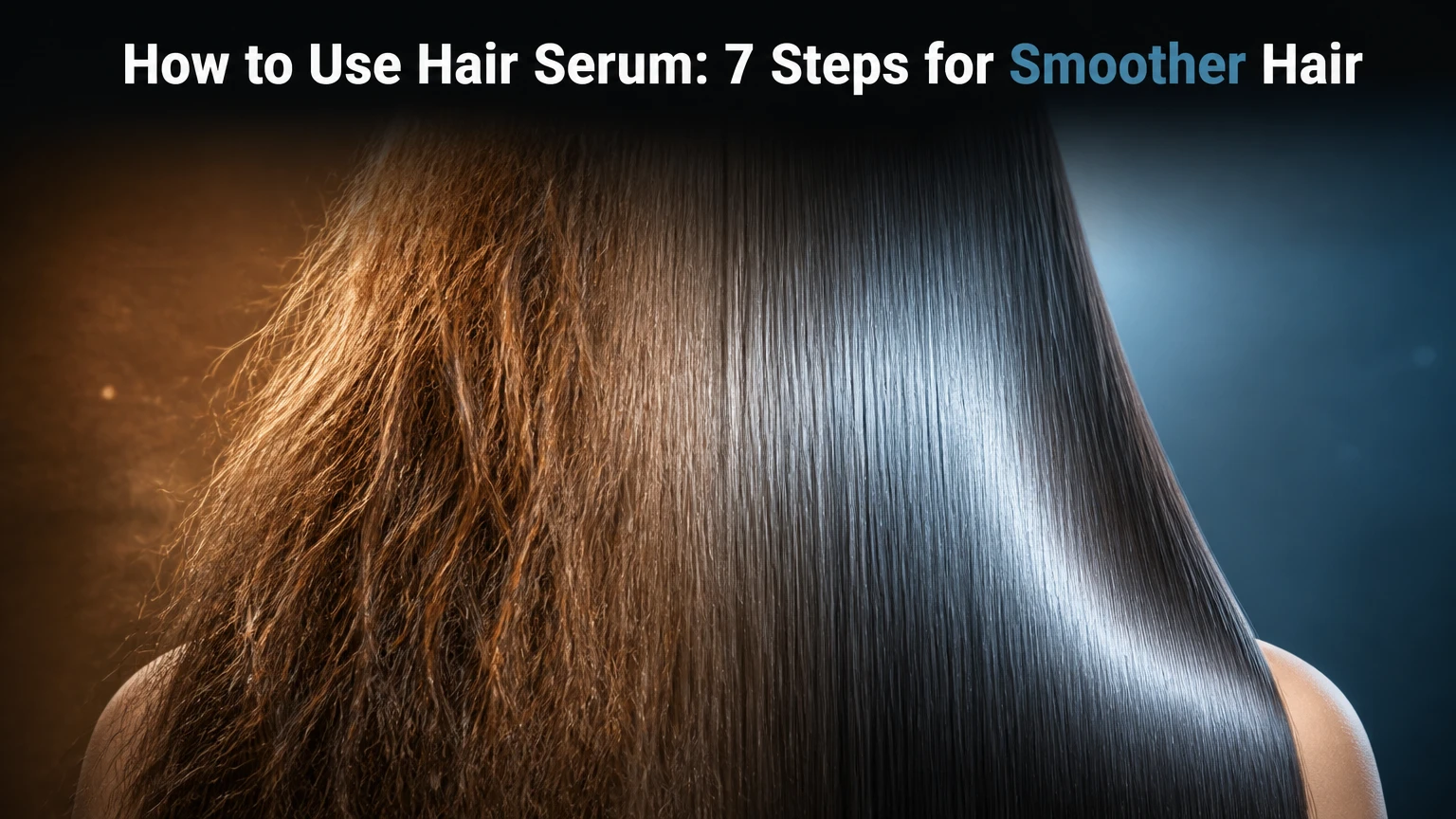
Hair serum is applied in a small amount to clean, damp hair, starting at the ends and moving toward the mid-lengths while avoiding the scalp. Use one to four drops according to hair length, density, and formula weight, then air-dry or style as directed on the label. The correct dose matters more than warming the product in your hands.
Key Facts at a Glance
Hair serum mainly coats the hair shaft, reducing surface friction, visible frizz, and light scattering.
Start with one drop for short or fine hair and increase only when the ends still feel rough.
Standard smoothing serum belongs on the lengths and ends, not the scalp.
A serum labeled as heat protectant is not automatically tested to 450°F or 230°C.
Hair serum can conceal split ends temporarily, but no leave-in product fuses a split end permanently.
Use serum on dry hair for targeted finishing, not as a substitute for conditioner on wash day.
What Is Hair Serum and What Does It Do?
Hair serum is a leave-in cosmetic treatment that forms a thin film over the hair cuticle. Common formula families include silicones such as dimethicone, amodimethicone, dimethiconol, cyclopentasiloxane, or cyclomethicone, alongside esters, oils, polymers, proteins, and conditioning agents.
The film can make rough strands feel smoother because neighboring fibers slide past one another with less friction. A smoother surface also reflects light more evenly, which creates shine and makes tangles easier to remove. The result is immediate, but largely cosmetic and mechanical rather than a structural repair.
Hair serum can reduce the appearance of humidity-related frizz by limiting water exchange at the surface. Performance varies with porosity, weather, hair damage, the amount applied, and whether the formula contains a humidity-resistant film former. A serum cannot permanently reverse bleaching damage, restore lost keratin, or close a split end.
How Does Hair Serum Work on the Cuticle?
Hair serum deposits conditioning materials over irregular areas of the cuticle, filling or covering microscopic roughness and lowering friction. Volatile silicones can spread quickly and evaporate, while nonvolatile silicones and polymers remain longer to provide slip, shine, and some humidity resistance.
The distinction between hair serum and hair oil is not absolute. Some oils can penetrate parts of the fiber under particular conditions, but oil does not automatically “nourish hair from within,” and a silicone serum does not repair internal damage. The formula, fiber condition, and application amount determine the practical result.
The U.S. Food and Drug Administration states that cosmetic products generally do not require premarket approval, except for color additives. That means a product’s marketing term, including “serum,” does not prove a specific heat rating, growth effect, or repair capability. Read the intended use and directions on the package.
Which Hair Serum Type Matches Your Goal?
Choose a smoothing, finishing, curl, heat-protective, or scalp treatment formula according to where you will apply it and what result you need. A cosmetic shaft serum is designed for lengths and ends, whereas a scalp serum is a separate category with different ingredients, directions, and safety considerations.
| Serum type | Typical formula features | Apply to | Best match | Main limitation |
|---|---|---|---|---|
| Smoothing and frizz | Dimethicone, amodimethicone, dimethiconol | Mid-lengths and ends | Thick, porous, wavy hair | Can flatten fine strands |
| Lightweight shine | Cyclomethicone, cyclopentasiloxane, volatile esters | Ends and flyaways | Fine, straight, dull hair | Shorter-lasting conditioning |
| Curl and coil | Conditioning polymers, glycerin, oils, film formers | Wet or very damp curls | Wavy, curly, coily hair | Excess can reduce volume |
| Heat-protective | Film formers plus label-tested thermal claims | Sections exposed to tools | Blow-dried or iron-styled hair | Protection depends on directions and coverage |
| Scalp treatment | Product-specific actives, such as minoxidil | Scalp only if labeled | Hair-loss or scalp concerns | Requires medical and label guidance |
| Plant-based alternative | Hemisqualane, coco-caprylate, broccoli seed oil | Lengths and ends | Silicone-avoiding routines | May provide different humidity control |
“Growth serum” requires particular caution. A cosmetic product containing caffeine, peptides, rosemary oil, or botanical extracts should not be treated as equivalent to a clinically established hair-loss treatment. Minoxidil products have separate labeling, contraindications, application rules, and timelines; persistent shedding, bald patches, scalp inflammation, or sudden density changes warrant a dermatologist’s assessment.
Which Ingredients Matter for Fine, Thick, or Curly Hair?
Fine hair usually benefits from a low-viscosity formula with a spreading or volatile ingredient near the top of the ingredient list. Thick or coarse hair can tolerate a more substantial film, while porous curls often need serum layered over water-based conditioning products to reduce moisture loss and friction.
| Hair situation | Start amount | Preferred texture | Application point | Adjustment rule |
|---|---|---|---|---|
| Fine, short hair | 1 small drop | Fluid, fast-spreading | From ear level downward | Cut amount in half if roots separate |
| Fine, long hair | 1-2 drops | Lightweight silicone or ester | Ends, then sparse mid-lengths | Apply in two passes |
| Medium-density straight hair | 2 drops | Medium fluid | Lower two-thirds | Add one half-drop only if needed |
| Thick or coarse hair | 2-4 drops | Viscous smoothing serum | Ends through mid-lengths | Divide hair into sections |
| Wavy or curly hair | 1-3 drops | Conditioning curl serum | Wet clumps, then dry ends | Scrunch instead of brushing |
| Coily or highly porous hair | 2-4 drops | Rich film-forming blend | Small sections from ends upward | Pair with leave-in conditioner |
Ingredient names do not predict performance perfectly. Amodimethicone, for example, is often used in formulas intended to deposit preferentially on damaged areas, while volatile silicones can give fine hair spread without the same lasting weight. Test one formula for two or three washes before changing several products at once.
How to Use Hair Serum Correctly
Use hair serum in seven steps after cleansing and conditioning, when the hair is damp but no longer dripping. The routine usually takes two to five minutes, costs only the amount of one product application, and succeeds when the ends feel smoother without a coated, sticky, or separated appearance.
Before You Start
Requirement
Typical specification
Time
2-5 minutes for application; 10-60 minutes for drying
Difficulty
Low
Product
1-4 drops or the label-directed pump amount
Tools
Towel, palms, optional wide-tooth comb
Hair state
Clean, conditioned, damp, and gently detangled
Main prerequisite
Confirm whether the serum is for hair lengths or the scalp
Step 1: Wash and Condition the Hair
Cleanse the scalp and lengths according to oil, sweat, and styling-product buildup, then rinse conditioner thoroughly from the roots while leaving enough slip on the lengths. Blot with a towel until the hair is damp rather than dripping, because excess water dilutes and displaces serum before it forms an even film.
You will know the hair is ready when it feels flexible and releases water only when squeezed, not when it continues to drip onto your clothing. A microfiber towel can reduce rough handling, but any soft towel works if you blot instead of rubbing.
Common mistake: Applying serum over hair that is saturated with water. Squeeze out more water first, especially with fine hair.
Step 2: Measure a Small Amount
Dispense one drop for fine or short hair, two drops for medium-density hair, and up to four drops for thick, long, or coarse hair. Pump packaging varies, so a full pump may equal several drops; begin with half a pump when the product is unfamiliar.
Place the serum in one palm and spread it across both palms and fingers. A small dose is easier to add than to remove, and excessive product can make clean hair look greasy within minutes.
Common mistake: Copying another person’s pump count. Dose depends on product concentration, strand diameter, length, and porosity.
Step 3: Spread the Serum Between Your Palms
Rub the serum between your palms for about two to five seconds, enough to distribute it into a thin layer. Hand friction helps spread the product, but it does not need five to ten seconds of heating and does not “liquefy” every silicone formula.
Your hands should look lightly coated rather than wet with product. This checkpoint predicts even application better than the sensation of warmth.
Common mistake: Rubbing until the serum disappears completely, then applying too much because the hands seem empty. Keep track of the original dose.
Step 4: Apply Serum to the Ends First
Press and smooth the serum over the last 5-8 centimeters of hair, concentrating on the tips. The ends are older, more weathered, and more likely to have lifted cuticles, split-end visibility, and friction damage.
Use a gentle “prayer hands” motion or lightly squeeze the ends rather than scrubbing them. You will know the step worked when the tips separate into smooth sections instead of feeling dry and snagging.
Common mistake: Starting at the crown. Roots receive natural sebum and usually need less conditioning than the ends.
Step 5: Move Toward the Mid-Lengths
Use the residue remaining on your hands over the mid-lengths, generally beginning below the ears or lower depending on density. Keep standard cosmetic serum at least 5 centimeters from the scalp unless the label specifically instructs scalp application.
Hair should look aligned and lightly reflective, not wet or stringy. Thick hair may need a second small application on a separate section, while fine hair often needs no additional product.
Common mistake: Applying the same full dose to every section. The first pass leaves enough residue for upper lengths.
Step 6: Detangle and Distribute Evenly
Use fingers or a wide-tooth comb to distribute the serum through the treated lengths. Straight and wavy hair can usually be combed from ends upward; curly and coily hair should be detangled while wet, following the existing curl pattern to avoid disrupting clumps.
A comb is optional. If the hair is fragile or tightly textured, finger distribution may create less tension than repeated combing.
Common mistake: Pulling a comb from roots to ends through a knot. Remove tangles at the tips first, then work upward.
Step 7: Air-Dry or Style Within the Label Limits
Air-dry for a natural finish, or use a blow dryer and styling tools only if the product provides appropriate heat-protection directions. Apply the serum before heat when the label identifies it as a thermal protectant; otherwise, use a dedicated heat protectant and treat serum as a finishing product.
A heat claim such as “up to 450°F” is not universal to hair serum, and tool temperature is not the same as the temperature reaching the fiber. Keep irons moving, use the lowest effective setting, and avoid repeatedly heating the same section.
Common mistake: Assuming any silicone serum provides complete thermal protection. Check the package claim and application instructions.
Should You Apply Hair Serum to Wet or Dry Hair?
Damp hair is the best default for a standard smoothing serum because moisture helps distribute a small dose across more surface area. Dry application is useful for a targeted finish, such as smoothing two flyaways or softening visibly dry ends, but it requires less product than wash-day application.
For fine hair, apply serum to towel-damp lengths and allow the hair to dry naturally or with controlled heat. For curls, apply it over wet or very damp clumps after leave-in conditioner, then scrunch. For thick, straight hair, a dry touch-up can work if the amount is limited to a fraction of one drop.
Avoid applying a large amount to dry hair when dust, hairspray, or oil is already present. The combination can create a heavy coating that appears dull rather than shiny.
How Should Serum Fit Into a Hair Routine?
Layer water-based conditioning products first and use a smoothing serum later, because the serum’s film can reduce the even distribution of products applied afterward. A practical order is shampoo, conditioner, leave-in conditioner, curl cream or styling product, heat protectant if required, then serum as directed by the specific labels.
| Routine goal | Product order | Serum timing | Typical amount | Reason |
|---|---|---|---|---|
| Straight blowout | Shampoo, conditioner, heat protectant, serum | Damp hair before drying if labeled | 1-2 drops | Smooths lengths during drying |
| Defined curls | Cleanser, conditioner, leave-in, curl gel, serum | Wet clumps or dry finish | 1-3 drops | Reduces friction without brushing out curls |
| Dry-end repair look | Conditioner, leave-in, serum | Damp hair, optional dry touch-up | 1-2 drops | Coats porous tips |
| Flat-iron routine | Cleanse, conditioner, thermal protectant, dry hair, iron, serum | Usually after styling unless label says otherwise | Less than 1 drop | Prevents oily thermal styling |
| Minimal routine | Shampoo, conditioner, serum | Damp lengths | 1-2 drops | Combines conditioning feel with shine |
Compatibility matters more than ingredient ideology. Flaking may result from incompatible polymers, too much total product, or rubbing a layered film until it rolls off. Apply thinner layers, allow each water-based product to settle, and test combinations on one section before using them throughout the head.
Hair Serum vs. Oil, Leave-In Conditioner, and Curl Cream
Hair serum is usually the most targeted option for surface smoothness and finish, while leave-in conditioner contributes water-based conditioning and detangling, oil adds lubrication and emollience, and curl cream shapes and moisturizes textured hair. The best choice depends on whether the immediate problem is friction, dryness, definition, or heat exposure.
| Product | Main phase or action | Best timing | Finish | Weakest use case |
|---|---|---|---|---|
| Hair serum | Surface film and slip | Damp lengths or dry finish | Smooth, glossy, light to rich | Replacing a rinse-out conditioner |
| Hair oil | Lipid lubrication and emollience | Damp ends or pre-shampoo treatment | Soft, shiny, potentially oily | Humidity control on very fine hair |
| Leave-in conditioner | Water-based conditioning and detangling | Damp hair after washing | Soft, moisturized | High-shine finishing alone |
| Curl cream | Conditioning, shaping, and hold support | Wet or damp textured hair | Defined, soft curls | Sleek, rigid straight styling |
| Hair mask | Intensive rinse-out conditioning | Wash routine, usually 5-20 minutes | Softer, heavier conditioning | Quick dry-hair flyaway control |
The claim that hair oil always penetrates the cortex while serum stays exclusively on the surface is too broad. Ingredient chemistry and hair condition determine movement into the fiber, and many products combine oils, silicones, esters, and polymers. Compare the product’s function rather than relying on the word “natural” or “serum.”
Can Hair Serum Cause Greasy Roots or Hair Fall?
Standard hair-length serum can make roots look greasy when it is applied too close to the scalp or used in excess, but cosmetic serum is not automatically a cause of hair loss. Hair fall requires a different assessment, and scalp treatment products should be used only according to their labels or a clinician’s instructions.
Hair serum can irritate the scalp if fragrance, essential oils, preservatives, or other ingredients trigger sensitivity. Stop using a product that causes burning, rash, swelling, or persistent itching, and seek medical advice for a severe reaction.
Do not use a lengths serum as a follicle treatment. A scalp product containing minoxidil has a different evidence base and safety profile from a shine product containing dimethicone or argan oil. Sudden shedding can follow illness, medication changes, nutritional problems, hormonal shifts, or scalp disease, none of which a cosmetic coating can diagnose or treat.
Common Hair Serum Problems and Their Fixes
Most serum failures come from excess dose, incorrect placement, incompatible layering, or a mismatch between formula weight and hair density. Remove the immediate cause before buying another product, because adding a second formula often increases residue and makes diagnosis harder.
| Visible problem | Likely cause | Immediate fix | Next-use adjustment |
|---|---|---|---|
| Limp, separated strands | Too much product or heavy formula | Shampoo or rinse thoroughly | Use half the dose below ear level |
| Greasy roots | Serum applied near scalp | Cleanse roots and avoid the crown | Keep a 5-centimeter scalp boundary |
| Crunchy or stiff hair | Protein, resin, or gel interaction | Wash and condition | Use less layered product or a softer serum |
| White flakes or rolls | Product incompatibility or rubbing | Brush out only when dry, then cleanse | Patch-test the product sequence |
| Frizz returns quickly | Humidity, porous fiber, or weak film | Add a small amount to ends | Choose a humidity-focused formula |
| Hair feels coated | Accumulated film, wax, or oil | Use a suitable cleansing wash | Alternate lighter products |
How Do You Remove Serum Buildup?
Start with the normal shampoo recommended for your hair, using enough water and cleanser to reach the lengths without rough scrubbing. If the coated feeling persists after one or two washes, use a clarifying or chelating shampoo according to its label, then follow with conditioner.
A clarifying shampoo is not automatically required every two weeks. Washing frequency, formula ingredients, water hardness, styling products, and hair texture determine buildup risk. Some water-soluble or lightweight silicones rinse readily with regular shampoo, while heavier films, waxes, oils, and hard-water minerals may need a more targeted cleanser.
Signs of buildup include persistent dullness, strands that repel water, reduced curl formation, and a coated feel that returns immediately after styling. Over-cleansing can increase dryness and tangling, so correct the product dose before increasing cleansing strength.
How Often Should You Use Hair Serum?
Use a cosmetic hair serum whenever the lengths need slip or frizz control, commonly after each wash or several times weekly, provided the hair remains light and clean-looking. Daily use can work for coarse or porous hair, while fine hair may need serum only on wash days or for occasional dry-end touch-ups.
| Use pattern | Typical frequency | Suitable situation | Warning sign to reduce use |
|---|---|---|---|
| Fine straight hair | 1-3 times weekly | Low porosity, minimal styling | Flatness by the second day |
| Medium-density hair | After most washes | Blow-drying and moderate frizz | Dull coating |
| Thick coarse hair | Every wash, sometimes daily ends-only | High friction and dryness | Sticky or weighed-down ends |
| Curly or coily hair | Each wash, plus minimal refresh | Porosity and humidity changes | Curl clumping turns greasy |
| Scalp treatment | Label-specific schedule | Only a designated scalp product | Irritation or increased shedding |
Bottle life varies by dose and package size. A 30-milliliter bottle used at two drops per wash may last several months, but a pump applied daily to long, dense hair will finish much sooner. Do not continue using a product whose smell, color, or texture changes.
What Does Hair Serum Cost and How Quickly Does It Work?
Typical hair serum prices range from about $5-$15 for mass-market products and $25-$60 or more for salon-positioned formulas, although location, size, and active ingredients change the retail price. Smoothing results appear during the first styling session, while hair-growth claims require a separate evidence and treatment timeline.
| Outcome | Typical timeframe | What changes visibly | What serum cannot establish |
|---|---|---|---|
| Shine | Immediately, within minutes | More even light reflection | Stronger internal fiber |
| Reduced friction | First application | Easier combing and fewer snags | Permanent cuticle repair |
| Frizz control | First application, variable in humidity | Fewer raised fibers | Complete humidity resistance |
| Heat styling support | During the same styling session | Smoother finish after drying | Protection beyond label testing |
| Reduced split-end visibility | Immediately | Tips look more aligned | Rejoined split fibers |
| Density change from scalp treatment | Product and condition dependent, often months | Possible change in shedding or growth | Guaranteed regrowth |
Hair serum is a finish and protection aid, not a substitute for trimming severe splits, treating dermatitis, correcting traction, or addressing medical hair loss. The most reliable benefit is improved manageability when the product matches the fiber and the dose remains small.
Situational Routines for Different Hair Needs
Fine or Thin Hair
Apply one drop to damp ends and use the remaining residue on the lower mid-lengths. Avoid rich oil-serum blends near the ear line, and choose a spray or fluid formula when you need shine without reduced volume.
Thick, Coarse, or Porous Hair
Divide hair into two to four sections and distribute two drops at a time, beginning at the ends. A richer film can improve combability, but add product only after the first application has spread and the hair still feels rough.
Curly and Coily Hair
Apply serum over wet or very damp clumps after leave-in conditioner, then scrunch upward. Avoid dragging a comb through dry curls, because the technique can create frizz even when the formula itself is appropriate.
Color-Treated or Bleached Hair
Use serum to reduce friction during detangling and styling, especially at porous ends. It can improve the look and feel of processed hair, but it cannot replace a bond-building or conditioning routine, reduce all color fading, or reverse lightener damage.
Humid Weather
Choose a formula that specifically claims frizz or humidity control, apply it to fully covered lengths, and avoid repeatedly touching the hair after drying. A single thin film usually performs better than several heavy applications layered throughout the day.
Hair Serum FAQ
Can I leave hair serum in overnight?
Yes, if the product is labeled as a leave-in formula and is applied to the lengths rather than the scalp. Use a very small amount on dry ends, protect fragile hair from friction with a smooth pillowcase or loose style, and wash normally if the hair feels coated the next morning.
Can I use hair serum every day?
Daily use is reasonable for coarse, porous ends when the hair stays flexible and clean-looking. Fine hair often needs less frequent use. Reduce the dose or frequency if strands separate, roots look oily, curls lose volume, or regular shampoo no longer removes the coated feeling.
Can hair serum repair split ends?
Hair serum can temporarily coat split ends, reduce friction, and make the tips appear smoother, but it cannot permanently fuse split fibers. A trim removes the damaged section; conditioner and careful detangling help limit new mechanical damage.
Should I use serum before or after hair oil?
Use the product that needs better distribution first, then apply a smaller amount of the more occlusive product. In many routines, leave-in conditioner goes first, serum follows for surface smoothing, and oil is reserved for a tiny amount on dry ends, but the product labels and finish should decide the sequence.
Can I use face or skin serum on my hair?
Do not assume a facial serum is suitable for hair. Skin serums may contain acids, retinoids, high concentrations of fragrance, or other actives intended for facial skin, while hair serums are formulated for the fiber. Use a product according to its labeled body area.
Why does my serum make my hair feel dry?
A dry feel can result from excess film, protein-heavy styling layers, alcohol-rich volatile formulas, hard-water residue, or an underlying need for conditioning. Clarify only when buildup is evident, then test less serum over well-conditioned hair and change one product at a time.
The Bottom Line
To use hair serum effectively, apply a small amount to clean, damp lengths, begin at the ends, spread the remaining product upward, and keep standard cosmetic formulas away from the scalp. Adjust the dose for density and porosity, use only labeled heat protection, and reserve dry application for tiny finishing touch-ups. The best hair serum is the one that improves slip and shine without flattening, irritating, or coating the hair.