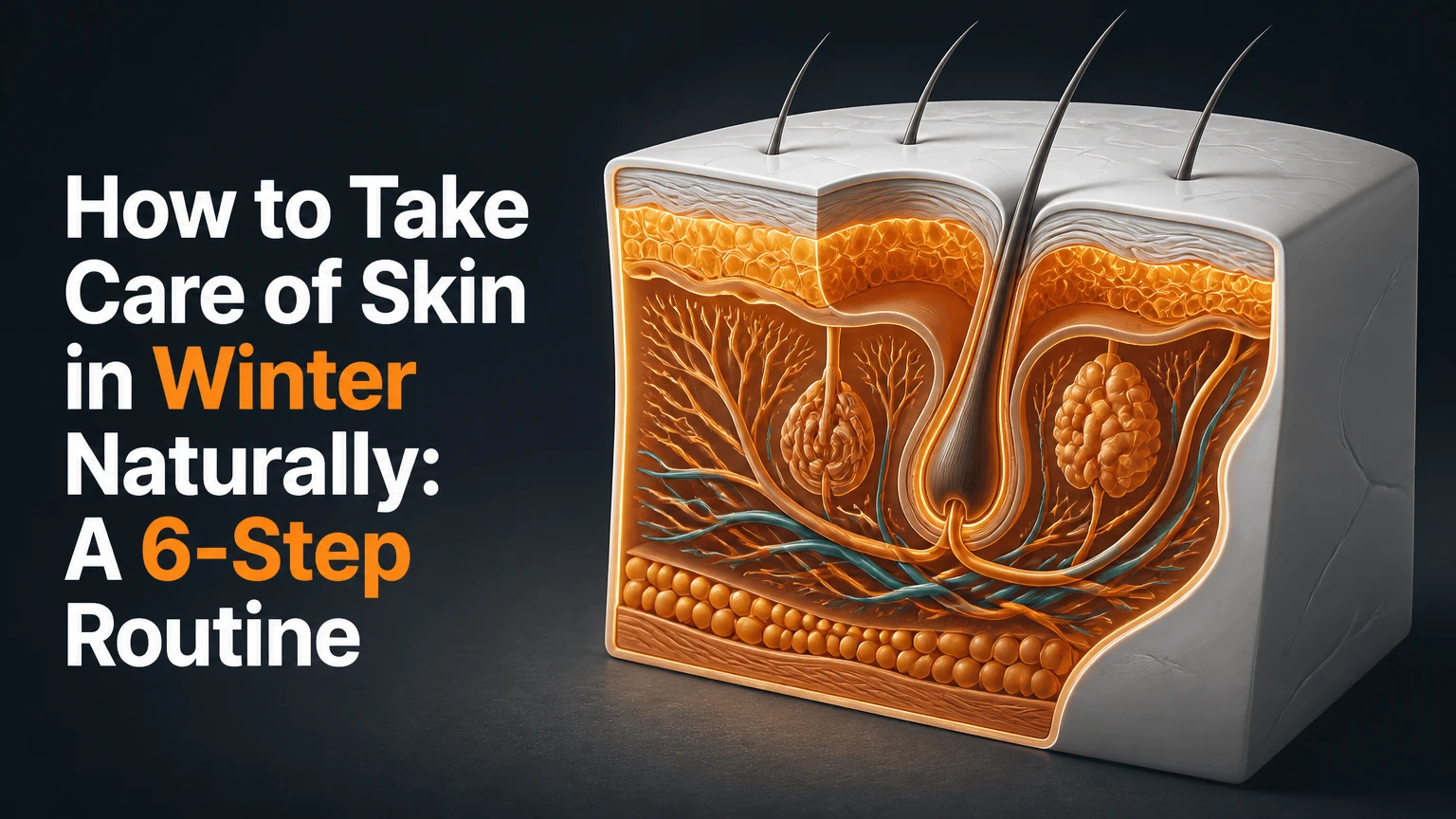
To take care of skin in winter naturally, use six steps: patch-test ingredients, cleanse gently, hydrate, moisturize, seal dry areas, and protect skin outdoors. The routine takes 5-10 minutes daily, with a 15-minute honey mask twice weekly. It is beginner-friendly, and success depends most on preserving the skin barrier rather than adding more oil.
Before You Start
Set aside 10 minutes for the first routine and about 5-10 minutes for later applications. The difficulty is beginner. A basic routine costs approximately $15-$45, depending on whether you already own a cleanser, sunscreen, and moisturizer. You do not need every suggested ingredient.
Use plain, fragrance-free materials wherever possible. “Natural” describes an ingredient’s origin, not its likelihood of causing irritation. Essential oils, citrus juice, cinnamon, undiluted apple cider vinegar, and abrasive sugar or coffee scrubs do not belong on winter-irritated skin.
| Item | Quantity or specification | Typical cost | Purpose |
|---|---|---|---|
| Lukewarm water | Comfortable, never hot | Usually free | Cleansing without excessive barrier stripping |
| Gentle cleanser | Fragrance-free, pea-sized amount | $6-$15 | Removes sweat, dirt, and sunscreen |
| Jojoba or sweet almond oil | 2-3 drops for moisturizing; up to 1 teaspoon for optional oil cleansing | $8-$18 | Reduces water loss and softens dry skin |
| Pure aloe vera gel | Pea-sized amount | $6-$12 | Adds lightweight water-based hydration |
| Raw honey | 1 tablespoon for an optional mask | $5-$10 | Temporary humectant mask |
| Rosewater or plain water | 3-4 spray pumps, alcohol-free | $5-$12 | Dampens skin before moisturizing |
| Shea butter | Half a pea-sized amount | $6-$15 | Seals especially dry areas |
| Mineral sunscreen | Broad-spectrum SPF 30 or higher, zinc oxide | $10-$20 | Protects against ultraviolet exposure |
| Soft microfiber cloth | One clean cloth | $3-$8 | Gentle removal when needed |
Patch-Test Before Facial Use
Apply each new ingredient separately to a small area before putting it across your face. Use the inner forearm or the skin beside the jaw, and apply a small amount once or twice daily for several days. The American Academy of Dermatology Association advises testing new skin-care products on a small area for 7-10 days when possible.
Stop if you develop burning, swelling, hives, blisters, or a spreading rash. A mild brief tingling is not a requirement for effectiveness. If swelling affects your lips, eyelids, or breathing, seek urgent medical help.
Six-Step Winter Routine
| Step | Action | Time | Most common mistake |
|---|---|---|---|
| 1 | Patch-test and choose a simple formula | 1-2 minutes initially | Introducing several ingredients together |
| 2 | Cleanse gently | 1-3 minutes | Using hot water or rubbing |
| 3 | Apply an optional honey mask | 15 minutes, 2 times weekly | Letting honey dry hard on the skin |
| 4 | Re-wet and hydrate the skin | 30 seconds | Allowing mist to evaporate completely |
| 5 | Layer aloe and a small amount of oil | 1 minute | Applying too much oil to dry skin |
| 6 | Seal dry zones and apply sunscreen | 1-2 minutes | Treating oil or shea butter as sun protection |
Step 1: Patch-Test Ingredients and Choose Your Formula
Patch-test new natural ingredients individually, then choose the lightest routine that stops tightness and flaking.
Start with one base combination: plain water, a gentle cleanser, aloe vera, jojoba oil, and mineral sunscreen. Add honey, rosewater, sweet almond oil, or shea butter only after the basic combination feels comfortable. This isolates the cause if redness or breakouts appear.
For dry skin, choose jojoba or sweet almond oil and reserve shea butter for cheeks, lips, and cracks. For oily or acne-prone skin, begin with one or two drops of jojoba and skip coconut oil on the face. For sensitive or eczema-prone skin, use plain water instead of rosewater and avoid fragranced products.
You’ll know it worked when the chosen products produce no persistent burning, itching, swelling, or new rash during the test period. Most guides skip this, then several new ingredients fail at once.
The common mistake is testing a complete homemade mixture. Avoid it by adding only one new ingredient every 3-4 days.
Step 2: Cleanse Gently With Lukewarm Water
Cleanse your face with lukewarm water and a small amount of gentle cleanser, using your fingertips for 20-30 seconds without scrubbing.
In the morning, rinse with water if your skin is comfortable and clean. At night, use a fragrance-free cleanser to remove sunscreen, makeup, sweat, and pollution. Place a pea-sized amount in wet hands, spread it over the face, and keep pressure light around the nose and eyes. Rinse with your hands or use a soft microfiber cloth only once, without dragging it across the skin.
The AI Overview’s oil-cleanse option can work for some people, but it is not mandatory. If you choose it, use up to 1 teaspoon of jojoba or sweet almond oil on dry skin, massage for 2 minutes, then remove it thoroughly with a damp lukewarm cloth. Follow with a gentle cleanser if sunscreen remains.
You’ll know it worked when skin feels clean but not squeaky, tight, hot, or visibly reddened. The American Academy of Dermatology Association recommends gentle cleansing and avoiding hot water for dry skin.
The common mistake is using steaming water or a rough cloth. Lower the temperature and rinse with bare hands for 3-4 days if redness develops.
Step 3: Apply a Honey Mask Twice Weekly
Apply 1 tablespoon of raw honey to clean, slightly damp skin for 10-15 minutes, then rinse it away with lukewarm water.
Spread a thin film over the cheeks, forehead, and chin, keeping it away from the eyes, nostrils, lips, and any broken skin. Do not mix it with lemon juice, baking soda, cinnamon, or essential oils. Honey can feel sticky, so remove it by wetting the face first rather than rubbing the dried layer.
Use the mask once weekly at first, increasing to twice weekly if there is no irritation. The overview suggests two or three times weekly, but more frequent use provides little advantage when the skin barrier is already reactive. Honey attracts water, yet it cannot replace a moisturizer or repair eczema.
You’ll know it worked when skin feels temporarily softer and comfortable after rinsing, without itching, redness, or a sticky residue. Follow with aloe and moisturizer while the skin is still slightly damp.
The common mistake is leaving honey on until it dries completely. Limit contact to 15 minutes and rinse sooner if stinging begins.
Step 4: Mist and Re-Wet the Skin
Mist alcohol-free rosewater or plain water onto freshly cleansed skin, using 3-4 spray pumps morning and night.
Hold the bottle 15-20 centimeters from your face and spray evenly, or press clean wet hands against the skin. Use the mist immediately after cleansing, while the face is still damp. Rosewater is optional, not a treatment requirement, and fragranced or alcohol-containing versions can sting sensitive skin.
Do not wait for the mist to dry completely. Water left on the surface will evaporate, so move directly to the next step within 30 seconds. In a very dry heated room, applying products immediately matters more than applying extra mist.
You’ll know it worked when the skin feels cool and lightly damp, not dripping. The next product should spread easily without pulling across the face.
The common mistake is using a mist as the entire moisturizing routine. Avoid it by applying aloe and an emollient while the skin remains damp.
Step 5: Layer Aloe Vera and Jojoba Oil
Mix a pea-sized amount of pure aloe vera gel with 2-3 drops of jojoba oil, then press the mixture onto damp face and neck.
Place the aloe in one palm, add the oil, and blend for a few seconds. Press it over the cheeks, forehead, chin, and neck instead of rubbing aggressively. If the mixture pills, use less aloe or apply the products in separate thin layers, aloe first and oil second.
Aloe contributes water-based hydration, while oil reduces moisture loss. Neither step repairs a severe rash, and oil cannot hydrate completely dry skin by itself. For oily or combination skin, use one drop of oil over the cheeks only. For dry skin, use the full two or three drops.
You’ll know it worked when the skin feels comfortable and flexible after 5 minutes, with no greasy film or tight patches. It should not feel wet enough to transfer heavily onto clothing or bedding.
The common mistake is adding oil to completely dry skin. Re-wet the face first, then reduce the oil amount if greasiness remains.
Step 6: Seal Dry Zones and Protect Against Sun
Press a half pea-sized amount of shea butter onto flaky areas at night, then apply broad-spectrum mineral SPF 30 or higher during the day.
Warm the shea butter between your fingertips and press it onto the cheeks, lips, sides of the nose, and small dry patches. Do not spread a thick layer over the entire face unless your skin tolerates it. Use a plain lip balm or a tiny amount of shea butter on lips, and wear gloves outdoors to reduce wind exposure.
In the morning, finish with a zinc oxide sunscreen labeled broad-spectrum and SPF 30 or higher. Apply it to exposed face, ears, neck, and hands after moisturizing. The AAD recommends broad-spectrum SPF 30 or higher, even during winter, because ultraviolet exposure continues on cloudy days and can increase around snow.
You’ll know it worked when dry areas remain comfortable overnight and sunscreen forms an even, unbroken layer during the day. Shea butter and oils are not sunscreen.
The common mistake is using coconut oil as a facial sealant or sun protector. Coconut oil can feel heavy and may clog pores for some users, while it does not provide reliable UV protection.
Common Mistakes and How to Fix Them
| Problem | Likely cause | Recovery |
|---|---|---|
| Skin feels greasy but still flakes | Oil or butter applied without water-based hydration | Re-wet skin, use aloe, then reduce oil to 1-2 drops |
| New clogged pores or breakouts | Coconut oil, heavy butter, or excessive layering | Stop the newest product for 7 days and switch to jojoba or a light, fragrance-free moisturizer |
| Tight, red skin after washing | Hot water, long cleansing, or cloth friction | Use lukewarm water, fingertips, and a shorter cleanse for 3-4 days |
| Burning after rosewater or aloe | Fragrance, alcohol, preservatives, or ingredient sensitivity | Rinse, stop that product, and use plain water plus a bland moisturizer |
| Honey mask causes itching | Allergy or irritation | Remove it immediately and do not repeat the test |
| Cracks keep bleeding | More than ordinary seasonal dryness | Apply a bland ointment, cover the area, and arrange medical advice |
If a product causes swelling, hives, blisters, pus, severe pain, or breathing difficulty, stop using it. Contact a clinician for spreading redness, infected cracks, persistent eczema, or symptoms that do not improve after one to two weeks of gentle care.
Variations for Skin Type and Climate
| Situation | Use more of | Use less of or avoid | Practical adjustment |
|---|---|---|---|
| Very dry skin | Aloe, jojoba, shea on dry zones | Frequent cleansing and exfoliation | Cleanse once nightly and seal immediately |
| Oily or acne-prone skin | Plain water, light gel, 1-2 drops jojoba | Coconut oil and full-face shea | Keep occlusives on lips and flaky patches |
| Sensitive or eczema-prone skin | Fragrance-free products and bland ointment | Honey, rosewater, botanicals, essential oils | Skip optional mask and mist until calm |
| Cold, windy climate | Shea on cheeks, lip balm, gloves | Unprotected outdoor exposure | Apply sealant before going outside |
| Heated, dry indoor air | Humidifier and frequent moisturizer | Repeated hot showers | Keep indoor relative humidity around 30%-50%; the U.S. Environmental Protection Agency gives this as a typical comfortable indoor range |
If You Have No Mist Bottle
Use clean wet hands instead of buying a spray bottle. After rinsing, leave the face slightly damp and apply aloe immediately. A damp cotton pad can work, but do not wipe repeatedly because friction can worsen flaking.
If You Cannot Use Natural Oils
Use a fragrance-free moisturizer containing ingredients such as glycerin, petrolatum, ceramides, or dimethicone. These are not “natural-only” options, but they are often more predictable for sensitive or eczema-prone skin. The goal is moisture retention and barrier support, not a particular ingredient label.
If You Need a Minimal Three-Product Routine
Use a gentle cleanser, a fragrance-free moisturizer, and broad-spectrum SPF 30 or higher. Cleanse at night, moisturize while skin is damp, and apply sunscreen each morning. Add one optional ingredient only after the basic routine works for at least 7 days.
How Long Does It Take and What Does It Cost?
| Routine version | Daily time | Weekly time | Typical cost |
|---|---|---|---|
| Minimal cleanser, moisturizer, sunscreen | 3-5 minutes | None | $20-$45 |
| Full natural-ingredient routine | 5-10 minutes | Add 15-minute mask | $35-$80 |
| Oil cleanse plus full routine | 8-13 minutes | Add 15-minute mask | $45-$95 |
| Sensitive-skin version | 3-6 minutes | Usually no mask | $20-$55 |
The morning routine usually takes 2-4 minutes: rinse or cleanse, hydrate, moisturize, and apply sunscreen. The evening routine takes 3-6 minutes, depending on whether you oil cleanse. The honey mask adds 15 minutes twice weekly.
Costs vary mainly by whether you already own sunscreen and cleanser. Rosewater, honey, and shea butter are optional purchases, so omit them before buying duplicates. A plain fragrance-free moisturizer can replace the aloe and oil combination.
Frequently Asked Questions
Can I use coconut oil on my face in winter?
You can test it, but coconut oil is a poor starting choice for acne-prone or combination skin because it feels heavy and may contribute to clogged pores. Use jojoba oil instead, apply one or two drops to damp skin, and keep coconut oil for body areas that tolerate it.
Should I exfoliate dry winter skin?
Pause physical scrubs when skin is flaky, tight, cracked, or red. Scrubbing can remove surface cells while the barrier is already irritated. Once skin stays comfortable for at least a week, use only a gentle, low-frequency exfoliant if you have a specific reason, and never apply it to cracks or eczema.
Is rosewater necessary for winter hydration?
No. Rosewater adds a convenient damp layer, but plain lukewarm water works just as well for the routine’s moisture-sealing sequence. Choose alcohol-free, fragrance-free rosewater if possible, and stop it if your face stings or becomes red. Aloe, moisturizer, and sunscreen matter more than the mist.
Can I use honey if I have eczema?
Do not assume honey is safe on eczema. Broken or inflamed skin can react to botanical ingredients, and honey may sting or trigger irritation. Skip the mask during a flare, use a bland fragrance-free ointment or moisturizer, and ask a dermatologist about recurring eczema symptoms.
Why does my skin flake after applying oil?
Oil slows water loss but does not supply enough water to dry skin. Apply aloe or a fragrance-free moisturizer to slightly damp skin first, then use only one or two drops of jojoba. If flakes continue, stop the oil and simplify the routine for a week.
When should I see a dermatologist?
Seek medical advice for bleeding or painful cracks, spreading redness, pus, facial swelling, severe itching, or a rash that persists despite gentle care. Winter dryness can resemble eczema, contact dermatitis, psoriasis, or infection, which may require treatment beyond household ingredients.
Conclusion
A successful natural winter routine protects the barrier in the right order: cleanse gently, add water-based hydration, layer a small amount of oil, seal vulnerable zones, and use sunscreen. Patch-test every new ingredient, remove anything that burns, and simplify the routine for sensitive or eczema-prone skin. That is how to take care of skin in winter naturally without turning dryness into irritation.