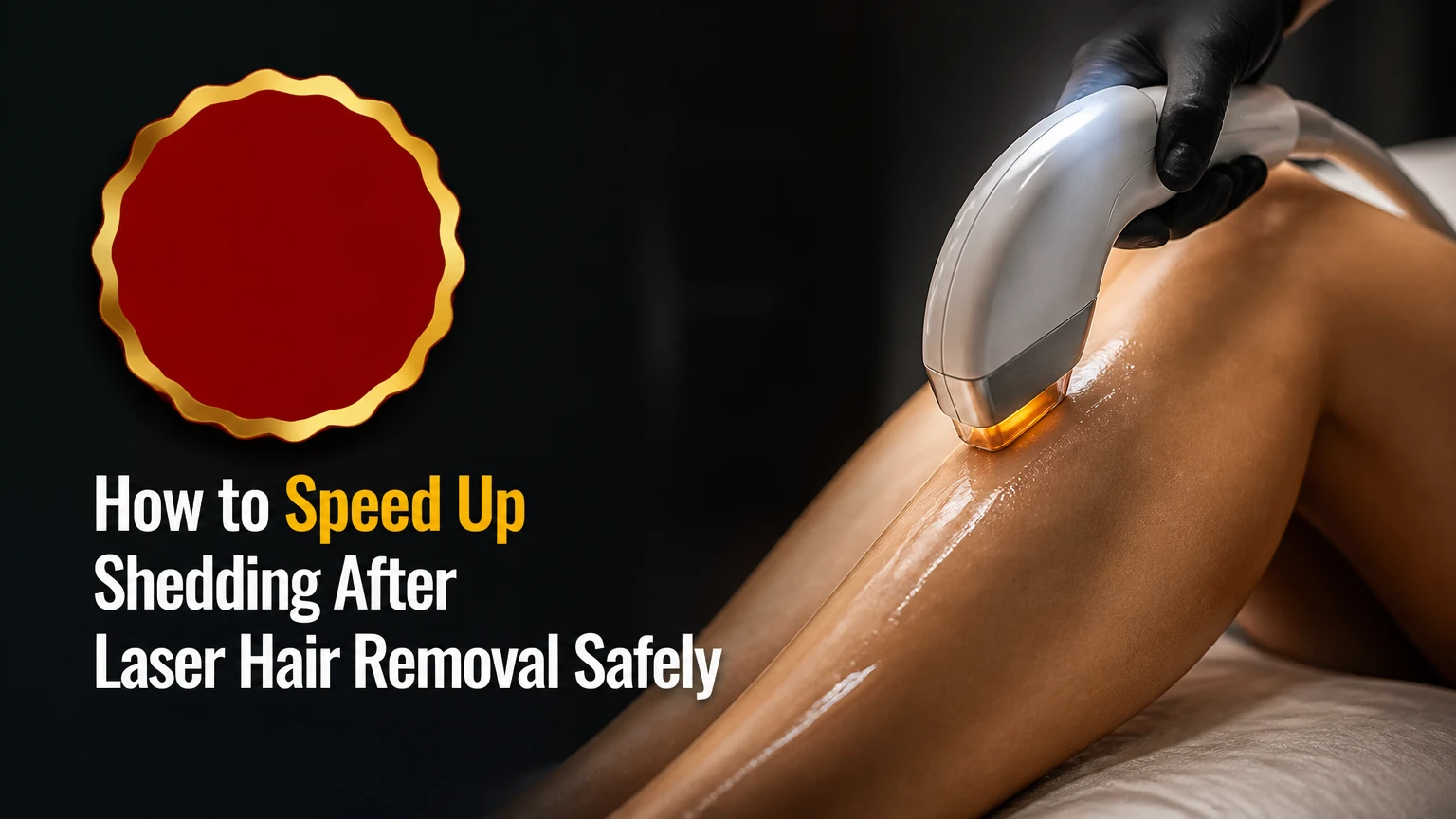
To speed up shedding after laser hair removal, wait until treated skin is calm, then use lukewarm water and a soft washcloth with light pressure two or three times weekly. This can remove loose, treated hair shafts, but it cannot make damaged follicles shed faster or improve an ineffective laser session.
Key Facts at a Glance
- Laser hair removal shedding commonly begins about 7-14 days after treatment and may continue for another 7-14 days.
- Visible stubble after laser hair removal can be expelled treated hair, not necessarily fresh growth.
- Gentle exfoliation removes loose shafts from the skin surface; it does not increase follicle destruction.
- Waxing, tweezing, threading, and epilating remove the root and can reduce the pigment target needed for later laser sessions.
- Heat, friction, acids, and fragranced products are most irritating while redness, swelling, or tenderness remains.
- Blisters, worsening pain, pus, spreading redness, or persistent swelling require advice from the treating clinic or a qualified medical professional.
Can You Speed Up Shedding After Laser Hair Removal?
You can help loose treated hairs exit the skin, but you cannot reliably accelerate the biological shedding process. Laser energy damages pigment-rich hair structures during a suitable growth phase, while the body gradually pushes the treated shaft outward over the following days.
The American Academy of Dermatology describes laser hair removal as a procedure using “a concentrated beam of light” to damage unwanted hair. The practical limitation is that laser exposure depends on melanin, hair thickness, wavelength, fluence, cooling, and growth phase. Exfoliation does not change those variables after the session.
A soft cloth may make the area look clearer sooner because it lifts hairs that are already loose. Scrubbing harder does not produce a better laser result. It increases the chance of irritation, follicular inflammation, post-inflammatory hyperpigmentation, and delayed recovery, especially on brown or black skin.
What is post-laser shedding?
Post-laser shedding is the gradual extrusion of treated hair shafts from follicles after a laser session. The process often appears as dark stubble, pepper-like dots, or short hairs that seem to grow before they loosen and fall away.
Laser hair removal is not equally effective on every visible hair. Hair in the active anagen phase contains the strongest useful pigment target, while hairs in catagen or telogen may receive less effective thermal injury. That difference explains why a session can produce partial shedding rather than immediate smoothness.
When Does Laser Hair Shedding Start?
Laser hair shedding usually starts 7-14 days after treatment, although facial hair, coarse body hair, device settings, skin response, and hair-cycle timing can shift the window. Some people notice expelled hairs around day 5, while others see meaningful shedding closer to day 21.
The first week is primarily a recovery period. A treated area may have mild perifollicular redness or swelling, similar to small raised bumps around hairs. Those signs generally settle within hours to several days, but the treating clinic’s instructions take priority when they differ from general guidance.
| Time after session | What may happen | Appropriate care | Avoid |
|---|---|---|---|
| 0-48 hours | Warmth, redness, follicular swelling | Cool compress, gentle cleanser, bland moisturizer | Sauna, hot bath, intense friction |
| Days 3-6 | Sensitivity usually decreases | Moisturize and protect from sun | Scrubs, acids, picking crusts |
| Days 7-14 | Dark stubble and loose shafts appear | Lukewarm rinse and soft cloth if calm | Forceful rubbing or tweezing |
| Days 15-21 | More treated hairs release | Continue gentle care as needed | Assuming every remaining hair is treatment failure |
| After day 21 | Results become easier to assess | Contact clinic if no meaningful change | Repeating treatment too early |
Why does hair look like new growth?
Hair can look like new growth because the treated shaft remains inside the follicle until skin turnover and movement push it outward. A shaft that appears at the surface may be dead, even though it looks dark and feels coarse.
A useful practical test is timing. Stubble that appears soon after treatment and then releases over one to three weeks is compatible with shedding. Hair that continues lengthening from the follicle over several weeks may represent surviving hair, untreated growth-phase hair, or hair outside the laser’s effective target.
Step 1: Protect the Area for the First 48 Hours
Protect treated skin from heat, rubbing, and unnecessary active ingredients for the first 24-48 hours, or longer if redness and tenderness remain. Wash with lukewarm water, pat dry, and apply a simple fragrance-free moisturizer when the skin feels dry.
The NHS and dermatology clinics commonly advise avoiding excess heat and irritation after laser procedures, but exact instructions vary by device and treatment area. A diode or alexandrite hair-removal session is not identical to a resurfacing laser treatment, so do not transfer aftercare instructions between procedures.
Use loose clothing on the bikini line, underarms, or legs. Avoid swimming pools, hot tubs, saunas, and strenuous exercise during the period your clinic specifies, particularly when sweat or chlorine stings the treated skin.
You will know this step is complete when: redness, warmth, and tenderness have substantially settled.
Common mistake: applying ice directly to the skin. Wrap a cold pack in fabric and use short intervals instead.
Step 2: Cleanse and Moisturize Without Scrubbing
Cleanse the treated area once daily or after sweating with a mild, fragrance-free product and your fingertips. Apply a thin layer of bland moisturizer containing ingredients such as glycerin, ceramides, or hyaluronic acid; moisturizer softens surface scale but does not force follicles to shed.
Pure aloe vera gel may feel cooling, but “pure” products can still contain alcohol, fragrance, botanical extracts, or preservatives. Patch-test a product when possible, and stop using it if burning, itching, or a rash develops.
Moisturizing is supportive care, not a shedding accelerator. Dry, peeling skin can trap surface hairs and encourage rubbing, while over-layering occlusive products can aggravate follicular bumps in acne-prone areas.
You will know this step is complete when: the skin feels comfortable, without burning after application.
Common mistake: using a body scrub because the skin feels rough. Roughness is a reason to reduce friction, not increase it.
Step 3: Use a Soft Washcloth When the Skin Is Calm
Use a damp, soft washcloth in light circular movements after a lukewarm shower, beginning around day 7 only if the area has no active redness, tenderness, blistering, open skin, or significant itching. Limit the routine to 30-60 seconds over each small area, then moisturize.
A washcloth is usually easier to control than a loofah or exfoliating mitt. Use a clean cloth, rinse it thoroughly, and allow it to dry between uses. Two sessions weekly are a reasonable starting point; increase to three only when the skin remains completely comfortable.
The goal is to wipe away hairs that are already loose. Do not chase individual black dots, scrape the surface, or press until the skin turns pink. Persistent redness after exfoliation means the pressure or frequency is excessive.
You will know this step is complete when: loose hairs appear on the cloth or rinse away without stinging.
Common mistake: using a dry cloth. Dry friction is more abrasive and provides no useful advantage.
Which Exfoliation Method Is Safest?
A soft washcloth is the safest first choice for most people because it provides low, measurable friction and no acid exposure. Chemical exfoliants may help people prone to clogged pores or ingrown hairs, but they are optional and should begin only after full recovery, often around day 10-14.
| Method | Earliest typical timing | Frequency | Main benefit | Main risk |
|---|---|---|---|---|
| Soft washcloth | Day 7 if calm | 2 times weekly | Lifts loose shafts | Irritation from pressure |
| Soft loofah | Day 10 if resilient skin | 1-2 times weekly | Covers legs or back | Over-scrubbing and microtears |
| Lactic or glycolic acid | Day 10-14 if calm | 1 time weekly initially | Loosens surface scale | Stinging and pigment change |
| Salicylic acid | Day 10-14 if ingrown-prone | 1-2 times weekly | Reduces pore congestion | Dryness and irritation |
| Enzyme or grain scrub | Not preferred early | Avoid during recovery | Limited added value | Uneven abrasive injury |
| Picking or scraping | Never | Never | No safe benefit | Cuts, infection, pigmentation |
Do not combine a washcloth, exfoliating mitt, AHA, BHA, retinoid, and benzoyl peroxide in the same recovery period. Layering several irritating methods creates more inflammation without changing the laser’s action.
When are chemical exfoliants appropriate?
Use a low-strength AHA or BHA only after the skin has recovered and your clinic permits it. A practical starting schedule is one application weekly on a small test area, followed by moisturizer, with at least 48 hours before repeating or adding another active.
Glycolic acid and lactic acid are AHAs that loosen bonds between surface cells. Salicylic acid is a BHA that can penetrate oily follicular material. Neither acid removes a laser-treated follicle, and neither should be applied to sunburned, peeling, blistered, freshly shaved, or inflamed skin.
People with eczema, rosacea, very reactive skin, or a history of post-inflammatory hyperpigmentation should usually choose gentle cleansing and moisturizing instead. Chemical exfoliation is not a requirement for successful laser hair reduction.
When Can You Shave After Laser Hair Removal?
You can shave once the treated skin is comfortable and intact, commonly after 24-72 hours, although some clinics advise waiting several days. Shaving cuts hair at the surface and does not remove the follicle, so it does not interfere with the laser target in the way waxing or tweezing can.
A clean razor, lukewarm water, and fragrance-free shaving gel reduce friction. Use one light pass rather than repeatedly scraping the area, and avoid shaving across pustules, scabs, blisters, or active irritation.
Shaving does not speed biological shedding. It only makes visible stubble shorter and may improve the appearance while treated shafts remain inside the follicle. That distinction prevents unnecessary exfoliation when the actual issue is cosmetic impatience.
| Hair-removal method between sessions | Removes follicle root? | Effect on next laser target | Typical post-treatment recommendation |
|---|---|---|---|
| Shaving | No | Preserves target in follicle | Usually preferred once skin recovers |
| Electric trimming | No | Preserves target in follicle | Useful for sensitive areas |
| Depilatory cream | No, but dissolves shaft | Preserves root, may irritate skin | Avoid until clinic approves |
| Waxing | Yes | May remove laser target | Usually avoid |
| Tweezing | Yes | Removes individual target | Usually avoid |
| Threading | Yes or partially | Can reduce target availability | Avoid on treated areas |
What Should You Avoid While Hair Is Shedding?
Avoid waxing, tweezing, threading, epilators, aggressive scrubs, tanning, and unapproved active products while the treatment area recovers. These actions either remove the follicle’s pigment-bearing target or create inflammation that can prolong redness and increase discoloration risk.
Sun exposure matters because recently treated skin may respond poorly to ultraviolet exposure. Follow the clinic’s sunscreen instructions, use broad-spectrum SPF 30 or higher on exposed areas when appropriate, and avoid tanning until the skin has returned to baseline.
Do not use home IPL or another laser over skin that is still irritated from professional treatment. The added energy does not rescue a poorly timed session and may increase thermal injury.
Which method is best for sensitive skin?
Sensitive skin usually does best with no active exfoliant during the first two weeks, followed by a soft washcloth only when the skin is fully calm. The face, bikini line, and underarms have thinner or more reactive skin than the outer legs, so pressure and product tolerance differ.
For facial treatment, avoid applying acids close to the eyes, lips, nostrils, or mucous membranes. For the bikini area, keep exfoliating products on external skin only and follow the clinic’s anatomical instructions. Genital skin should not receive ordinary body acids without specific professional guidance.
How Should You Handle Peppering, Bumps, or Itching?
Small dark dots after laser hair removal often represent treated coarse hairs near the surface and can be left alone while they shed. Mild perifollicular redness or swelling may also be a normal short-term response, but worsening pain, pus, blistering, or spreading redness is not routine shedding.
Do not squeeze peppering. A lukewarm compress for about five minutes may soften surface scale, after which a gentle rinse or cloth can remove hairs that release easily. Stop if the area stings or remains red.
Itching can result from temporary inflammation, dryness, friction, or follicular irritation. A bland moisturizer and cool compress may help, but topical steroid use should follow advice from a clinician or the treating provider, particularly on the face, groin, or large areas.
| Symptom | More compatible with | Immediate action | Seek medical advice when |
|---|---|---|---|
| Small red bumps around follicles | Temporary perifollicular response | Cool compress, gentle care | Swelling worsens or lasts beyond clinic guidance |
| Dark dots without pain | Shedding or peppering | Leave alone, gentle rinse | No improvement after several weeks |
| Mild itch and dryness | Irritation or barrier disruption | Fragrance-free moisturizer | Itch is severe or rash spreads |
| Pus-filled bumps | Folliculitis or infection | Stop exfoliation and contact clinic | Pus, warmth, or spreading redness develops |
| Blisters or crusting | Possible burn | Do not peel or apply acids | Contact provider promptly |
| Severe pain or swelling | Excessive thermal reaction | Stop products and seek advice | Same day if severe or rapidly worsening |
Why Has Hair Not Shed After Three Weeks?
No visible shedding after three weeks does not automatically mean treatment failed, but it merits a review with the clinic. Possible explanations include hair-cycle timing, insufficient fluence, unsuitable wavelength, light or fine hair, inadequate pigment contrast, overlapping treatment areas, or a device and setting mismatch.
The laser does not treat every follicle equally in one appointment. A session may reduce some anagen hairs while leaving telogen hairs visibly present. Hormonal conditions, including polycystic ovary syndrome, can also drive ongoing facial or body-hair growth that requires a longer treatment plan.
Do not ask a provider to increase energy solely because shedding seems slow. Safe settings depend on skin type, tanning history, hair characteristics, cooling, device type, and the reaction observed during treatment. A qualified clinician should assess the response before changing fluence or wavelength.
What information should you bring to the clinic?
Record the device name if available, treatment date, treated body area, shaving date, visible shedding dates, and any redness, blistering, or pigment change. Photographs taken in consistent lighting can distinguish stable peppering from genuine new growth.
Ask whether the treatment used an alexandrite, diode, or Nd:YAG laser, whether the settings were adjusted for your skin type, and when the next session should occur. IPL is light-based hair reduction but is not the same device category as a laser, so the expected response can differ.
How Should the Routine Change by Body Area?
The safest shedding routine depends on skin sensitivity, hair diameter, friction, and sun exposure. Legs often tolerate a soft cloth more readily than the face, while bikini and underarm areas need lower friction because sweat, clothing, and occlusion can amplify irritation.
| Treatment area | Typical sensitivity concern | Preferred first method | Practical adjustment |
|---|---|---|---|
| Face and neck | Irritation and pigment change | Fingertips or very soft cloth | Avoid acids near eyes and lips |
| Bikini line | Friction and folliculitis | Gentle washcloth on external skin | Use loose clothing and avoid picking |
| Underarms | Sweat and deodorant irritation | Gentle cleansing, then cloth | Delay fragranced deodorant if stinging |
| Lower legs | Dryness and scale | Soft cloth after shower | Moisturize immediately afterward |
| Back and chest | Larger surface and acne | Washcloth, then optional BHA | Avoid combining acids with scrubbing |
| Darker or pigment-prone skin | Hyperpigmentation after inflammation | Minimal-friction routine | Treat redness early and avoid tanning |
Tools, Quantities, and Typical Costs
A minimal routine needs fewer products than many aftercare packages suggest. Typical consumer prices vary by country and brand, but a soft washcloth, bland moisturizer, and sunscreen are usually sufficient; acids and specialty mitts are optional rather than mandatory.
| Item | Useful specification | Typical quantity | Typical cost range |
|---|---|---|---|
| Soft washcloth | Cotton or microfiber, non-abrasive | 2-4 cloths | $2-$12 |
| Fragrance-free cleanser | Mild, non-exfoliating formula | 100-250 mL | $5-$15 |
| Bland moisturizer | Ceramides or glycerin, 100-250 mL | 1 bottle | $8-$25 |
| Aloe gel | Alcohol-free, fragrance-free | 100-200 mL | $5-$15 |
| Sunscreen | Broad-spectrum SPF 30 or higher | 40-100 mL | $10-$30 |
| AHA or BHA | Low-strength body formula | 100-200 mL | $10-$30 |
A practitioner rule of thumb is to introduce one change at a time. If the skin reacts, a single new product makes the cause easier to identify; a multi-product routine makes recovery slower and troubleshooting less reliable.
Common Mistakes and How to Fix Them
Scrubbing before the skin recovers: Stop exfoliation, cleanse gently, moisturize, and wait until redness and tenderness resolve. Early abrasion can create micro-injury even when no visible cut appears.
Trying to pull out black dots: Leave embedded hairs alone. Forced removal can traumatize the follicle and create marks that last longer than the original shedding window.
Using acids immediately: Pause glycolic, lactic, salicylic, retinoid, and benzoyl peroxide products until the skin is calm and the provider’s interval has passed. Burning is a stop signal, not evidence that an active is working.
Waxing between sessions: Switch to shaving or trimming. Root removal can make fewer follicles available for laser targeting at the next appointment.
Mistaking shaving for treatment failure: Shaving shortens the visible shaft but says nothing about follicular damage. Assess results over the clinic’s full treatment interval, not after one day of surface stubble.
Ignoring sun exposure: Protect exposed skin and postpone treatment on recently tanned skin according to provider guidance. Ultraviolet exposure raises the risk of an uneven pigment response.
FAQ
Can I exfoliate five days after laser hair removal?
Exfoliating on day five may be acceptable only if the treated skin is completely calm and the clinic specifically permits it, but many people should wait closer to day seven or longer. Use a soft cloth rather than acids or a scrub, and stop immediately for burning, tenderness, or renewed redness.
Does a warm shower make laser hair shed faster?
A lukewarm shower can soften surface scale and hair shafts, making loose hairs easier to rinse away. Warm water does not open pores or increase follicle destruction, and hot showers, steam rooms, and saunas can worsen early redness and irritation.
Can I use a loofah after laser hair removal?
A loofah is optional and carries more over-scrubbing risk than a soft washcloth. If used on resilient skin, wait until the area is fully recovered, apply very light pressure for less than a minute, and avoid it entirely on inflamed, peeling, blistered, or pigment-prone skin.
Does laser hair removal shedding mean the treatment worked?
Shedding is evidence that some treated shafts are being expelled, but it does not prove that every targeted follicle was permanently reduced. Treatment response also depends on anagen timing, hair pigment, hair diameter, device wavelength, fluence, cooling, and the number of sessions completed.
Can I apply hydrocortisone to bumps after laser treatment?
Do not automatically apply hydrocortisone to every post-laser bump. Mild irritation may improve with cooling and bland moisturizer, while folliculitis, infection, fungal conditions, or burns need different management; ask the treating clinic or a clinician before using steroid cream, especially on the face or groin.
When should I book the next laser session?
Book the next session according to the clinic’s hair-cycle plan, commonly several weeks after body treatment and a shorter interval for some facial areas. The provider should assess regrowth and skin recovery first, because treating too early can miss the next useful growth window or irritate recovering skin.
The Bottom Line
The safest way to speed up shedding after laser hair removal is to protect the area first, wait until inflammation has settled, then use lukewarm water and a soft washcloth with minimal pressure. Moisturizer supports the skin barrier, while shaving can improve appearance without removing the follicle. Exfoliation cannot compensate for unsuitable laser settings, missed growth phases, or an incorrect diagnosis of new hair growth. Stop when skin reacts, avoid plucking and waxing, and contact the treating clinic for blistering, infection signs, severe pain, or no meaningful shedding after roughly three weeks.