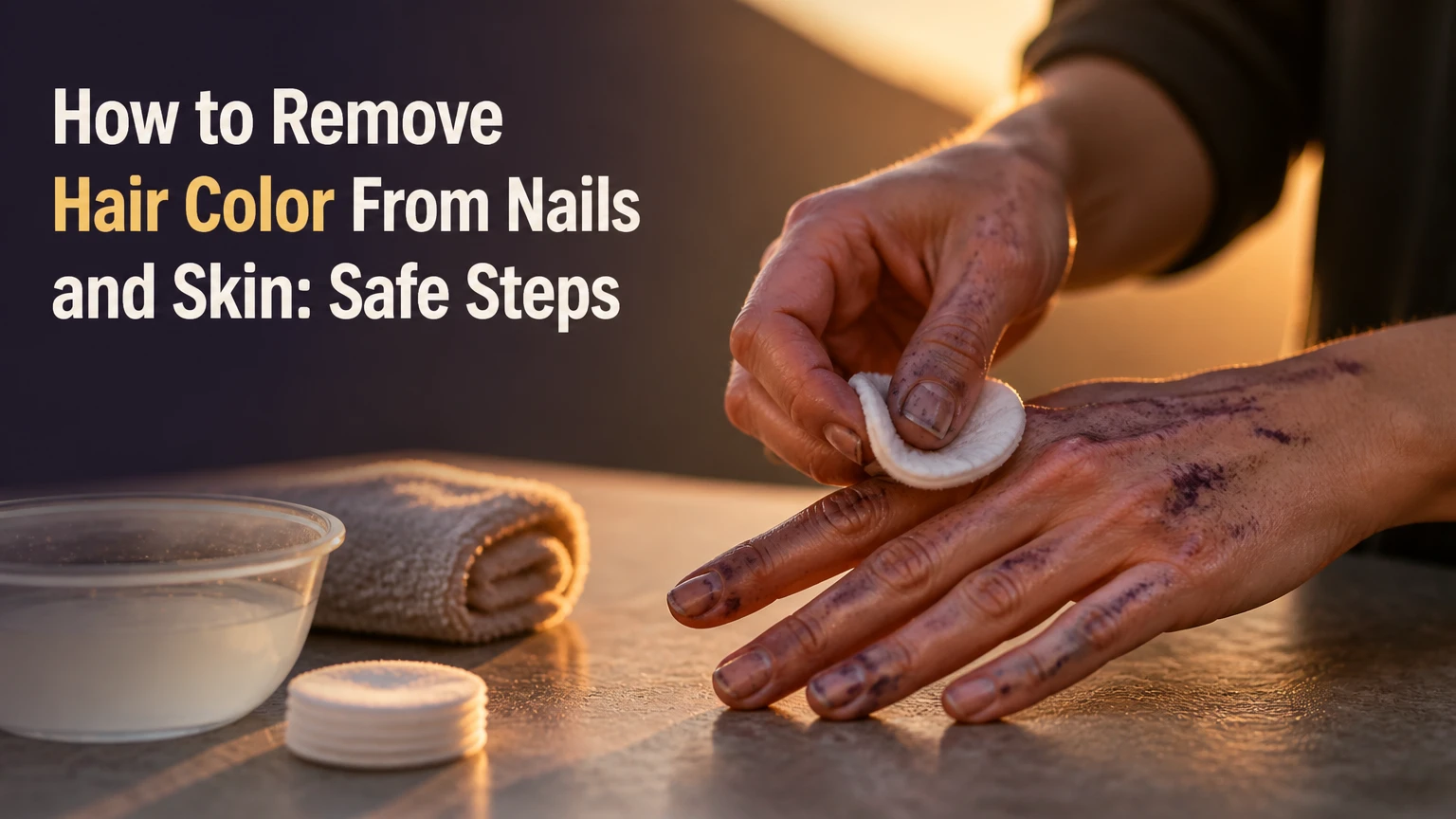
To remove hair color from nails and skin, start with mild soap and warm water, then use oil or micellar water before considering a targeted stain remover. For bare nails, use a small amount of isopropyl alcohol or non-acetone remover; avoid acetone, bleach, window cleaner, and vigorous scrubbing on facial skin or irritated areas.
Key Facts at a Glance
- Fresh hair-color stains usually respond best to soap, warm water, and a soft cloth within the first few minutes.
- Mineral oil, baby oil, olive oil, and coconut oil can loosen surface pigment without the drying effect of alcohol.
- Isopropyl alcohol belongs on intact hands and bare nail plates, not on eyelids, lips, broken skin, or eczema.
- Acetone can remove dye from some bare nails, but it may dull gel polish, soften extensions, and increase skin dryness.
- Hair dye stain remover wipes are usually the most predictable option for intact skin around the hairline.
- Hair electrolysis removes unwanted hair through a follicle, so it cannot remove pigment stains from nails or skin.
How to Remove Hair Color From Nails and Skin Safely
The safest removal sequence is mild cleansing, oil or micellar water, targeted wiping, and moisturising. Most people need 5-15 minutes for a fresh stain and two or three gentle sessions for a dark, oxidised mark; the determining factor is whether the color remains on the surface or has already dried around the cuticle and skin texture.
Use the least aggressive method that works. Hair-color molecules can lodge in the ridges around the nail fold, so additional pressure often irritates the surrounding skin without removing much more pigment. The American Academy of Dermatology Association recommends gentle cleansing and moisturising for irritated skin, a principle that applies after stain removal as well as after ordinary washing.
Before You Start
| Item | Typical amount | Typical cost | Purpose |
|---|---|---|---|
| Mild liquid soap | 1-2 drops | $0.05-$0.20 | First-line cleansing |
| Warm water and soft cloth | 1 cloth | $0-$2 | Loosens fresh residue |
| Mineral, baby, olive, or coconut oil | 1-2 teaspoons | $0.10-$0.75 | Softens adhered pigment |
| Cotton pads or swabs | 2-6 pieces | $0.10-$0.50 | Precise application |
| Fragrance-free moisturiser | Pea-sized amount per hand | $0.10-$0.40 | Restores comfort after cleaning |
| Optional dye stain remover | 1-2 wipes | $1-$5 per use | Targeted removal from intact skin |
Prerequisite: Check the area for cuts, cracked cuticles, rash, swelling, or burning. Do not apply alcohol, acetone, peroxide, baking soda, toothpaste, or commercial remover to damaged skin.
Step 1: Wash the Stain Immediately
Wet a soft cloth with lukewarm water, add one or two drops of mild soap, and press it against the stain for 20-30 seconds. Wipe toward the outside of the mark, rinse the cloth, and repeat once rather than scrubbing continuously.
You will know this step worked when the cloth picks up visible color and the stain becomes lighter at its edges. The common mistake is using very hot water, which can increase discomfort and does not chemically dissolve permanent dye better than lukewarm water.
Step 2: Apply Oil to Remaining Skin Pigment
Apply a thin layer of mineral oil, baby oil, olive oil, or coconut oil to the mark. Leave it for 3-5 minutes, then massage with a cotton pad for 15-20 seconds and wash with mild soap.
Oil is particularly useful around the ears, neck, and hairline because those areas are more sensitive than the palms. A practical rule is to extend contact time before increasing friction: one 10-minute oil application is usually kinder to skin than repeated abrasive rubbing.
Step 3: Use Micellar Water or a Dye Remover
For intact skin, saturate a cotton pad with micellar water or a product labelled specifically for hair-color stains. Hold the pad on the mark for 10-20 seconds, then wipe once in a controlled direction.
Professional stain removers vary considerably, so follow the package contact time and rinse afterward. Many are designed for skin around the hairline, but “professional” does not mean suitable for eyelids, lips, mucous membranes, or broken skin.
Step 4: Treat a Set-In Mark With Gentle Exfoliation
Mix one teaspoon of baking soda with enough water to form a loose paste, or use a small amount of non-gel toothpaste. Apply it to intact hand skin for no longer than 30-60 seconds, using light fingertip pressure, then rinse thoroughly.
Baking soda and toothpaste remove some pigment by mild abrasion rather than by safely bleaching the skin. Stop immediately if the skin feels hot, stings, becomes bright red, or develops small cracks. Do not use this approach on the face, eyelids, eczema, sunburn, or freshly shaved skin.
Step 5: Moisturise and Reassess
Pat the area dry and apply a fragrance-free cream or a thin layer of petroleum jelly. Wait at least 30 minutes before choosing another method, because redness can make a partly removed stain look darker or more severe.
You will know the process is complete when the remaining mark is faint, the skin feels comfortable, and there is no burning or swelling. A residual stain is safer to leave for gradual fading than to attack with several solvents in one session.
How Do You Remove Hair Color From Natural Nails?
Natural nails respond best to brief, localised wiping followed by moisturising. Remove surface residue with soap first, then dab the bare nail plate with a cotton swab containing 70% isopropyl alcohol or non-acetone nail-polish remover for 10-20 seconds; avoid prolonged soaking.
Hair color can stain the nail plate, the underside of the free edge, and the cuticle fold differently. The nail plate is hard keratin, while the surrounding cuticle is living skin, so a solvent that is tolerable on the plate may irritate the fold.
Nail-Specific Procedure
- Wash hands for 30 seconds with mild soap and dry completely.
- Trim loose cotton fibres from a swab so they do not catch under the free edge.
- Dab the stained nail plate for 10-20 seconds.
- Brush the free edge with a soft nail brush using five to ten light strokes.
- Rinse, dry, and apply cuticle oil or fragrance-free cream.
- Repeat once after 30 minutes if the nail remains stained.
Do not use a metal tool, pin, file, or cuticle nipper to scrape dye from the nail fold. Scraping can create tiny breaks that allow irritants and microbes into the surrounding tissue.
Which Nail Remover Fits Your Manicure?
| Nail surface | First choice | Contact time | Main risk |
|---|---|---|---|
| Bare natural nail | 70% isopropyl alcohol | 10-20 seconds | Dry cuticle skin |
| Bare natural nail with heavy stain | Non-acetone remover | 15-30 seconds | Repeated wiping dries keratin |
| Regular polish | Soap, oil, or stain wipe | 10-20 seconds | Color transfer or polish dulling |
| Gel polish | Soap, oil, or gel-safe stain wipe | 10-20 seconds | Acetone can lift or wrinkle gel |
| Acrylic or hard gel | Soap, oil, or manufacturer-approved wipe | 10-20 seconds | Solvent can affect the finish |
| Press-on nail | Soap and oil first | 30-60 seconds | Oil may weaken adhesive |
What Should You Use Around the Cuticles?
Use oil, micellar water, or a skin-formulated dye remover around cuticles. Keep alcohol on the nail plate whenever possible, and wipe the cuticle edge only if the product label permits skin contact.
Hydrogen peroxide is not a harmless universal nail whitener. It can irritate the nail fold and dry surrounding skin, while lemon juice adds acidity without reliably removing oxidised permanent dye. Neither option should replace a controlled, labelled remover.
Which Hair-Color Removal Method Works Best?
A method should be selected by stain age, body location, and nail finish rather than by pigment color alone. Soap is the safest first attempt, oil is the best low-irritation follow-up, and a commercial stain remover is usually the most efficient option for intact skin around the hairline.
| Method | Best location | Typical contact time | Typical result | Main limitation |
|---|---|---|---|---|
| Mild soap and water | Fresh hands and skin | 1-3 minutes | Removes surface residue | Weak on dried permanent dye |
| Micellar water | Hairline, ears, neck | 1-3 minutes | Lifts light to moderate marks | May need several passes |
| Mineral or baby oil | Sensitive intact skin | 3-10 minutes | Softens adhered pigment | Slow on deep stains |
| Baking soda paste | Intact hand skin, bare nails | 30-60 seconds | Lightens surface staining | Can irritate with friction |
| 70% isopropyl alcohol | Bare nail plate, intact hands | 10-20 seconds | Effective on surface pigment | Drying and unsuitable for face |
| Acetone | Selected bare nails only | 10-15 seconds | Strong solvent action | Damages polish and dries skin |
| Commercial dye remover | Intact hairline skin | Label-defined | Fast, targeted lifting | Product cost and irritation risk |
Does Oil Remove Hair Dye From Skin?
Oil can loosen hair-color residue on skin, especially when the stain is fresh or sits in dry surface flakes. Mineral oil and baby oil are usually more predictable than food oils because they contain fewer plant compounds that can irritate or sensitise some users.
Oil does not reverse the chemical oxidation inside the skin. It helps transfer loose pigment to a pad or cloth, so it becomes less useful once the mark is deeply embedded in the outer surface layer. Wash afterward to remove the oily film, particularly near the eyes.
Can Rubbing Alcohol Remove Hair Color?
Rubbing alcohol can remove surface hair dye from intact hands and bare nail plates, but it is a poor choice for facial skin. Use a small amount of 70% isopropyl alcohol on cotton, limit contact to 10-20 seconds, rinse, and moisturise.
Alcohol is a solvent and a drying agent. It may increase tightness, flaking, or stinging, especially after repeated applications. Do not apply it near the eyes, lips, nostrils, open cuts, inflamed cuticles, or areas affected by dermatitis.
Is Acetone Safe for Hair-Color Stains?
Acetone is suitable only for brief, localised use on some bare nail surfaces, not as a general skin stain remover. Acetone can strip natural oils, irritate the skin barrier, dull regular polish, and loosen or wrinkle certain gel, acrylic, and press-on systems.
Never combine acetone with bleach, ammonia products, bathroom cleaners, or other solvents. The United States Food and Drug Administration advises consumers to follow hair-color product safety directions and stop use when irritation occurs; household cleaning chemicals add unnecessary exposure to an already irritated area.
What Changes for Gel, Acrylic, and Press-On Nails?
Manicure type determines whether solvent use is acceptable. Soap and oil are the safest starting options for gel, acrylic, hard-gel, and press-on nails, while acetone should be reserved for bare natural nail unless the nail-product manufacturer specifically approves it.
| Manicure type | Safe first attempt | Avoid initially | Recovery care |
|---|---|---|---|
| Gel polish | Soap, oil, soft cloth | Acetone soak, abrasive file | Cuticle oil after rinsing |
| Acrylic | Soap, oil, labelled wipe | Long alcohol exposure | Cream around nail folds |
| Hard gel | Soap, oil, soft swab | Acetone and scraping | Oil twice daily for 24 hours |
| Press-on | Damp cloth, minimal oil | Solvent near adhesive | Re-adhere only after surface dries |
| Regular polish | Oil or skin-safe wipe | Baking soda scrub | Add top coat if finish dulls |
If dye has entered a crack, lifting edge, or porous topcoat, home cleaning may not restore the original appearance. A nail technician can remove and replace the affected coating more safely than aggressive filing, which thins the natural nail underneath.
How Long Does Hair Color Stay on Skin and Nails?
Fresh stains often improve within 1-3 minutes of washing, while set-in marks may need 24-72 hours and repeated gentle cleansing. Skin stains usually fade as the outer cells shed, but the exact duration depends on dye depth, skin dryness, pigment shade, and washing frequency.
The commonly repeated claim that all skin regenerates in exactly 27 days is too precise for practical stain advice. The epidermis renews continuously, and visible dye may disappear well before complete skin-cell turnover.
| Situation | First-session time | Likely total time | Typical home cost |
|---|---|---|---|
| Fresh dye on hands | 2-5 minutes | 2-10 minutes | $0.05-$1 |
| Dried dye on palms | 5-10 minutes | 1-3 days | $0.25-$2 |
| Dye around hairline | 3-8 minutes | 1-2 days | $0.50-$5 |
| Dark red, blue, or purple stain | 5-15 minutes | 2-4 days | $0.50-$5 |
| Natural nail plate stain | 2-5 minutes | 1-3 sessions | $0.10-$2 |
| Stained gel or acrylic finish | 5-10 minutes | Same day or salon visit | $1-$25 |
| Professional salon correction | 5-15 minutes | Usually same visit | $5-$20 typical |
The cost figures are typical household and salon ranges, not fixed retail prices. A professional dye remover may cost more than household soap but can reduce skin friction and shorten the correction process.
What Should You Do for Sensitive Skin or a Stubborn Stain?
Sensitive skin should receive oil or micellar water first, while a stubborn stain should receive a labelled skin stain remover rather than increasingly harsh household chemicals. If burning, swelling, blistering, or widespread redness develops, rinse with water and stop all removal attempts.
Sensitive-Skin Variation
Use this lower-irritation sequence:
- Rinse with lukewarm water.
- Apply mineral or baby oil for 5-10 minutes.
- Wipe gently with a soft cotton pad.
- Wash once with fragrance-free cleanser.
- Apply a bland moisturiser.
- Leave residual pigment alone for the rest of the day.
Patch-test a commercial product on a small area of the inner forearm when the product label permits it. Do not patch-test over a cut, rash, active eczema, or recently waxed skin.
Dark or Fantasy Color Variation
Blue, purple, and red direct dyes can remain visually strong after the surrounding residue has been removed. Make two gentle passes several hours apart, and avoid trying to bleach the skin with peroxide, lemon juice, chlorine bleach, or hair lightener.
A counterintuitive practitioner rule is that a fresh application of the same dye can sometimes loosen an old mark because wet dye rehydrates residue. If attempted, place a tiny amount only on the existing stain, wipe it away immediately after 10-20 seconds, and wash thoroughly. Never use this approach near the eyes or on irritated skin.
When Should You Stop Home Treatment?
Stop after two or three gentle sessions, or sooner if the area becomes painful, hot, swollen, cracked, or persistently red. Medical advice is appropriate for eye exposure, facial swelling, blistering, breathing difficulty, spreading rash, or symptoms that continue after thorough rinsing.
Hair dye reactions can involve more than a cosmetic stain. The NHS and the FDA both advise prompt attention to serious symptoms after hair-dye exposure, particularly swelling around the face or difficulty breathing.
Common Mistakes and How to Fix Them
| Mistake | Why it fails | Safer correction | Stop point |
|---|---|---|---|
| Scrubbing for several minutes | Creates irritation without proportional pigment removal | Use oil for 5-10 minutes first | Redness or stinging |
| Using acetone on the face | Strips oils and irritates facial skin | Use micellar water or skin remover | Any facial burning |
| Applying bleach or cleaner | Adds corrosive or toxic exposure | Wash with soap and water | Any chemical burn |
| Filing a stained nail aggressively | Thins the nail plate | Use a soft brush and brief wipe | Visible thinning |
| Repeating solvents back-to-back | Increases dryness and barrier damage | Wait at least 30 minutes | Tight, cracked skin |
| Ignoring the manicure type | Can lift gel or weaken adhesive | Start with soap and oil | Lifting or softening |
Do not mix removal agents. Alcohol followed by bleach, acetone followed by cleaner, or peroxide combined with an unknown product can create hazardous exposure or significant skin damage.
Do not use a magic eraser on skin. Its abrasive fibres can act like sandpaper, particularly on the thin skin around the eyes, ears, and hairline.
How Can You Prevent Hair Color From Staining Nails and Skin?
Prevention is more reliable than removal: wear nitrile gloves, protect the hairline and ears with petroleum jelly, and wipe drips before they dry. Apply a narrow barrier to the skin only, keeping petroleum jelly off hair roots that must absorb color.
Use these preparation rules:
- Apply petroleum jelly or a thick fragrance-free cream around the hairline and ear rims.
- Wear snug nitrile gloves rather than loose gloves that allow dye through the wrist.
- Keep cotton swabs and a damp cloth beside the mixing bowl.
- Wipe drips within 30 seconds.
- Remove rings before coloring, because dye collects beneath bands and around nail edges.
- Wash gloves before touching bottles, taps, phones, or door handles.
- Do not cover broken skin with dye or barrier cream.
A professional colorist’s useful rule of thumb is to clean small drips while working instead of waiting until the final rinse. Dried oxidative dye requires more solvent contact, while wet residue often needs only soap and water.
FAQ
Will hair dye under my nails disappear naturally?
Hair dye under the free edge usually lightens as the nail grows, but the visible time depends on stain depth and nail growth. Washing may remove loose residue within one day, while pigment inside a rough or porous nail edge can remain until trimmed or grown out over several days.
Can I leave oil on a dye stain overnight?
You can leave mineral or baby oil on intact skin for several hours if the product causes no irritation, but overnight contact is rarely necessary. Apply a thin layer, protect bedding, and wash the area afterward. Do not leave oil on broken skin, inflamed cuticles, or near the eyes.
Can hydrogen peroxide whiten stained nails?
Hydrogen peroxide may lighten some surface discoloration, but it can irritate cuticles and dry the nail fold. It is not a dependable treatment for all hair dyes. Soap, a brief nail-safe wipe, and cuticle oil provide a more controlled first approach.
How do I remove hair dye from acrylic nails without lifting them?
Start with mild soap and a damp cloth, then use a small amount of oil on the acrylic surface. Avoid soaking the nail in acetone or repeatedly applying alcohol, because solvents can affect the finish or adhesive. A nail technician should handle dye trapped under a lifted edge.
Can hair electrolysis remove color stains?
Hair electrolysis cannot remove hair-color stains from skin or nails. Electrolysis uses a probe and electrical current to disable individual hair follicles, whereas a dye stain is pigment on or within the outer skin, nail plate, or manicure coating.
When should a salon or doctor handle the problem?
Ask a salon to correct stained gel, acrylic, or hard-gel surfaces when gentle cleaning does not work. Seek medical care for facial swelling, blistering, breathing difficulty, eye exposure, severe pain, or redness that continues after rinsing and stopping all products.
The Bottom Line
To remove hair color from nails and skin, wash fresh dye immediately, soften set-in pigment with oil, and use a labelled stain remover only on intact skin. For natural nails, use brief localised alcohol or non-acetone contact; for gel, acrylic, and press-ons, start with soap and oil. Moisturise afterward, never mix solvents or cleaners, and leave a faint stain alone when further treatment would damage the skin barrier.