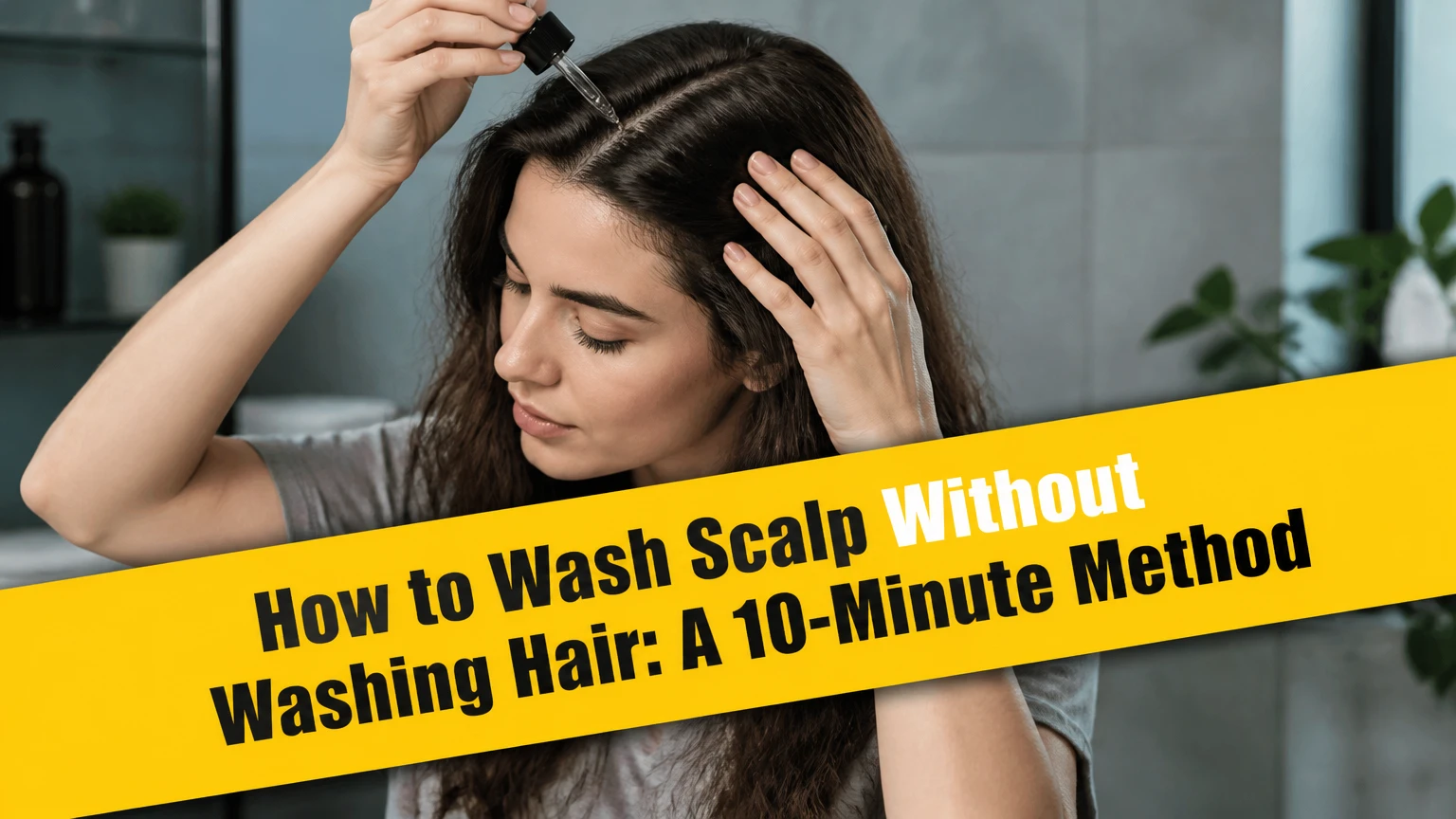
To wash your scalp without washing your hair, isolate the roots, wet only the scalp with lukewarm water, apply a small amount of shampoo, rinse downward, and dry the roots completely. For a water-free refresh, use dry shampoo, a scalp wipe, or a suitable micellar product, understanding that these options refresh rather than fully cleanse.
Key facts at a glance
A targeted water wash usually takes 10-15 minutes and removes more sweat, sebum, and residue than dry shampoo.
Dry shampoo absorbs visible oil but does not remove accumulated cleanser, sweat salts, skin flakes, or microorganisms.
Keeping the mid-lengths and ends dry reduces unnecessary water exposure, but it does not eliminate the need for periodic full washing.
Damp roots should be dried promptly because prolonged moisture can increase odor, irritation, and styling problems.
A scalp wipe is useful after exercise or while traveling, but it cannot reach every area of a dense scalp.
Persistent itching, greasy scale, painful bumps, or hair loss needs medical assessment rather than repeated cosmetic refreshing.
What Does Scalp-Only Washing Mean?
Scalp-only washing means cleansing the skin under the hair while deliberately minimizing water and shampoo contact with the mid-lengths and ends. The practice is useful when roots are sweaty or oily but the lengths are dry, curly, color-treated, braided, or difficult to restyle.
The scalp produces sebum through sebaceous glands and accumulates sweat, shed skin cells, styling residue, environmental particles, and sometimes medicated-product residue. Hair lengths accumulate a different mixture: conditioner, oil transferred from the hands, silicone or polymer styling products, minerals, and mechanical wear.
Those materials require different treatment. Shampoo belongs primarily on the scalp because surfactants remove oil from skin; conditioner belongs mainly on the lengths because it reduces friction along the hair shaft. A scalp-only wash therefore changes the distribution of cleansing rather than abandoning normal hair hygiene.
The practice is not a treatment for every scalp condition. A person with seborrheic dermatitis, psoriasis, folliculitis, or an infection may need a medicated shampoo applied across affected areas and left on for a specified contact time.
What scalp-only washing does not do
Scalp-only washing does not fully remove product film from the lengths, refresh the ends, or replace every full wash. It also does not sterilize the scalp. The goal is targeted cleansing between ordinary wash days, not permanent avoidance of water.
Repeated wetting and drying can contribute to swelling and contraction of the fiber, often called hygral fatigue, especially when hair is porous or chemically processed. However, avoiding all water is not automatically healthier: sebum, sweat, and styling residue can irritate the scalp when they remain for too long.
How Does a Targeted Water Wash Work?
A targeted water wash uses physical isolation and downward water control to clean exposed roots while a secured bundle protects the lengths. The most important variables are a tight waterproof barrier, low water pressure, a small shampoo dose, and complete root drying.
Before you start
| Requirement | Typical specification | Why it matters |
|---|---|---|
| Total time | 10-15 minutes | Allows washing and root drying |
| Water temperature | Lukewarm, about 32-38°C | Reduces scalp irritation and color bleeding |
| Shampoo quantity | 2-5 mL for short or medium hair | Limits residue and unnecessary spread |
| Root drying | 3-8 minutes on cool or low heat | Prevents prolonged dampness |
| Tools | Clips, waterproof tie, small cap, towel | Keeps the lengths isolated |
| Best location | Sink or handheld shower | Gives directional water control |
Use a handheld showerhead if available. A fixed overhead shower makes it harder to keep the bun dry, particularly with thick hair or a small shower cap.
Step 1: Detangle and separate the lengths
Brush or finger-detangle the hair gently before adding water. Divide the hair at the point where the oily or sweaty scalp meets the drier lengths, then gather the mid-lengths and ends into a high bun or several compact sections.
Secure the bundle with a soft waterproof tie. Do not pull tightly enough to create scalp pain, because traction can worsen breakage and tenderness around the hairline.
Success checkpoint: The exposed hairline, part lines, crown, and nape are reachable without pulling the protected hair bundle apart.
Common mistake: Starting with a loose ponytail. Water travels through a loose bundle and wets the ends before the scalp is clean.
Step 2: Seal the hair lengths
Cover the bun with a small shower cap, reusable silicone cap, or clean plastic barrier. Tuck loose strands under the edge and check the nape, where water commonly enters first.
For very long or dense hair, use two protected sections rather than one oversized bun. A large bundle is heavy, difficult to seal, and more likely to collapse into the sink.
Success checkpoint: The outside of the covering feels dry after a test splash near the scalp.
Common mistake: Wrapping only the ends. The mid-lengths can still absorb water through exposed sides of the bundle.
Step 3: Wet only the exposed scalp
Lean over a sink and direct lukewarm water onto the scalp in short passes. Start at the hairline, then clean the part lines, crown, temples, and nape. Keep the nozzle close enough for precision, but use gentle pressure.
Do not flood the entire head. Saturate the skin and roots enough to distribute shampoo, while keeping the protected bundle above or away from the water stream.
Success checkpoint: The scalp feels evenly wet, but the covered lengths remain dry when touched through the barrier.
Common mistake: Tilting the head backward under a faucet. That sends water through the roots and down the lengths.
Step 4: Apply shampoo to the scalp
Place 2-5 mL of shampoo on wet fingertips, not directly in one concentrated spot. Press fingertips between the hair sections and massage the skin for approximately 60-120 seconds using small circular movements.
Use the pads of the fingers rather than fingernails. A gentle scalp massage loosens oil and residue without creating scratches that can sting when shampoo reaches them.
Success checkpoint: The scalp feels slippery and clean, with light lather distributed across the intended zones.
Common mistake: Using a full palmful of shampoo. Extra cleanser is harder to rinse from dense roots and may leave a tight, dry sensation.
Step 5: Rinse downward and dry the roots
Rinse with the water stream aimed from the scalp toward the sink, not toward the protected bun. Lift each section briefly so water can reach the skin, then stop as soon as the shampoo no longer feels slippery.
Blot the roots with a microfiber towel. Use a hair dryer on cool or low heat for 3-8 minutes, moving continuously around the hairline, crown, and nape.
Success checkpoint: The scalp feels clean, the roots are dry to the touch, and no shampoo film remains.
Common mistake: Air-drying under a cap or towel. Trapped warmth and moisture can increase odor and leave roots flattened.
Which Method Should You Use?
The best scalp-refreshing method depends on whether the scalp has oil, sweat salts, styling residue, or visible scale. A partial water wash offers the deepest routine cleansing, while dry shampoo is fastest but primarily cosmetic.
| Method | Typical time | Approximate cost | Cleansing reach | Main limitation |
|---|---|---|---|---|
| Partial water wash | 10-15 minutes | $0 with existing shampoo | Removes surface oil, sweat, and shampoo-soluble residue | Lengths may get wet |
| Scalp wipe | 2-5 minutes | $5-$20 per pack | Removes sweat and odor from reachable skin | Misses dense or covered areas |
| Micellar scalp product | 5-10 minutes | $8-$30 per bottle | Lifts light oil and salts from part lines | May require rinsing |
| Loose powder | 3-5 minutes | $5-$25 per container | Absorbs surface oil at roots | Leaves powder and does not wash |
| Aerosol dry shampoo | 3-5 minutes | $6-$30 per can | Absorbs oil over broad root areas | Fragrance, propellant, or residue may irritate |
When is dry shampoo appropriate?
Dry shampoo is appropriate for a short cosmetic extension between washes when the scalp has mild oil but no heavy sweat, visible scale, or sticky product buildup. Starches such as rice, corn, or tapioca can absorb some surface sebum, making roots look less oily.
Apply a small amount to separated roots, hold an aerosol approximately 20-25 cm away, wait 1-2 minutes, then massage and brush lightly. Fine hair often needs less product than thick hair because residue remains more visible.
Dry shampoo does not rinse away sweat salts or remove dead skin. The American Academy of Dermatology Association describes dry shampoo as a product that absorbs oil, but dermatologists continue to recommend regular washing because absorption is not the same as cleansing.
A practical rule is to use dry shampoo for one or two refreshes, then perform a water-based scalp wash. Stop sooner if itching, tenderness, odor, or powdery buildup develops.
When are wipes better?
Scalp wipes work best after a workout, during travel, or around a protective style where pouring water is inconvenient. Choose a fragrance-free product when possible and avoid vigorous scrubbing, which can abrade sensitive skin.
Part the hair with your fingers, press the wipe onto the hairline and nape, then work through exposed part lines. Let the scalp dry before covering it with a hat, scarf, wig, or helmet.
Wipes are not a substitute for shampoo after heavy sweating. They remove some surface residue mechanically, but they cannot thoroughly clean the skin beneath dense hair or remove substantial styling film.
Is micellar water safe for the scalp?
Micellar water can lift light oil and sweat from exposed scalp skin, but ordinary facial micellar water is not automatically suitable as a leave-on scalp cleanser. Formulas differ in surfactants, preservatives, fragrance, oils, and intended rinse instructions.
Select an oil-free, fragrance-light product labeled for scalp or hair when possible. Apply it to a cotton pad or nozzle, press along a small part line, and avoid saturating the roots. Follow the product label about rinsing.
Salicylic acid scalp tonics may loosen scale and oil, but they can sting irritated skin and should not be layered with several exfoliating products. Witch hazel and tea tree oil are not universally soothing; both can trigger irritation or allergic contact dermatitis in some users.
How Should You Adapt the Method to Your Hair?
Hair texture, chemical treatment, scalp oil production, and the presence of extensions determine whether water, powder, or a wipe offers the best trade-off. The protected lengths need the most care when they are porous, curly, bleached, or repeatedly heat-styled.
| Hair or scalp situation | Preferred method | Typical frequency | Adjustment |
|---|---|---|---|
| Fine, straight, oily roots | Partial wash or light aerosol | Every 1-2 days as needed | Use 1-2 mL shampoo and minimal powder |
| Curly or coily lengths | Targeted water wash | Every 3-7 days, depending on scalp | Use multiple protected sections |
| Bleached or porous hair | Scalp wipe or partial wash | As needed between full washes | Keep water off ends and dry roots quickly |
| Braids, locs, or weave | Nozzle tonic or scalp wipe | After sweat or every 3-7 days | Follow the style provider’s maintenance instructions |
| Daily exercise | Partial wash after heavy sweat | Same day when possible | Prioritize hairline, crown, and nape |
| Sensitive or eczema-prone scalp | Fragrance-free gentle shampoo | Individualized | Patch-test new leave-on products |
Curly, coily, and textured hair
Textured hair often benefits from protecting the lengths because repeated wetting can increase frizz, shrinkage, tangling, and styling time. A targeted wash works well when the hair is divided into four or more small protected sections instead of one large bun.
Powder can appear gray or chalky on dark hair and may cling to oils or styling creams. A wipe or carefully applied scalp cleanser is often easier to distribute, but neither should replace a proper wash when sweat or buildup is substantial.
Braids, locs, wigs, and extensions
Protective styles make scalp access more important and full washing more complicated. Use the exposed parts or grid as the application map, then direct a small amount of cleanser to the skin rather than coating the braid, loc, extension bond, or wig hair.
Avoid saturating sewn, glued, or bonded systems unless the manufacturer or stylist permits water. Excess moisture can prolong drying, loosen adhesive, increase odor, or encourage matting.
Tea tree oil is sometimes included in scalp products, but “antimicrobial” does not mean risk-free. Never apply concentrated essential oil directly to the scalp.
What Are the Costs and Time Requirements?
A targeted water wash costs nothing beyond existing products and usually takes 10-15 minutes. Water-free options typically cost more per use, with aerosol dry shampoo often costing $6-$30 and wipes approximately $5-$20 depending on pack size and brand.
| Item | Typical quantity per use | Typical price | Approximate uses |
|---|---|---|---|
| Gentle shampoo | 2-5 mL | $8-$25 per bottle | 20-50 targeted washes |
| Aerosol dry shampoo | 1-3 seconds per section | $6-$30 per can | 10-30 applications |
| Powder dry shampoo | 0.25-1 teaspoon | $5-$25 per container | 20-60 applications |
| Scalp wipes | 1-2 wipes | $5-$20 per pack | 10-30 refreshes |
| Micellar scalp product | 5-15 mL | $8-$30 per bottle | 10-30 applications |
| Microfiber towel | 1 towel | $5-$15 | Reusable for months |
These are typical retail ranges in the United States, not fixed prices. Local pricing varies by brand, pack size, salon distribution, and whether a product is medicated.
What Problems Can Happen?
The most common failures are accidental wetting of the lengths, incomplete root drying, excessive product, and treating a scalp disease as ordinary oiliness. Each problem has a different correction, so adding more dry shampoo is often the wrong response.
| Problem | Likely cause | Immediate correction | Prevention |
|---|---|---|---|
| Wet ends | Loose bun or backward rinse | Blot and dry the lengths separately | Use two sealed sections |
| White residue | Powder applied too heavily | Massage, brush, or use a damp cloth | Apply smaller amounts from 20-25 cm |
| Itchy scalp | Fragrance, alcohol, acids, or residue | Stop the product and rinse when possible | Choose fragrance-free formulas |
| Oily roots remain | Too little water-based cleansing | Perform a partial shampoo wash | Do not layer powder repeatedly |
| Sour odor | Sweat and dampness trapped at roots | Wash and dry the scalp fully | Dry after exercise |
| Tender bumps | Friction, occlusion, or follicle inflammation | Stop scratching and heavy products | Seek care if bumps persist |
Why does the scalp still feel dirty?
A scalp can remain greasy after dry shampoo because the powder has absorbed oil without removing it. Sweat salts, dead skin, waxes, gels, and styling polymers may remain attached to the scalp even when the roots look temporarily matte.
Use a partial water wash when the scalp feels coated, develops odor, or has visible residue. Clarifying shampoo can help with stubborn styling buildup, but frequent use may worsen dryness and should match the product’s instructions.
Can scalp-only washing cause dandruff?
Scalp-only washing does not inherently cause dandruff, but inadequate cleansing can allow oil, scale, and product residue to accumulate. Dandruff is commonly associated with seborrheic dermatitis and sensitivity to scalp yeast, while psoriasis, eczema, and contact dermatitis can look similar.
Overusing dry shampoo, scratching, or applying fragranced tonics can worsen irritation. If flakes are persistent, yellow, thick, painful, or accompanied by redness, use a dermatologist-recommended treatment rather than relying on wipes or powder.
When should you stop home refreshing?
Seek medical advice for persistent itching, pus-filled bumps, spreading redness, thick plaques, bleeding, sudden shedding, or patchy hair loss. A cosmetic scalp refresh cannot diagnose fungal infection, psoriasis, allergic contact dermatitis, or scarring alopecia.
A dermatologist may recommend ingredients such as ketoconazole, selenium sulfide, zinc pyrithione where available, salicylic acid, or a topical anti-inflammatory, depending on the diagnosis. Treatment shampoos usually require contact with the scalp for several minutes, so a quick root wipe may not provide the intended effect.
Expert Rules for Better Results
Clean the scalp, not the hair. Shampoo spread through the lengths increases friction and can leave porous ends rough. Applying cleanser to fingertips and pressing between sections gives better control than rubbing a large amount over the whole head.
Drying is part of cleansing. Water removes the cleanser, but drying determines whether the roots remain comfortable under a cap, scarf, helmet, or protective style. Cool or low heat is preferable to high heat held in one place.
Sweat changes the decision. Sebum alone may be handled briefly with powder, but heavy exercise leaves water-soluble salts and moisture that powder cannot remove. After intense sweating, choose a targeted rinse whenever the schedule and hairstyle allow it.
Do not confuse low frequency with low need. Some curly or coily routines intentionally space full washes several days apart, while oily scalps may need cleansing more often. Scalp comfort, odor, scale, and residue are better signals than a universal calendar.
FAQ
Can I wash only my roots in the shower?
Yes. Clip or tie the lengths into a waterproof bundle, turn your head so the scalp faces the water, and use a handheld showerhead if possible. Apply shampoo only to exposed roots, rinse toward the drain, and dry the scalp before releasing the protected hair. A fixed shower stream requires more caution.
How often can I wash my scalp without washing the lengths?
Many people can use a targeted wash once or several times between full washes, but the appropriate frequency depends on oil production, exercise, styling products, and scalp conditions. Wash sooner when odor, itching, visible scale, or sticky buildup appears. Hair lengths still need periodic cleansing.
Can I use baby powder instead of dry shampoo?
Baby powder can absorb oil, but it may leave visible residue, transfer onto clothing, and become difficult to distribute through dense or dark hair. Inhaled loose powder also presents an avoidable respiratory exposure. A formulated dry shampoo used sparingly is generally easier to control.
Does washing the scalp help hair growth?
A clean scalp supports a suitable environment for normal follicle function, but scalp-only washing does not independently make hair grow faster. Hair growth is influenced by genetics, hormones, nutrition, inflammation, medications, and overall health. New patchy loss or rapid shedding warrants professional evaluation.
Can I sleep with damp roots after a partial wash?
It is better to dry the roots before sleeping, especially under dense hair, braids, a wig, or a satin bonnet. Dampness does not automatically cause infection, but trapped moisture can increase odor, irritation, frizz, and discomfort. Use cool or low heat and avoid high heat on one area.
Is a scalp rinse enough after a workout?
A water rinse may remove light sweat when the workout is short and the scalp is not oily. Heavy sweating, sunscreen near the hairline, styling products, or odor usually requires a small amount of shampoo and thorough drying. Dry shampoo alone is the least complete post-workout option.
The Bottom Line
To wash your scalp without washing hair, secure the lengths, expose the roots, use 2-5 mL of shampoo with lukewarm water, rinse downward, and dry the scalp completely in 10-15 minutes. Use dry shampoo only for brief oil control, and choose wipes or micellar products for light, targeted refreshes. For persistent flakes, itching, bumps, odor, or hair loss, replace cosmetic shortcuts with medical assessment.