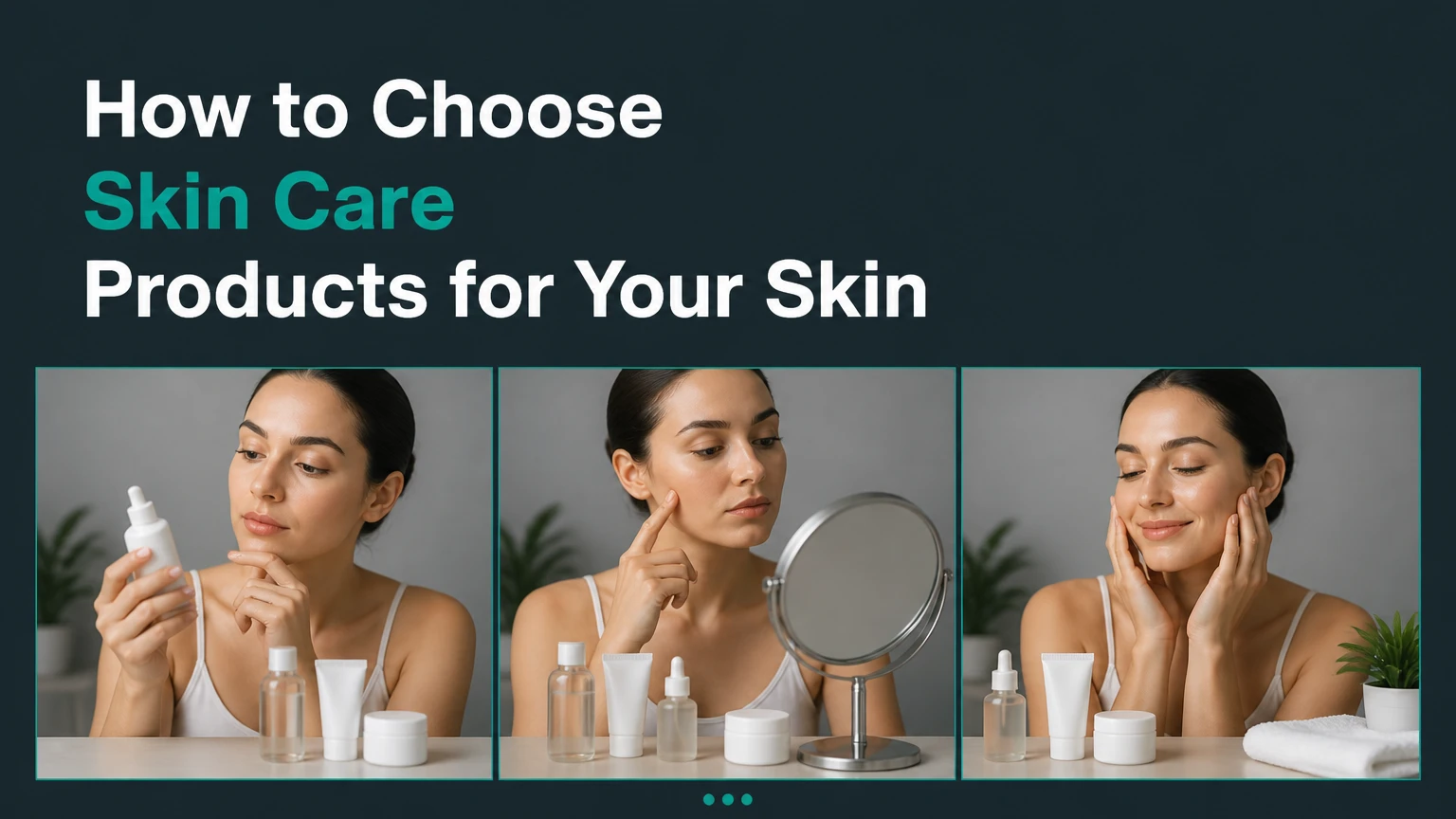
Choosing skin care products takes 7 steps: define your goal, identify skin type, match categories, read labels, patch test, introduce products, and evaluate results. Allow 30-60 minutes to choose and test your routine, then 7-10 days for thorough safety screening. The biggest success factor is introducing one meaningful change at a time.
Before You Start
Gather the items below before comparing products. You do not need an expensive device, a cabinet full of formulas, or professional equipment. A basic routine usually costs $25-$80, depending on brand, sunscreen size, and whether you add treatment products.
| Item | Quantity or specification | Typical cost | Purpose |
|---|---|---|---|
| Gentle cleanser | 1 fragrance-free or mild formula | $6-$18 | Removes oil, sunscreen, and debris |
| Clean towel | 1 soft, freshly washed towel | Already owned to $10 | Dries without aggressive rubbing |
| Mirror | 1 well-lit mirror | Already owned to $30 | Helps inspect shine, flakes, and redness |
| Moisturizer | 1 face product matched to texture preference | $8-$25 | Supports the skin barrier |
| Sunscreen | 1 broad-spectrum SPF 30 or higher | $10-$30 | Protects against ultraviolet radiation |
| Treatment product | 0-1 active ingredient initially | $8-$30 | Addresses acne, pigmentation, or texture |
| Patch-test bandage | 1, optional and breathable | Under $5 | Covers a small test area |
| Product labels | Full ingredient list and directions | Included | Confirms formula, warnings, and use |
Have clean hands and avoid testing immediately after shaving, exfoliating, sun exposure, or a hot shower. If you have diagnosed rosacea, eczema, cystic acne, a known allergy, or a prescription regimen, treat this as general guidance and confirm product choices with a dermatologist.
| Step | Action | Time | Most common mistake |
|---|---|---|---|
| 1 | Define your primary goal | 5-10 minutes | Buying for several concerns at once |
| 2 | Identify your baseline skin type | 1 hour | Calling temporary tightness “dry skin” |
| 3 | Match product categories | 10-15 minutes | Choosing a texture instead of a function |
| 4 | Screen the ingredient label | 10 minutes | Trusting front-label marketing |
| 5 | Patch test each new product | 24 hours to 10 days | Testing several products simultaneously |
| 6 | Introduce and layer products | 1-2 weeks | Starting strong actives every day |
| 7 | Evaluate and adjust the routine | 2-8 weeks | Replacing products too quickly |
Step 1: Define Your Primary Skin Goal
Choose one primary skin concern and one supporting routine need before comparing products.
Write down the result you want, such as reducing occasional breakouts, relieving tightness, fading uneven tone, reducing shine, or preventing sun damage. Then identify the minimum categories required: cleanser, moisturizer, and sunscreen are usually enough for a starter routine; add one treatment only when the basic routine feels comfortable.
Do not select products because they contain the largest number of ingredients. A product should have a clear job, a suitable texture, and directions you can follow consistently. Set a practical budget before shopping, because a reliable low-cost cleanser and moisturizer can be more useful than a premium formula used inconsistently.
You’ll know it worked when you can state your plan in one sentence, such as, “I need a gentle cleanser, light moisturizer, and SPF 30 sunscreen for oily, acne-prone skin.”
Common mistake: trying to treat acne, wrinkles, pores, dark spots, and dryness at the same time. Avoid this by choosing one treatment category first and postponing other active ingredients until your skin is stable.
Step 2: Identify Your Baseline Skin Type
Wash your face with a gentle cleanser, leave it bare for 1 hour, and observe the skin in a mirror.
Use lukewarm water, apply a small amount of mild cleanser with clean fingertips for about 20-30 seconds, and rinse thoroughly. Pat dry with a clean towel. Do not apply toner, serum, moisturizer, oil, or sunscreen during the observation period. After 1 hour, inspect the forehead, nose, chin, and cheeks under consistent lighting.
| Observation after 1 hour | Likely type | Product implication |
|---|---|---|
| Comfortable, balanced, few visible concerns | Normal | Most lightweight or medium textures may work |
| Shine across most areas, visible pores | Oily | Gel textures and non-comedogenic moisturizers often feel better |
| Tight, rough, flaky, or uncomfortable | Dry | Cream cleanser and richer barrier-supporting moisturizer may help |
| Shine in the T-zone, dry or comfortable cheeks | Combination | Use different textures by facial area if needed |
| Redness, stinging, itching, or rapid flushing | Sensitive or reactive | Prioritize short, fragrance-free formulas and slow introduction |
Skin type is not the same as skin condition. Acne can occur with dry or oily skin, and sensitivity can occur with any type. Tightness after a harsh cleanser may indicate irritation or dehydration rather than naturally dry skin, so repeat the test on another day if the first result follows a product reaction.
You’ll know it worked when your observations are consistent across two ordinary days and you can describe each facial zone separately.
Common mistake: judging skin immediately after cleansing. Wait the full hour, because water evaporation and cleanser residue can temporarily change how the skin feels.
Step 3: Match Product Categories to Your Skin
Choose a cleanser, moisturizer, sunscreen, and optional treatment whose texture and ingredients fit your goal and baseline skin behavior.
Start with the basic routine before adding a treatment. For oily skin, a gel or gentle foaming cleanser can remove excess sebum, while a lightweight lotion or gel-cream may feel more comfortable. Salicylic acid can help some acne-prone skin, but it is an active exfoliant and may irritate sensitive or dry skin.
Dry skin often tolerates a creamy, non-foaming cleanser and a cream moisturizer containing ingredients such as glycerin, ceramides, petrolatum, shea butter, or jojoba oil. Sensitive skin generally benefits from fragrance-free, essential-oil-free formulas with a short ingredient list. Aloe, chamomile, and calendula may feel soothing, but botanical ingredients can still trigger allergy.
| Skin behavior or concern | Cleanser direction | Moisturizer direction | Treatment starting point |
|---|---|---|---|
| Oily or acne-prone | Gel or mild foaming cleanser | Lightweight, oil-free or non-comedogenic | Salicylic acid, introduced slowly |
| Dry or tight | Cream or lotion cleanser | Cream with humectants and barrier lipids | Hydration first |
| Combination | Gentle gel or lotion cleanser | Light layer on T-zone, richer layer on cheeks | Treat only the affected zones |
| Sensitive or reactive | Minimal, fragrance-free cleanser | Fragrance-free barrier cream | No active until skin is calm |
| Uneven tone | Gentle cleanser | Comfortable moisturizer | One pigment-focused active at a time |
Choose broad-spectrum SPF 30 or higher every morning. The American Academy of Dermatology recommends broad-spectrum, water-resistant sunscreen with SPF 30 or higher for exposed skin. Reapply according to the label, especially after swimming, sweating, or toweling off.
You’ll know it worked when every selected product has one defined function, feels suitable for your driest area, and does not duplicate the same strong active.
Common mistake: assuming “natural,” “clean,” or “dermatologist tested” guarantees tolerance. Those phrases do not replace reading the full ingredient list or patch testing.
Step 4: Screen the Label Before Buying
Read the full ingredient list, directions, warnings, and package date before placing the product in your routine.
Check the first several ingredients for the product’s main function. Humectants such as glycerin attract water, emollients soften the surface, and occlusives such as petrolatum reduce water loss. Look for “fragrance-free” rather than “unscented” if fragrance sensitivity is a concern, because unscented products can contain masking fragrance.
For treatment products, identify the active ingredient and its concentration when the label provides one. Common examples include salicylic acid for acne, retinol for cell-turnover support, and alpha hydroxy acids such as glycolic or lactic acid for exfoliation. Do not begin retinol and an AHA or BHA on the same night. The combination can increase dryness and irritation, especially during the first weeks.
Confirm whether the product is rinse-off or leave-on, whether it contains a known personal allergen, and whether the packaging protects light-sensitive ingredients. Check the expiration date and avoid products with changed smell, color, or separation.
You’ll know it worked when you can identify the product’s active, usage frequency, storage instructions, and primary warning without relying on advertising language.
Common mistake: buying several products with different brand names but the same exfoliating function. Write the active ingredients in a note before purchasing.
Step 5: Patch Test Every New Product
Apply each new product to a quarter-sized area twice daily for 7-10 days before using it on your face.
Clean a small area on the underside of your arm or behind the ear. Apply a pea-sized amount, or the same thin application thickness you would use on the face. Use a clean bandage only if the product instructions permit it and the adhesive does not irritate you.
For a wash-off cleanser, apply it for about 5 minutes, then rinse. For a leave-on serum, moisturizer, or sunscreen, leave it on according to its normal directions. Repeat twice daily when the label allows. A 24-hour check may identify an immediate reaction, but the American Academy of Dermatology recommends testing skin care products on a small area twice daily for 7-10 days to detect delayed reactions.
Do not patch test multiple new formulas on overlapping areas. Photograph the area before testing if redness is difficult to assess. Stop immediately for swelling, hives, blistering, intense burning, or breathing difficulty. Seek urgent medical care for breathing difficulty or swelling of the lips, tongue, or throat.
You’ll know it worked when the test area remains free from new itching, swelling, hives, blistering, or persistent redness through the chosen test period.
Common mistake: treating a patch test as proof that a product cannot irritate the face. Facial skin may react differently, and a patch test cannot guarantee that a formula will not clog pores.
Step 6: Introduce and Layer Products Gradually
Add one new product at a time and apply products from the thinnest texture to the thickest.
Begin with cleanser, moisturizer, and sunscreen. Use cleanser and moisturizer as directed, then apply sunscreen as the final morning skin care step. At night, cleanse, apply a watery serum if needed, use a treatment, and finish with moisturizer. Allow each layer to settle briefly if pilling occurs, but do not wait for a fixed number of minutes unless the label requires it.
Introduce one new product every 7-14 days, especially when it contains retinol, glycolic acid, lactic acid, or salicylic acid. Start an active 1-2 nights per week, then increase only if the skin remains comfortable. Do not combine retinol with AHAs or BHAs at the beginning. Use moisturizer before or after a retinoid if the formula causes dryness.
Apply enough sunscreen to cover the face and neck. Approximately half a teaspoon is a commonly cited practical amount for those areas, but facial sunscreen instructions vary; the AAD’s guidance for the face is approximately a nickel-sized amount, so follow the product label and use a generous, even layer.
You’ll know it worked when the routine spreads without rolling, leaves no prolonged burning, and you can identify which product was used if a reaction appears.
Common mistake: applying thick cream before a watery serum. Reverse the order, or use fewer layers if products pill.
Step 7: Evaluate Results and Adjust One Variable
Keep the routine consistent, record reactions, and change only one product or frequency at a time.
Record the product name, active ingredient, date introduced, application frequency, and any redness, itching, dryness, or breakouts. A moisturizer may improve comfort within days, while acne, pigmentation, or texture changes commonly require several weeks of consistent use. Do not keep increasing an active because results are not immediate.
If mild dryness occurs, reduce an active to once weekly, add moisturizer, and avoid other exfoliants until comfort returns. If breakouts persist, stop the newest product first and observe whether the pattern improves. If the product causes burning, swelling, hives, blistering, or severe inflammation, wash it off and do not retry it without medical advice.
Use a cool compress for uncomfortable redness and apply plain petroleum jelly to protect irritated skin. If symptoms persist, simplify the routine to gentle cleansing, moisturizer, and sunscreen, then consult a board-certified dermatologist.
You’ll know it worked when your skin remains comfortable, the routine is easy to repeat, and your chosen treatment shows gradual improvement without persistent irritation.
Common mistake: changing three products after one bad week. Eliminate the newest product first, then allow the skin to settle before testing another formula.
Common Mistakes and How to Fix Them
| Failure mode | Likely cause | Recovery |
|---|---|---|
| Burning or intense stinging | Irritating active, fragrance, damaged barrier | Rinse, stop the product, use a bland moisturizer, seek care if severe |
| Tightness after cleansing | Harsh cleanser, hot water, over-washing | Use lukewarm water and a gentler cleanser once or twice daily |
| New breakouts | Comedogenic formula, too many changes, irritation | Stop the newest product and track the skin for several days |
| Peeling and redness | Too much retinol or acid | Pause actives, moisturize, restart at lower frequency only when calm |
| Sunscreen pilling | Too many layers or insufficient settling | Reduce layers, use less product underneath, apply sunscreen evenly |
| Oily skin becomes uncomfortable | Skipping moisturizer or over-cleansing | Add a lightweight, non-comedogenic moisturizer |
Do not dismiss persistent redness as a normal adjustment. Mild dryness can occur with some actives, but swelling, hives, blistering, or severe pain requires prompt medical advice.
Variations for Different Situations
If You Have Acne-Prone Skin
Keep the cleanser gentle and add only one acne-focused active. Salicylic acid may help unclog pores, while benzoyl peroxide can address acne-causing bacteria but may dry skin and bleach fabrics. Start with the lowest practical frequency allowed by the label. Avoid scrubs, aggressive brushes, and several acne actives at once.
If You Have Eczema or Rosacea
Prioritize barrier support over treatment intensity. Choose fragrance-free products with minimal ingredients, patch test for the full 7-10 days, and avoid applying new formulas to actively inflamed areas. Prescription treatment may be needed, so ask a dermatologist before using retinoids, exfoliating acids, or essential oils.
If You Are Pregnant or Breastfeeding
Do not assume every “natural” product is suitable. Ask your obstetric clinician or dermatologist about retinoids, high-strength salicylic acid, hydroquinone, and prescription treatments before use. A simple cleanser, moisturizer, and broad-spectrum SPF 30 or higher routine is the safer starting framework until you receive individualized advice.
If You Cannot Identify Your Skin Type
Skip the one-hour classification and start with a fragrance-free gentle cleanser, basic moisturizer, and sunscreen. Use the routine consistently for several days, then assess whether the skin feels oily, tight, flaky, or comfortable. Product tolerance and observed behavior matter more than forcing the skin into one label.
If You Need the Lowest-Cost Routine
Buy one cleanser, one moisturizer, and one broad-spectrum SPF 30 or higher product. Select treatment products later. Compare the cost per ounce, return policy, expiration information, and directions rather than choosing the cheapest package price.
How Long Does It Take and What Does It Cost?
Choosing products usually takes 30-60 minutes, including the one-hour skin observation if you begin from scratch. A thorough patch test takes 7-10 days, although the full routine can be prepared before that test finishes. Treatment results vary by concern and formula, so judge comfort first and visible improvement later.
| Routine level | Products | Typical total cost | Practical use |
|---|---|---|---|
| Basic | Cleanser, moisturizer, sunscreen | $25-$60 | Best starting point |
| Basic plus treatment | Basic routine plus one active | $35-$90 | Addresses one defined concern |
| Sensitive-skin trial | Small or travel-size basic products | $20-$60 | Reduces waste during testing |
| Premium | Higher-priced versions of the same categories | $100+ | Not required for a sound routine |
Prices vary by country, retailer, package size, and prescription status. Expensive packaging does not prove better tolerance or stronger results.
Frequently Asked Questions
Should I choose products by skin type or skin concern first?
Choose the routine goal first, then filter products by skin type and sensitivity. A person with oily skin and eczema needs a different cleanser from someone with oily, resilient skin. Skin type guides texture and comfort, while the concern determines whether a treatment is appropriate.
Can I use the same products morning and night?
You can usually use the same gentle cleanser and moisturizer if they feel comfortable. Sunscreen belongs in the morning and should be reapplied as directed. Treatment products may be better at night, particularly retinoids or exfoliating acids, because their directions and irritation risks differ.
How many skin care products should a beginner use?
Start with three categories: cleanser, moisturizer, and sunscreen. Add one treatment only after the basic routine feels comfortable. This approach makes reactions easier to trace and prevents overlapping actives from creating unnecessary dryness, redness, or peeling.
Is a higher concentration always better?
No. A higher concentration can increase irritation without improving adherence or results. Begin with the lowest effective strength available for your concern, follow the label, and increase frequency only when the skin remains comfortable. Prescription-strength products require professional instructions.
What is the difference between irritation and an allergic reaction?
Irritation often causes burning, dryness, tightness, or redness where the product was applied. An allergy may cause itching, hives, swelling, or a spreading rash and can appear after repeated exposure. Stop the product for either reaction, but seek urgent care for breathing problems or facial swelling.
When should I replace a product?
Replace it when it expires, changes smell or color, separates unexpectedly, or no longer has intact packaging. Replace a routine product for persistent irritation, not merely because visible results take time. Keep a record of introduction dates so you can distinguish product age from skin changes.
Conclusion
The safest way to choose skin care products is to define one goal, observe your baseline skin, match simple product categories, read the label, patch test, introduce one change, and evaluate consistently. Start with a gentle cleanser, moisturizer, and broad-spectrum SPF 30 or higher, then adjust from evidence rather than marketing. This method makes how to choose skin care products practical, traceable, and safer for first-time shoppers.