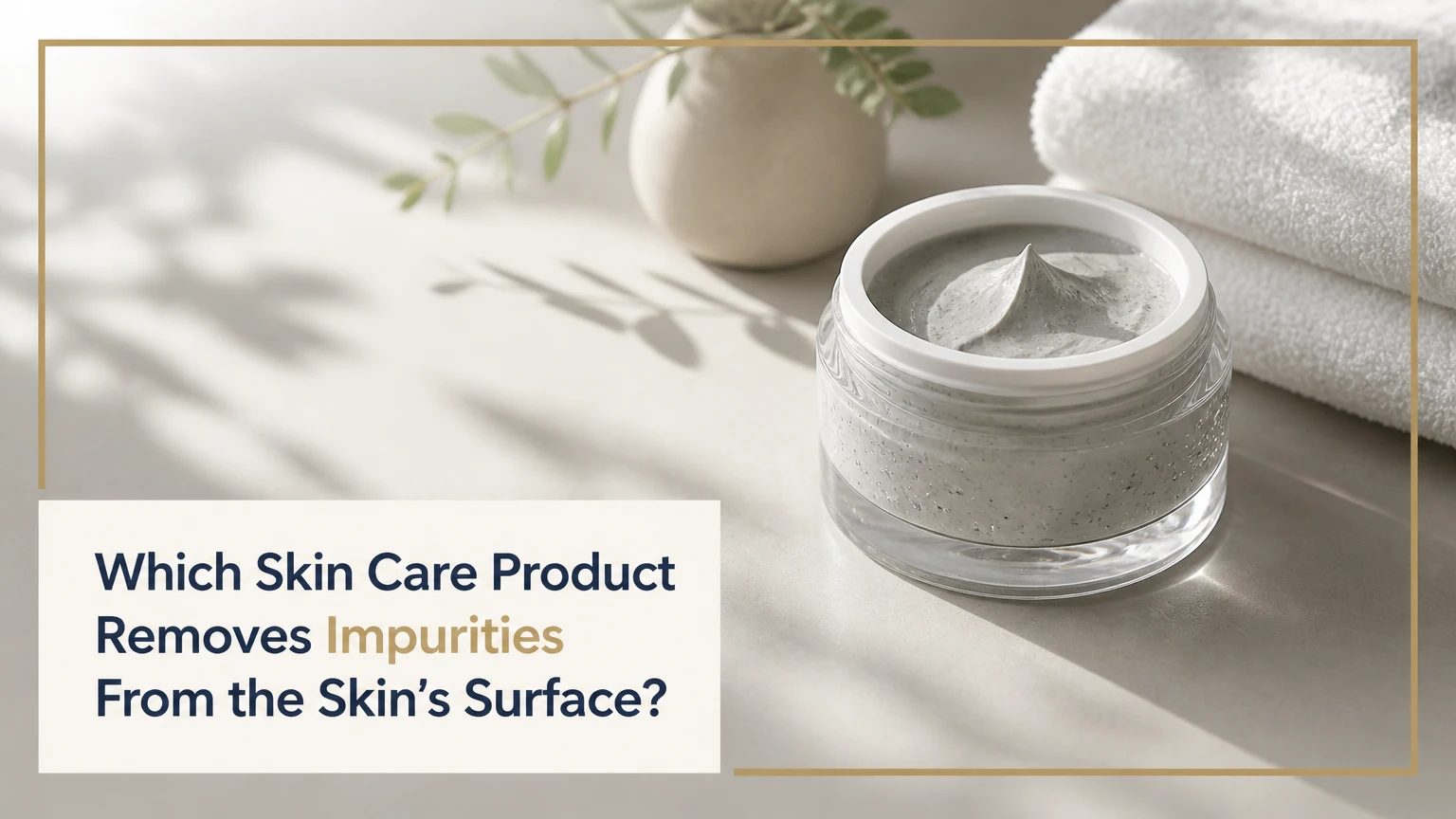
A facial cleanser is the skin care product designed to remove surface impurities such as dirt, excess sebum, makeup, sunscreen residue, sweat, and airborne particles. A gentle cleanser loosens these substances without excessive friction, helping maintain the skin barrier while reducing residue that can contribute to blocked pores.
Key Facts at a Glance
- Facial cleanser is the primary product for removing everyday surface impurities.
- Cleansing oil or balm dissolves oil-soluble makeup and water-resistant sunscreen more effectively than water alone.
- Micellar water can remove light makeup and surface residue, but rinsing is preferable when the product leaves a film.
- Lukewarm water and fingertip pressure reduce irritation compared with hot water or abrasive scrubbing.
- Most people need facial cleansing once or twice daily, with an additional wash after heavy sweating.
- A cleanser cannot physically remove established blackheads, treat every acne cause, or replace sunscreen and moisturizer.
What Product Removes Impurities From the Skin’s Surface?
A facial cleanser removes impurities from the skin’s surface. The cleanser’s surfactants surround oil, sweat, particulate dirt, and cosmetic residue so those substances can be lifted and rinsed away; oil cleansers dissolve oil-soluble materials before a water-based wash removes the remaining film.
The word “impurities” covers several different materials. Dust, sweat salts, and some water-soluble residue respond well to water-based cleansing. Sebum, foundation, waterproof mascara, and many sunscreen filters are oil-associated, so an oil, balm, or emulsifying cleanser may remove them more efficiently.
The American Academy of Dermatology recommends a “gentle, non-abrasive cleanser” for facial washing. That advice matters because the goal is removal of unwanted surface material, not removal of every lipid from the stratum corneum. A face that feels tight or squeaky after washing has often lost too much protective oil.
Facial cleanser is therefore different from an exfoliant. A cleanser mainly removes removable surface residue during a short rinse-off contact period. An exfoliant loosens or dissolves some corneocytes and may contain salicylic acid, alpha hydroxy acids, enzymes, or abrasive particles. Those products have different risks and should not be substituted automatically.
How Does Facial Cleanser Remove Dirt and Oil?
Facial cleanser removes residue through surfactant action, emulsification, and rinsing. Surfactant molecules have a water-compatible end and an oil-compatible end, allowing them to surround oily material and suspend it in water so the residue can leave the skin.
The cleanser must spread across the face without requiring hard pressure. A 30-60-second massage is usually enough for an ordinary wash, while longer rubbing rarely improves removal and can increase redness, stinging, or microscopic irritation.
Cleansers also vary in acidity. Healthy skin commonly has a mildly acidic surface environment, often described as approximately pH 4.5-5.5, although values vary by body site, age, humidity, and measurement method. A facial product formulated near the skin’s natural range may feel less stripping than a strongly alkaline soap.
Which impurities require which type of cleanser?
The appropriate cleanser depends on the impurity’s chemistry, not simply on whether the skin feels oily or dry. Water-based gels handle sweat and ordinary daily residue, while oil-based products are more useful for hydrophobic cosmetics and water-resistant SPF.
| Surface impurity | Most suitable first product | Typical contact time | Main limitation |
|---|---|---|---|
| Sweat and water-soluble dirt | Gentle gel cleanser | 20-40 seconds | Does not always dissolve waterproof SPF |
| Excess sebum | Gel or low-irritant foaming cleanser | 30-60 seconds | Strong formulas can increase tightness |
| Foundation and concealer | Cleansing balm, oil, or micellar water | 30-60 seconds | Heavy residue may need a second cleanse |
| Water-resistant sunscreen | Emulsifying oil or balm | 45-60 seconds | Non-emulsifying oils can leave a film |
Which Cleanser Matches Your Skin Type?
The best facial cleanser is the mildest formula that removes the day’s residue without causing persistent tightness, burning, scaling, or increased redness. Skin type provides a starting point, but current conditions matter more: dehydrated oily skin may need a gentler gel, while dry skin exposed to heavy makeup may need an oil-first step.
| Skin condition | Useful cleanser format | Ingredients or features to consider | Selection warning |
|---|---|---|---|
| Oily or combination skin | Low-fragrance gel or mild foam | Glycerin, niacinamide, non-stripping surfactants | Avoid washing repeatedly to chase shine |
| Dry or flaky skin | Cream, lotion, or cleansing balm | Ceramides, glycerin, fatty alcohols | Avoid high-fragrance, high-foam formulas |
| Sensitive or reactive skin | Minimal-ingredient cream or gel | Fragrance-free, non-abrasive, low-irritant formula | Patch test near the jaw before full use |
| Acne-prone skin | Gentle gel, optionally salicylic acid | Non-comedogenic label, salicylic acid when tolerated | Cleanser alone rarely controls moderate acne |
Is a foaming cleanser better than a cream cleanser?
A foaming cleanser is often more comfortable for oily skin, while a cream cleanser is often better tolerated by dry or sensitive skin. Neither format is universally superior because the surfactant system, fragrance, rinse behavior, and individual barrier condition determine whether cleansing is effective without irritation.
Foam volume is not a reliable measure of cleaning power. A highly foaming product can remove oil effectively, but excessive detergency may leave the face tight and increase the temptation to apply heavy products afterward. A low-foam cream cleanser can still remove sweat, sunscreen residue, and light makeup when used correctly.
What should acne-prone skin use?
Acne-prone skin generally benefits from a gentle, non-comedogenic cleanser used once or twice daily. A salicylic-acid cleanser may help reduce oil and follicular plugging, but its short contact time limits its effect compared with a leave-on treatment, and overuse can worsen irritation.
Facial cleanser cannot remove an acne lesion that has formed below the surface. It also cannot correct hormonal signaling, medication effects, picking, or occlusive hair products. Painful nodules, scarring, or acne that persists after several weeks of consistent care warrants assessment by a dermatologist.
How Should You Use a Facial Cleanser?
Use facial cleanser in seven steps and about two minutes of active time. Wash your hands, remove heavy cosmetics when necessary, wet the face with lukewarm water, massage a small amount gently for 30-60 seconds, rinse thoroughly, and pat dry with a clean towel.
Before you start
| Requirement | Typical amount or setting | Practical range | Why it matters |
|---|---|---|---|
| Hand washing | Soap and running water | 20 seconds | Removes transferable dirt and microbes |
| Water | Lukewarm water | About 32-38°C | Limits heat-related flushing and dryness |
| Water-based cleanser | Dime-sized dose | 1-2 mL | Covers face and jaw without excess waste |
| Balm or cleansing oil | Hazelnut-sized balm or 2-3 pumps | 1-3 mL | Dissolves makeup and water-resistant SPF |
Step 1: Wash your hands
Clean your hands with soap and water for approximately 20 seconds before touching your face. Fingertips can carry sunscreen, food oils, soil, and microbes that add residue during cleansing.
You will know this step worked when your hands feel free of visible grease and product. A common mistake is using hand sanitizer immediately before cleansing; residual alcohol or fragrance can sting facial skin.
Step 2: Pre-clean heavy makeup or sunscreen
Apply a cleansing balm or oil to dry skin when removing foundation, long-wear makeup, or water-resistant sunscreen. Massage for 45-60 seconds, add a small amount of water to emulsify the product if directed, then rinse or wipe away gently.
You will know it worked when mascara, foundation, and sunscreen no longer form visible streaks. Do not use a dry washcloth with force, because friction can cause more irritation than the cosmetic residue.
Step 3: Wet your face with lukewarm water
Splash the face with lukewarm water for approximately 5-10 seconds. Water softens surface residue and helps distribute the cleanser evenly.
You will know the face is ready when the skin is uniformly damp, not dripping. Very hot water can increase flushing and dryness, while icy water does not provide a special pore-closing benefit.
Step 4: Apply the cleanser
Dispense approximately 1-2 mL of facial cleanser, commonly a dime-sized amount, onto wet fingertips. Place the product on the forehead, cheeks, nose, chin, and jaw before spreading it across the face.
You will know the dose is adequate when a thin, even layer reaches the face without repeated scrubbing. Using a large quantity does not guarantee better cleaning and increases the chance of residue or dryness.
Step 5: Massage gently
Use the pads of two or three fingertips in small circular movements for 30-60 seconds. Cover the hairline, sides of the nose, chin, jaw, and neck, but keep cleanser away from the immediate eye surface unless the label identifies it as eye-safe.
You will know the step worked when the cleanser spreads smoothly and makeup residue visibly loosens. Pressing harder is the common mistake; light, consistent contact removes more safely than abrasive rubbing.
Step 6: Rinse completely
Rinse with lukewarm water for approximately 15-20 seconds, paying attention to the nostrils, hairline, jaw, and neck. Product left in creases can cause stinging or contribute to a sensation of residue.
You will know rinsing is complete when the skin feels clean but flexible rather than tight or squeaky. A soft, clean damp cloth can assist removal, but it should glide rather than scrub.
Step 7: Pat dry and moisturize
Pat the face with a dedicated clean towel for about 10 seconds, leaving the skin slightly damp if a moisturizer follows. Apply moisturizer soon after cleansing, particularly when the skin is dry, sensitive, or exposed to low humidity.
You will know the routine succeeded when the face has no visible residue and develops no persistent burning or tightness within several minutes. Repeated tightness signals a product or frequency problem, not a superior cleanse.
How Often Should You Wash Your Face?
Most people should cleanse once at night and optionally once in the morning, depending on oiliness, sweating, and overnight product use. A post-workout wash is reasonable when sweat and sunscreen remain on the skin, but repeated washing throughout the day can increase dryness and irritation.
| Situation | Suggested frequency | Product approach | Adjustment |
|---|---|---|---|
| Ordinary dry skin | Once nightly | Cream or lotion cleanser | Rinse with water in the morning if comfortable |
| Oily skin | Morning and night | Mild gel or foam | Reduce frequency if tightness develops |
| Heavy exercise | After each sweaty session | Gentle cleanser or thorough rinse | Reapply sunscreen afterward |
| Eczema-prone or reactive skin | Once nightly or as tolerated | Fragrance-free cream cleanser | Follow clinician guidance during flares |
The AAD’s face-washing guidance recommends limiting washing to twice daily and after sweating for many people. The practical exception is visible contamination or a clinician-directed routine. More washes do not equal cleaner pores when the extra friction damages the barrier.
What Is Better for Sunscreen, Makeup, and Waterproof Products?
Cleansing balm or oil is usually better than a single water-based wash for removing water-resistant sunscreen and long-wear makeup. Micellar water is convenient for light residue and travel, but a second rinse or gentle cleanser is preferable if micellar solution leaves a film or causes stinging.
| Removal method | Best use case | Typical time | Residue and irritation profile |
|---|---|---|---|
| Micellar water | Light makeup, travel, quick touch-up | 30-60 seconds | May leave surfactant film if not rinsed |
| Cleansing oil | Water-resistant SPF and foundation | 45-90 seconds | Efficient, but needs emulsifying or follow-up |
| Cleansing balm | Heavy makeup and dry-skin comfort | 45-90 seconds | Rich texture can feel occlusive |
| Water-based cleanser alone | Sweat and ordinary daily residue | 30-60 seconds | May leave waterproof products behind |
Double cleansing means using an oil or balm first, followed by a water-based cleanser. It is useful when a single wash leaves visible sunscreen or makeup, but it is unnecessary for every person every night and can be excessive for dry or reactive skin.
Micellar water is not automatically inferior. It can be a practical first step when water access is limited, although dragging a soaked cotton pad repeatedly across the skin creates avoidable friction. Press the pad against eye makeup for several seconds before wiping gently.
Can Cleanser Remove Blackheads and Clogged Pores?
Facial cleanser can remove surface oil and some loose material, but it cannot reliably extract established blackheads. Blackheads form when a follicle remains open and its contents oxidize; treating persistent comedones may require salicylic acid, a retinoid, professional extraction, or medical evaluation.
The dark color of a blackhead is not ordinary dirt sitting on top of the skin. Scrubbing harder therefore cannot solve the underlying follicular blockage. Aggressive pore strips and manual squeezing may produce short-term visible changes while increasing irritation, broken capillaries, or post-inflammatory marks.
A cleanser containing salicylic acid can be useful for some oily or acne-prone users, but irritation depends on concentration, frequency, and the rest of the routine. Introduce one active product at a time rather than combining multiple acids, scrubs, and retinoids immediately.
Facial Cleanser Versus Soap, Exfoliant, Toner, and Mask
Facial cleanser is the most appropriate routine product for ordinary surface impurities because it is designed for brief contact and rinsing. Bar soap, exfoliant, toner, and mask may have specific uses, but none is a universal substitute for a mild facial wash.
| Product | Primary function | Typical contact time | Can replace cleanser? |
|---|---|---|---|
| Facial cleanser | Removes sweat, oil, dirt, and cosmetics | 30-60 seconds | Yes, for routine washing |
| Body bar soap | Cleans skin through alkaline surfactants | 20-40 seconds | Usually no for facial use |
| Chemical exfoliant | Loosens dead-cell buildup or follicular plugs | Leave-on or 1-5 minutes | No, different purpose |
| Toner | Delivers hydrating or active ingredients | Leave-on | No, does not rinse impurities |
| Clay mask | Temporarily absorbs surface oil | 5-15 minutes | No, occasional adjunct only |
Traditional soap often has a higher pH than facial skin and can increase dryness for some users. A syndet bar labeled for facial use is a different category from ordinary alkaline soap and may be appropriate when its formula is fragrance-free and well tolerated.
Clay masks can absorb oil temporarily, but they do not remove all pollutants or replace daily cleansing. Toners may add humectants, acids, or soothing ingredients after washing; they do not make a poorly rinsed cleanser more effective.
What If Your Skin Feels Tight, Red, or Dirty After Cleansing?
Tightness after washing usually indicates excessive detergent action, water heat, friction, or cleansing frequency rather than superior impurity removal. Residual makeup usually indicates that an oil-soluble product needs a pre-cleanse, while new breakouts may result from irritation, occlusion, hormones, or an unrelated product.
| Problem after cleansing | Likely cause | Immediate correction | Seek medical advice when |
|---|---|---|---|
| Tight or squeaky skin | Strong cleanser or hot water | Switch to mild cream cleanser and moisturize | Cracking or persistent burning occurs |
| Redness or stinging | Friction, fragrance, or barrier damage | Stop scrubs and reduce washing | Swelling, hives, or eye involvement appears |
| Visible SPF residue | Water-resistant formula | Use balm or oil, then gentle cleanser | Rash persists after product removal |
| More pimples | Irritation or comedogenic product | Simplify routine for 2-4 weeks | Painful, scarring, or widespread acne develops |
A practical rule is to change one variable at a time. If a new cleanser causes problems, return to the previous tolerated product for several days, then assess whether the reaction resolves before testing another formula.
A second practitioner rule concerns “squeaky clean” skin: squeak is a sensory signal, not a cleanliness standard. The skin should feel comfortable, supple, and free of visible residue after rinsing.
Another useful rule is to treat the eye area separately. Waterproof eye makeup often needs a dedicated remover and a short, stationary soak, because repeated rubbing around thin eyelid skin can create irritation even when the rest of the face tolerates the cleanser.
How Much Does a Facial Cleanser Cost?
A facial cleanser typically costs about $6-$15 for a basic drugstore bottle, $15-$35 for many mid-range formulas, and $35 or more for premium products. A 150-200 mL bottle commonly lasts 2-4 months when used once or twice daily, although the cost depends on dose and packaging.
| Product category | Typical retail price | Common package size | Typical duration |
|---|---|---|---|
| Basic gel cleanser | $6-$15 | 150-250 mL | 2-4 months |
| Cream cleanser | $10-$25 | 150-200 mL | 2-4 months |
| Cleansing balm | $15-$40 | 80-120 mL | 1-3 months |
| Cleansing oil | $12-$35 | 150-200 mL | 2-4 months |
These are typical United States retail ranges, not fixed prices. Pharmacy, supermarket, specialist, and online prices vary, while fragrance-free or dermatologist-developed formulas may cost more without automatically being more effective.
The cheapest suitable cleanser is often the best value when it removes the required residue and does not trigger additional purchases for irritation, treatment, or barrier repair. A premium formula is not justified solely by luxurious texture.
When Should You Stop Self-Treating?
Stop experimenting with cleansers and seek medical advice when facial swelling, blistering, severe burning, widespread rash, eye symptoms, or breathing difficulty occurs. Dermatology assessment is also appropriate for persistent acne, painful cysts, recurrent eczema, or scaling that does not improve after simplifying the routine.
A cleanser cannot diagnose a skin disease. Rosacea, seborrheic dermatitis, allergic contact dermatitis, perioral dermatitis, and acne can all produce redness or bumps that a stronger wash will not correct.
People using prescription retinoids, benzoyl peroxide, isotretinoin, or other dermatologic treatments may need a particularly gentle cleanser. The treating clinician’s instructions take priority over a general cleansing schedule.
Frequently Asked Questions
Does water alone remove skin impurities?
Water alone removes some sweat, salts, and loose water-soluble particles, but it is less effective against sebum, makeup, sunscreen, and oily pollution. A gentle cleanser is more reliable at night or after wearing cosmetics because surfactants help suspend oil-associated residue for rinsing.
Should I cleanse before or after exfoliating?
Cleanse before applying a leave-on exfoliant so surface oil and cosmetics do not interfere with even application. Do not exfoliate every time you wash unless a clinician has prescribed that schedule, because combining frequent cleansing with acids or scrubs can produce dryness and irritation.
Can I use facial cleanser around my eyes?
Use facial cleanser around the orbital area only when the label indicates suitability and avoid direct contact with the eye. Dedicated eye makeup remover is safer for waterproof cosmetics because holding a product against the lashes briefly creates less friction than repeated rubbing.
Is micellar water enough for daily cleansing?
Micellar water may be enough for light makeup or a quick travel cleanse when the skin feels clean and comfortable afterward. For water-resistant sunscreen, heavy makeup, or a noticeable film, rinse the micellar product or follow with a gentle water-based cleanser.
Should I wash my face in the morning?
Morning cleansing depends on oil production, overnight products, sweating, and sensitivity. Oily or acne-prone skin may prefer a mild morning wash, while dry or reactive skin may tolerate a water rinse followed by moisturizer and sunscreen.
Why does my face break out after changing cleansers?
A breakout after changing cleansers may reflect irritation, fragrance sensitivity, a heavy residue, or coincidence with hormonal or environmental changes. Stop the new product if burning or rash appears, simplify the routine, and seek dermatology advice for painful or persistent lesions.
The Bottom Line
The answer to which skin care product removes impurities from the skin’s surface is a facial cleanser. Choose a gentle gel or foam for comfortable oil removal, a cream cleanser for dry or sensitive skin, and an oil or balm pre-cleanser when makeup or water-resistant sunscreen remains after washing. Use lukewarm water, light fingertip pressure, a 30-60-second massage, and no more than twice-daily cleansing for most routines. A cleanser removes surface residue, but it does not replace acne treatment, exfoliation, moisturizer, or professional care when a skin condition persists.