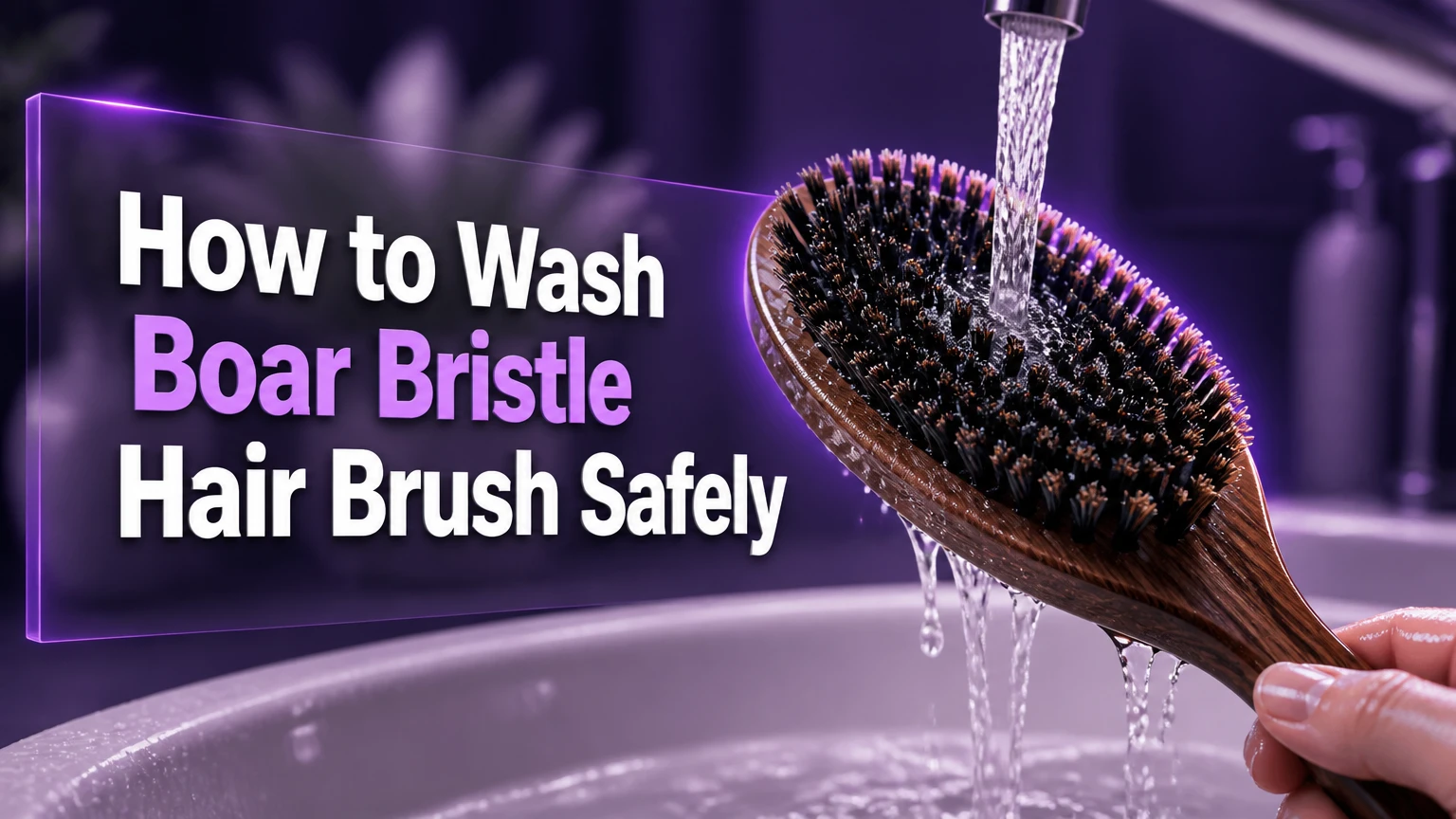
To wash a boar bristle hair brush, first remove trapped hair, then clean the natural bristles with lukewarm water and a small amount of gentle shampoo while keeping the wooden base or cushion as dry as possible. Rinse the bristles, press out moisture, and air-dry the brush bristle-side down for 12-24 hours.
Key Facts
A boar bristle hair brush should not be soaked because water can swell wood, weaken glue, and remain trapped beneath a cushion.
Typical cleaning takes 15-20 minutes, excluding the 12-24-hour drying period.
Remove loose hair after every 1-3 uses and deep-clean the brush every 2-4 weeks.
Use about 3-5 drops of gentle shampoo in a shallow bowl of lukewarm water.
A brush is dry enough to reuse when the bristle roots, cushion openings, and base feel completely dry.
Mixed nylon and boar brushes require the same low-water method, but nylon pins need separate attention around their anchors.
Why Does a Boar Bristle Brush Need Cleaning?
A boar bristle hair brush collects sebum, shed hair, dust, lint, dry shampoo, leave-in conditioner, and styling residue between its bristle rows. Cleaning removes that film so the brush can move through hair without transferring yesterday’s oil, debris, or product back onto the scalp.
Boar bristles are made from keratin, the same broad structural protein found in human hair and nails. Their uneven, fibrous surface can pick up scalp oil and spread it along the hair shaft, which explains the polished finish many users notice on dry, fine, or straight hair.
Cleaning does not make the brush create oil or repair damaged cuticles. The brush may distribute existing sebum more evenly, but it cannot replace conditioner, detangle severe knots, or treat dandruff, seborrheic dermatitis, psoriasis, folliculitis, or a scalp infection.
The scalp-stimulation claim also needs precision. Brushing can provide mechanical massage and lift loose flakes, but there is no reliable basis for promising that a boar brush will materially increase hair growth. Hair shedding, painful follicles, or persistent scaling require medical assessment rather than more vigorous brushing.
What You Need Before Washing
A basic wash needs five items: a brush rake or fine-tooth comb, a shallow bowl, lukewarm water, gentle shampoo, and an absorbent towel. A soft toothbrush is optional for residue around the bristle roots, but aggressive scrubbing can bend or break natural fibers.
Use a clean work surface and inspect the brush before adding water. A loose cushion, cracked wooden base, peeling coating, or large bald patch indicates structural damage that washing may worsen.
Before You Start
| Requirement | Typical specification | Why it matters |
|---|---|---|
| Preparation time | 5 minutes | Removes hair before wet residue hardens |
| Washing time | 10-15 minutes | Allows controlled bristle cleaning |
| Drying time | 12-24 hours | Prevents moisture retention at the roots |
| Shampoo amount | 3-5 drops | Cuts sebum without creating excess residue |
| Water temperature | 30-37°C | Cleans effectively without heat stress |
| Direct cost | $0-$5 | Uses household tools and existing shampoo |
A wooden paddle brush, bamboo brush, and rubber-cushion brush all need water restraint. A fully plastic brush tolerates more rinsing, but natural bristles still benefit from short exposure and low heat.
How to Wash a Boar Bristle Hair Brush
The safest method has six steps: remove dry debris, prepare diluted shampoo, clean the bristles, rinse in controlled amounts, remove trapped moisture, and dry face-down. The factor that most determines success is keeping water away from the base, adhesive, and cushion cavity.
Step 1: Remove Hair and Lint While the Brush Is Dry
Hold the brush with the bristles facing away from you and pull a brush rake or fine-tooth comb horizontally beneath the trapped hair. Lift gradually instead of yanking upward, because sudden force can pull anchored bristles from a wooden base or deform a rubber cushion.
Work across one section at a time. Use clean fingers or blunt tweezers for compacted lint, but do not use a sharp pin to dig around glue points.
You will know this step worked when the comb passes through each row without catching a thick hair mat. The common mistake is wetting the brush before removing hair, which turns loose fibers, oil, and dry shampoo into a paste.
Step 2: Mix a Small Shampoo Bath
Fill a shallow bowl with 30-37°C water, then add 3-5 drops of sulfate-free, baby, or otherwise mild shampoo. Swirl the liquid with your fingers until it is lightly cloudy rather than heavily foamy.
A clarifying shampoo is useful when the brush carries wax, silicone-rich serum, pomade, or dry shampoo, but dilute it more carefully and use it less often. Do not add conditioner because its emollients can leave the bristles slick and transfer residue to clean hair.
The mixture should be deep enough to wet the bristle tips and lower fibers, not deep enough to cover the wood, handle joint, cushion, or back panel. You will know the bath is ready when a small amount of foam appears after agitation.
Step 3: Wash the Bristles Without Soaking the Base
Dip the bristles into the shampoo solution for 10-20 seconds, keeping the brush base above the waterline. Rotate the brush so the solution reaches different rows, then lift it out and let excess liquid drain into the bowl.
Use a soft toothbrush to brush from the bristle roots toward the tips. Apply light pressure, especially on first-cut or stiff natural bristles, because repeated sideways bending can loosen anchors.
For a rubber-cushion brush, clean the spaces between the cushion and bristle clusters with short strokes. For a round or vented brush, rotate it while cleaning so product does not remain on the inner curve.
You will know it worked when the bristles feel flexible rather than waxy and the shampoo solution no longer turns gray or oily. The common mistake is scrubbing the base with a saturated toothbrush, which pushes dirty water into seams.
Step 4: Rinse With Controlled Water
Rinse the brush under a narrow stream of lukewarm water with the bristles pointing downward. Keep the stream on the bristles rather than the back, and stop as soon as the runoff becomes clear and no longer feels slippery.
A shallow bowl of clean water can replace a tap for wooden brushes. Swirl only the bristle area, lift the brush, and repeat with fresh water until shampoo residue disappears.
Do not twist a cushion brush aggressively. Instead, hold it over the sink and tap the handle lightly against your palm to encourage water to leave the bristle holes.
You will know the rinse is complete when the bristles no longer produce foam and a finger passed across several rows feels clean. The common mistake is rinsing for too long, which increases the amount of water that reaches glue and cushion openings.
Step 5: Press Out Water, Do Not Wring
Shake the brush bristle-side down over the sink, then press the bristles gently against a clean towel. Use several light presses rather than one hard squeeze, because compression can distort a flexible cushion and bend natural fibers.
Fold the towel around the bristle tips for 10-20 seconds. If the brush has a vented back, inspect the air holes for droplets and blot them with the corner of the towel.
You will know moisture removal worked when the brush no longer drips and the towel shows only a small damp patch. The common mistake is rubbing the bristles back and forth, which creates friction and roughens the keratin surface.
Step 6: Air-Dry Bristle-Side Down
Place the brush horizontally on a dry towel with the bristles facing downward and the handle supported by the towel edge if necessary. Leave it in a ventilated room at normal indoor temperature for 12-24 hours, away from radiators, hair dryers, heated styling tools, and direct sunlight.
Face-down drying lets water move away from the base instead of pooling beneath it. Do not place the brush bristle-side down on a nonporous countertop because trapped water cannot evaporate efficiently.
The brush is ready when the bristle roots, cushion openings, and wooden base feel dry to the touch. If the room is humid or the brush has dense bristles, allow a full 24 hours.
Which Cleaning Method Fits Your Brush?
Brush construction determines how much water and friction the tool can safely tolerate. A solid plastic base presents the lowest water risk, while a wood-backed cushion brush requires the most conservative wash.
| Brush construction | Water exposure | Scrubbing method | Typical drying time |
|---|---|---|---|
| 100% boar, wooden base | 10-30 seconds | Soft toothbrush, root to tip | 12-24 hours |
| 100% boar, plastic base | 30-60 seconds | Soft toothbrush or fingers | 8-12 hours |
| Boar and nylon blend | 20-45 seconds | Clean between nylon pins | 12-24 hours |
| Rubber cushion, wood-backed | Bristles only | Light root cleaning | 18-24 hours |
| Vented round brush | 20-45 seconds | Rotate through vent channels | 8-16 hours |
| Bamboo handle, sealed base | Bristles only | Blot base immediately | 12-24 hours |
A pure boar brush usually works best for fine to medium hair that needs oil distribution and polish. Long nylon pins are more useful for thick or coarse hair because they penetrate farther, but the added pins create more places for residue to collect.
Boar, Nylon, and Detangling Tools Compared
| Tool type | Best hair situation | Oil distribution | Main cleaning risk |
|---|---|---|---|
| Pure boar bristle | Fine, straight, short, or medium hair | High along dry lengths | Bent or loosened natural bristles |
| Boar and nylon blend | Thick, coarse, or long hair | Moderate to high | Product trapped around nylon pins |
| Flexible detangling brush | Wet curls or knots | Low | Cushion residue and stretched pins |
| Wide-tooth comb | Wet, curly, or fragile hair | Very low | Minimal, if washed and dried fully |
| Vented nylon brush | Blow-drying and lift | Low | Heat-softened plastic or residue |
A boar bristle brush is not a universal detangler. Thick curls, wet hair, and tightly matted sections usually need a wide-tooth comb or flexible detangling brush first, followed by a boar brush only after the hair is mostly dry.
How Often Should You Clean a Boar Brush?
Remove loose hair after every 1-3 uses and deep-clean a boar bristle brush every 2-4 weeks under typical conditions. Shorten the interval to about 7-14 days when the user applies dry shampoo, oil, pomade, wax, silicone serum, or leave-in cream frequently.
| Use pattern | Hair removal | Deep-clean interval | Cleaning product |
|---|---|---|---|
| Dry, clean hair, no styling product | Every 3 uses | Every 4 weeks | Gentle shampoo |
| Oily scalp or daily use | Every 1-2 uses | Every 1-2 weeks | Gentle shampoo |
| Dry shampoo or styling cream | Every use | Every 7-14 days | Diluted clarifying shampoo |
| Shared household brush | After each user | Every 7 days | Gentle shampoo, careful rinse |
| Travel or gym use | After each use | Within 3-7 days | Gentle shampoo |
Cleaning frequency depends more on residue load than on calendar time. A brush used once weekly with clean hair may stay acceptable for a month, while a daily styling brush can become greasy within several days.
Do not share a brush during an active scalp infection, unexplained sores, lice exposure, or heavy flaking. Washing removes residue, but household cleaning does not reliably replace professional treatment or targeted decontamination.
What Should You Avoid?
The four most damaging habits are soaking, using strong degreasers, drying with heat, and storing the brush before the roots are dry. Each habit can affect a different component, including natural keratin, wood, rubber, coating, or adhesive.
| Mistake | Likely damage | Immediate correction | Replacement signal |
|---|---|---|---|
| Soaking for 5-30 minutes | Swollen wood and loose glue | Blot and dry face-down | Cracks or persistent shedding |
| Using dish soap | Dry, rough bristles | Rinse and stop detergents | Bristles remain brittle |
| Applying a hair dryer | Singed bristles or warped cushion | Move to room-temperature airflow | Melted pad or curled fibers |
| Drying bristle-side up | Water pooling at roots | Turn over and blot | Sour odor or dark spots |
| Scraping with a pin | Cut fibers and damaged anchors | Use a rake or comb | Missing bristle clusters |
| Reusing while damp | Odor and microbial growth | Wash again and dry fully | Odor returns after cleaning |
Dish soap can remove heavy grease, but its stronger surfactant load is unnecessary for routine brush care and may leave natural bristles dry. Alcohol, bleach, acetone, and essential oils also create avoidable risks for wood finishes, rubber, adhesive, and skin contact.
An expert rule of thumb is simple: use the weakest cleaner that removes the residue, the least water that reaches the bristles, and the longest drying time the brush requires.
How Do You Fix Odor, Shedding, or Residue?
Persistent odor usually means moisture or product remains beneath the bristle roots, inside a cushion, or along a seam. Sour-smelling bristles should be cleaned once more with diluted gentle shampoo, blotted thoroughly, and dried for a full 24 hours before the brush returns to service.
A vinegar solution is not a universal mold treatment. White vinegar diluted 1:1 with water may reduce some odors on exposed, nonporous surfaces, but it cannot reliably disinfect a porous wooden base or remove growth inside a cushion. Never mix vinegar with bleach or other cleaners.
| Problem | Probable cause | Safe response | Do not do this |
|---|---|---|---|
| Greasy bristles | Sebum or styling product | Use diluted clarifying shampoo | Add concentrated detergent |
| White flakes | Dry shampoo or scalp flakes | Remove dry debris, then wash | Scrape aggressively |
| Sour odor | Trapped moisture | Repeat wash and dry 24 hours | Seal in a case wet |
| Bristles falling out | Glue or anchor failure | Stop washing and inspect | Pull remaining clusters |
| Rough bristles | Excess detergent or heat | Rinse, dry naturally, assess | Apply heavy oil |
| Dark cushion spots | Possible mold or residue | Isolate and inspect closely | Keep using against scalp |
Do not routinely restore dry boar bristles with argan or jojoba oil. Oil can mask residue, attract dust, and transfer directly to hair. If a manufacturer specifically recommends conditioning, use the smallest stated amount on fully dry bristles and discontinue it if the brush becomes tacky.
Replace the brush when bristle shedding continues, the wooden base splits, the cushion remains damp or discolored, or odor returns after a complete cleaning cycle. Cosmetic roughness alone may be tolerable; structural failure is not.
What Changes for Different Hair and Skin Situations?
Fine hair usually needs a softer pure-boar brush and less frequent clarifying. Thick hair benefits from nylon pins for penetration, while curly or fragile hair generally needs detangling before any boar-bristle polishing.
| User situation | Recommended brush | Cleaning adjustment | Main caution |
|---|---|---|---|
| Fine, thin hair | Soft pure boar | Every 3-4 weeks | Avoid hard scalp pressure |
| Thick, coarse hair | Nylon-boar blend | Every 1-2 weeks | Clean around long pins |
| Curly hair | Wide-tooth comb first | Wash brush after product use | Do not brush dry curls aggressively |
| Oily scalp | Medium boar or blend | Every 7-14 days | Remove sebum before buildup hardens |
| Sensitive scalp | Soft boar or comb | Use fragrance-free shampoo | Stop if brushing causes soreness |
| Frequent facial electrolysis | Clean, separate brush | Keep brush away from treated skin | Follow the electrologist’s aftercare |
Hair electrolysis does not change how the brush itself is washed, but freshly treated facial skin may be temporarily red, tender, or more sensitive. Avoid brushing treated facial areas, sharing facial grooming tools, or applying brush oils near electrolysis sites; follow the licensed electrologist’s instructions for the first 24-48 hours.
A boar brush also should not be used as a substitute for post-electrolysis hygiene. The brush touches hair and scalp, whereas electrolysis aftercare concerns recently treated follicles and the surrounding skin barrier.
How Much Does Cleaning Cost, and When Is Replacement Sensible?
Routine cleaning typically costs $0-$5 when shampoo, a comb, and a towel are already available. Replacement costs vary from approximately $10-$30 for basic composite or bamboo brushes to $50-$200 or more for handcrafted wood models, so gentle drying usually costs less than premature replacement.
| Item or decision | Typical price | Useful lifespan | Practical threshold |
|---|---|---|---|
| Fine-tooth comb | $2-$8 | 1-5 years | Replace when teeth bend |
| Brush-cleaning rake | $5-$15 | 2-10 years | Replace when teeth rust |
| Basic boar brush | $10-$30 | 1-3 years | Replace for shedding |
| Premium wood brush | $50-$200+ | 3-10 years | Repair only if structure holds |
| Replacement cushion | $5-$25 | 1-4 years | Match the original size |
| Professional cleaning | $10-$40 | Single service | Use for valuable specialty tools |
Lifespan is a typical range, not a guarantee. Daily use, wet-hair brushing, heat exposure, scalp oil, and poor storage can shorten it substantially.
Can You Wash a Boar Brush With Water and Shampoo?
Yes, water and diluted gentle shampoo are the safest general-purpose cleaning combination for most boar bristle brushes. The brush should receive brief bristle-only exposure, followed by controlled rinsing and face-down drying; the wooden handle, cushion back, and glued base should remain as dry as possible.
Can You Use Baby Shampoo?
Yes, mild baby shampoo is suitable for routine light cleaning, especially when the brush has ordinary sebum and dust rather than wax or heavy styling residue. Use 3-5 drops in a shallow bowl, rinse until no foam remains, and reserve stronger clarifying shampoo for occasional buildup.
Can You Soak a Wooden Boar Brush?
No, do not soak a wooden boar brush. Extended immersion can swell unfinished wood, damage coatings, loosen adhesive, and trap water beneath a rubber cushion; brief contact with diluted water on the bristles is safer.
Can You Use a Boar Brush on Wet Hair?
A pure boar bristle brush is generally better on dry or nearly dry hair because wet strands stretch more easily and natural bristles do not separate dense knots well. Use a wide-tooth comb or flexible detangler for wet hair, then use the boar brush after the hair is mostly dry.
Why Does My Clean Brush Still Feel Greasy?
A clean boar bristle brush may still feel greasy when styling silicone, wax, dry shampoo, or scalp sebum remains deep between the rows. Remove all hair first, repeat the wash with a slightly stronger dilution, and inspect the roots rather than adding oil to the bristles.
How Do I Store the Brush After Washing?
Store the brush only after 12-24 hours of complete drying, with the bristles protected from dust and the handle resting on a dry, ventilated surface. Avoid sealed bags, damp bathroom shelves, radiators, and bristle-up storage that lets moisture settle at the base.
The Bottom Line
To wash a boar bristle hair brush safely, remove dry hair first, use 3-5 drops of gentle shampoo in 30-37°C water, clean only the bristles, rinse briefly, blot instead of wringing, and dry bristle-side down for 12-24 hours. Remove hair every 1-3 uses, deep-clean every 2-4 weeks, and replace the brush when odor, shedding, mold, or structural damage persists.
FAQ
Does a boar bristle brush clean hair by itself?
No. A boar bristle brush can distribute some scalp oil and remove loose surface debris, but it does not wash away sebum, dry shampoo, sweat, or styling residue. Shampooing the hair and cleaning the brush serve different purposes, and neither process treats an underlying scalp condition.
How do I clean a boar brush without a brush cleaner?
Use a clean fine-tooth comb to remove hair, then wash the bristles with 3-5 drops of gentle shampoo diluted in lukewarm water. Rinse the bristles briefly, blot them with a towel, and dry the brush face-down for 12-24 hours.
Is a boar bristle brush hygienic?
A boar bristle brush can remain hygienic when loose hair is removed regularly, the brush is deep-cleaned every 2-4 weeks, and it dries completely after washing. A brush with recurring odor, mold-like discoloration, or persistent dampness should not be used on the scalp.
Should I brush my scalp with a boar bristle brush?
Use light pressure and stop if the scalp becomes sore, scratched, or inflamed. A boar brush can provide mild mechanical stimulation and spread oil, but vigorous brushing cannot improve every scalp problem and may worsen irritation, follicle inflammation, or breakage.
Can I clean a boar bristle brush with baking soda?
Baking soda is unnecessary for routine cleaning and may leave alkaline residue among the bristles. Diluted gentle shampoo removes ordinary oil and dust with less risk to the bristle finish, wood coating, rubber cushion, and adhesive anchors.