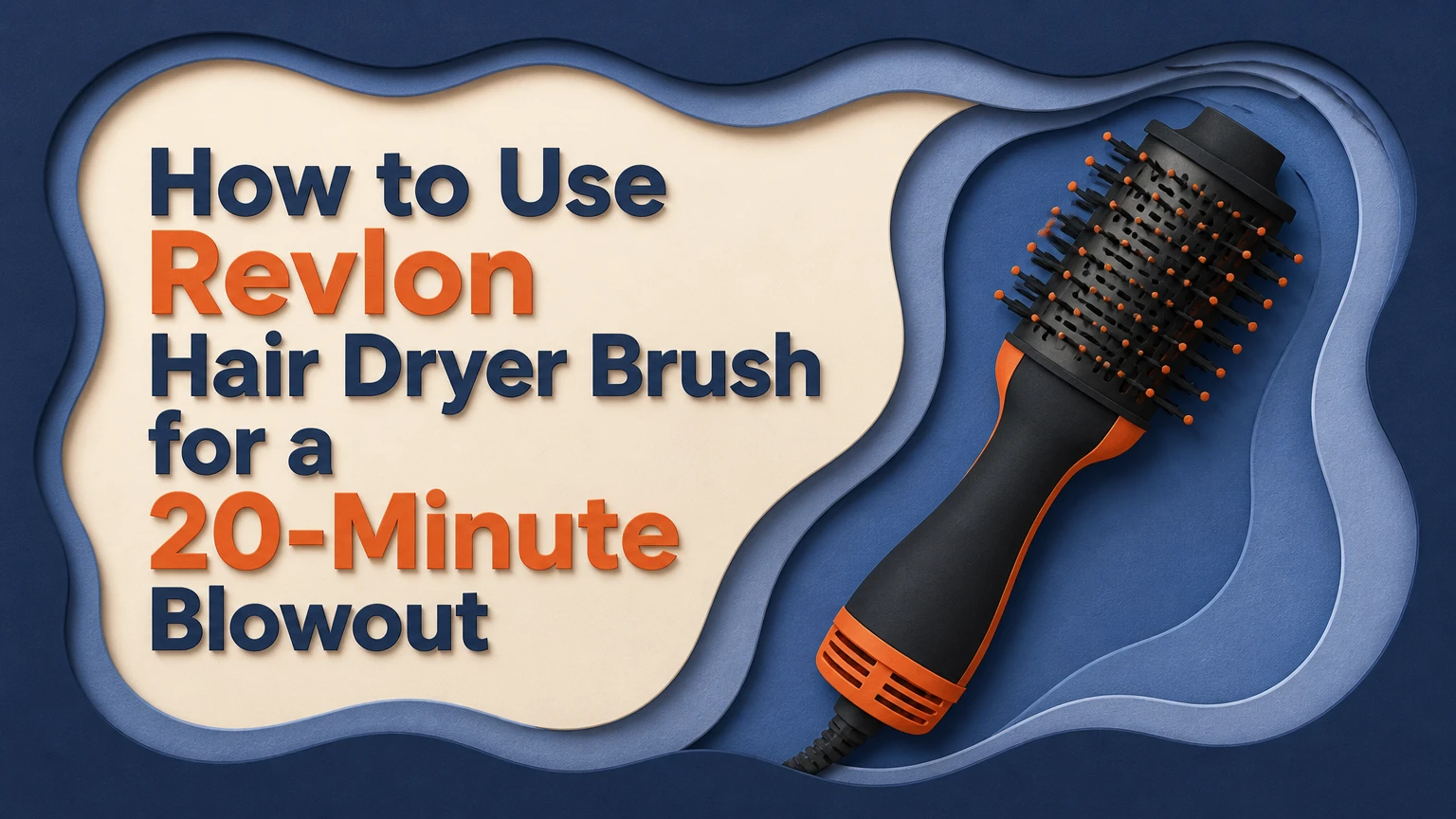
The Revlon hair dryer brush creates a blowout by moving warm air through a vented brush while the bristles detangle, smooth, and shape damp hair. Start with hair about 70%-80% dry, apply heat protectant, divide it into controlled sections, and move the brush continuously with moderate tension rather than stopping on one area.
Key Facts at a Glance
- A Revlon hair dryer brush should be used on damp, mostly towel-dried hair, not soaking-wet hair.
- Small sections, steady tension, and continuous movement produce a smoother result than maximum heat.
- Root volume comes from lifting the brush vertically for about 2-3 seconds near the scalp.
- The cool setting helps set a finished shape, but it does not eliminate heat damage from excessive temperature or repeated passes.
- The Original Volumizer has a larger oval head, while the Volumizer PLUS has a smaller detachable oval head and an additional temperature setting.
- A typical shoulder-length blowout takes 15-30 minutes, depending on density, porosity, and starting dampness.
What Does a Revlon Hair Dryer Brush Do?
A Revlon hair dryer brush dries and styles hair at the same time by combining heated airflow with mechanical tension. The vented barrel directs air through and around the hair, while nylon pins help separate strands and smoothing bristles help align the cuticle surface.
The Revlon One-Step Volumizer line uses an oval brush shape to create root lift and rounded ends. Ionic components are intended to help reduce static and frizz by influencing water droplets and charged particles, while ceramic surfaces are designed to distribute heat more evenly. Neither feature makes unlimited heat exposure safe.
The brush is most effective when hair is damp rather than wet. Very wet hair requires longer exposure, produces more steam, and makes the user hold the tool near each section for too long. A conventional blow dryer should remove most excess water first when hair is dense or highly textured.
What the Bristles and Vents Control
| Component | Physical role | Styling result | Practical rule |
|---|---|---|---|
| Nylon pins | Separate and detangle strands | Fewer tangles during drying | Detangle with a wide-tooth comb first |
| Ball-tipped pins | Contact hair with less sharp friction | More comfortable brushing | Reduce tension near sensitive scalps |
| Smoothing bristles | Grip the outer hair layer | Straighter, shinier surface | Use moderate tension on fragile ends |
| Air vents | Release warm air through the barrel | Faster drying and shaping | Keep vents clear of product buildup |
| Oval barrel | Creates lift and curvature | Volume and bent ends | Use a smaller section than the barrel width |
Before You Start
Prepare the hair, tool, products, and workspace before switching on the Revlon hair dryer brush. The most important prerequisite is removing enough water that the tool shapes hair instead of functioning as the only dryer.
| Preparation item | Typical amount or time | Purpose | Avoid |
|---|---|---|---|
| Microfiber towel | 2-5 minutes | Removes surface water with less friction | Rough rubbing with a terry towel |
| Heat protectant | 4-8 sprays or a pea-size serum amount | Reduces friction and thermal stress | Applying a heavy wet layer |
| Volumizing mousse | Golf-ball-size amount for medium hair | Adds root support and hold | Saturating the scalp |
| Detangling comb | 1-3 minutes | Removes knots before heated brushing | Pulling through large knots |
| Hair clips | 3-6 clips | Creates manageable layers | Taking sections wider than the brush |
| Electrical outlet | Dry, accessible, grounded where required | Powers the appliance safely | Using a damaged cord or wet outlet |
A typical preparation takes 5-10 minutes, and a complete shoulder-length style takes 15-30 minutes. Product cost is usually about $2-$8 per styling session when heat protectant and mousse are purchased in standard retail sizes, excluding the appliance.
The tool should remain on a dry, heat-resistant surface between sections. Remove necklaces, loose clothing, and hair ties that could catch in the bristles.
How to Use Revlon Hair Dryer Brush: Seven Steps
Step 1: Dry Hair to 70%-80%
Use a towel to blot hair, then let it air-dry or use a conventional dryer until the hair is damp but no longer dripping. Hair should feel cool and moist when touched, without releasing water when squeezed.
The 70%-80% guideline is a practical starting point, not a laboratory threshold. Fine hair may need to reach closer to 80% dry because it styles quickly, while dense coily hair may require a conventional dryer to remove more water before sectioning.
Success checkpoint: No section produces visible steam during a slow pass.
Common mistake: Starting on soaking-wet hair and compensating with repeated high-heat passes. Stop and remove more moisture first.
Step 2: Apply Heat Protectant and Detangle
Apply heat protectant from mid-lengths through the ends, then distribute the remaining product toward the roots without saturating the scalp. Use a wide-tooth comb or detangling brush to remove knots before the Revlon brush contacts the hair.
Typical product quantities vary by length: use 4-6 sprays for short hair, 6-10 sprays for shoulder-length hair, and 10-14 sprays for long or dense hair. Allow a very wet spray to spread for 30-60 seconds before using heat.
Success checkpoint: A comb moves from roots to ends without catching.
Common mistake: Applying oil before heat styling. Oil can increase surface heat and leave fine hair limp; reserve a small amount for finishing unless the product label specifically supports thermal use.
Step 3: Divide Hair Into Controlled Sections
Create a lower, middle, and upper layer, then split dense layers into smaller subsections. Each subsection should be narrower than the brush head, usually about 1-2 inches wide for medium-density hair.
Clip the upper layers away from the nape. Smaller sections take longer but allow the brush to contact every strand, while oversized sections leave wet roots and force additional passes.
| Hair condition | Section width | Typical passes | Starting setting |
|---|---|---|---|
| Fine, short hair | 1-1.5 inches | 1-2 | Low |
| Medium, shoulder-length hair | 1.5-2 inches | 1-2 | Low or medium |
| Thick, straight hair | 1-2 inches | 2-3 | Medium or high briefly |
| Coily or highly textured hair | 0.5-1 inch | 2-4 | Low or medium |
| Fringe or bangs | 0.5-1 inch | 1-2 | Low |
Success checkpoint: The brush can pass from root to end without the section spilling over the sides.
Common mistake: Sectioning by visual thickness only. A dense-looking section can contain much more hair than the bristles can grip.
Step 4: Lift the Roots for Volume
Place the Revlon brush underneath a section at the root, then lift the hair upward at roughly a 90-degree angle. Hold the brush near the root for about 2-3 seconds while moving it slightly, then pull through the section toward the ends.
For stronger lift, direct the root in the opposite direction from its natural fall. For example, lift right-side hair toward the left while drying, then allow it to fall back into place after cooling.
The tool should not press directly against the scalp. Leave a small air gap and keep the brush moving if the hair feels hot.
Success checkpoint: The root feels dry and springs upward when released.
Common mistake: Holding the brush motionless against the scalp. Excess heat at the root can cause discomfort and does not create better volume.
Step 5: Smooth the Lengths With Tension
Wrap the section lightly over the oval brush and pull from root to end in a slow, continuous pass. Keep the brush moving at approximately 1-2 inches per second, adjusting speed according to moisture and hair thickness.
Use the broad side of the oval head for a smoother finish. Keep the brush underneath the hair for volume, or place it over the section and pull downward for a flatter result.
Nylon pins help separate hair, but excessive force creates mechanical breakage. The brush should maintain contact without stretching the strand to its maximum length.
Success checkpoint: The section is dry from root through end, with no damp inner strip.
Common mistake: Brushing rapidly as if using a normal detangling brush. Fast movement reduces tension and leaves unevenly dried patches.
Step 6: Shape the Ends
Turn the brush inward at the ends for a rounded under-curl, outward for a flip, or keep it straight for a polished blunt finish. Hold the chosen position for about 2 seconds, then release without pulling the warm hair apart.
A full revolution creates more bend than most users need. On short hair, rotate only a quarter to half turn because the shorter length wraps tightly and heats quickly.
Success checkpoint: The end retains its bend after cooling for 10-20 seconds.
Common mistake: Wrapping hair tightly around the barrel. Revlon dryer brushes are styling brushes, not automatic curling irons, and tightly wrapped hair can snag.
Step 7: Cool and Finish the Style
Switch to the cool setting and make one final pass through each finished section, especially at the roots and ends. The cool airflow lowers the hair surface temperature and helps the shape settle while reducing the urge to touch or brush the style immediately.
Apply a small amount of lightweight serum or pomade only to flyaways and dry ends. A typical amount is half a pea for fine hair or one pea for thick hair.
Success checkpoint: Hair feels dry and warm rather than hot, and the shape remains after the section is released.
Common mistake: Using the cool button only at the end of the entire head. Cooling each section immediately gives the shape a better chance to hold.
Which Revlon Model Should You Use?
The Original Volumizer suits users who want a conventional oval blowout brush, while the Volumizer PLUS offers a smaller detachable head and an additional temperature option. The One-Step Styler uses a paddle format that generally favors straighter hair and faster smoothing over rounded root volume.
| Model | Brush format | Heat or speed settings | Best fit | Main limitation |
|---|---|---|---|---|
| One-Step Volumizer Original | 2.8-inch oval head | 3 settings | Medium and long hair | Bulky on short layers |
| One-Step Volumizer PLUS | 2.4-inch detachable oval head | 4 settings | Shorter hair and controlled volume | Higher purchase price |
| One-Step Styler | Flat paddle brush | 3 settings | Straight, medium, and long hair | Less rounded volume |
| One-Step Root Booster | Smaller root-focused barrel | Model-dependent | Bangs and short roots | Less efficient for long lengths |
The PLUS model is often easier to control near the roots because its 2.4-inch head is smaller than the Original Volumizer’s 2.8-inch head. The Original model can produce broader, softer volume on longer hair, but its larger head is less precise around a bob, fringe, or jaw-length layers.
Check the exact model label before purchasing replacement parts or relying on a feature. Revlon product names vary by market, and heat settings, detachable components, and voltage specifications can differ.
Is the Revlon PLUS Better Than the Original?
The Revlon Volumizer PLUS is the more flexible choice for short, medium, fine, or frequently styled hair because it adds a medium heat option and uses a smaller detachable head. The Original Volumizer remains practical for long, medium-density hair when broad volume and a lower purchase price matter more than compact control.
The supplied product information describes the PLUS as having a longer-life motor, reduced heat exposure, charcoal-infused nylon pins, and a lighter ergonomic design. Those features may improve handling and exposure time, but users should still follow the operating manual and avoid treating the PLUS as heat-proof protection.
How Should You Adjust Technique for Your Hair Type?
Hair density and condition determine section size and temperature more reliably than curl pattern alone. Fine or damaged hair needs low heat and fewer passes, while thick or textured hair usually needs smaller sections and more pre-drying before the styling brush is used.
| Hair type or condition | Preparation | Brush technique | Heat guidance |
|---|---|---|---|
| Fine hair | Reach about 80% dry; use light mousse | Lift briefly; avoid heavy serum | Low, then cool |
| Damaged or bleached hair | Use leave-in heat protectant; pre-dry well | One controlled pass per area | Lowest effective setting |
| Thick straight hair | Remove more water with a dryer | Use 1-2-inch sections and firm tension | Medium, high only briefly |
| Wavy or curly hair | Detangle and stretch gently | Work in 0.5-1-inch sections | Low or medium |
| Coily or 4C hair | Pre-stretch with a dryer and comb attachment | Start at ends, move toward roots | Low, with minimal passes |
| Short hair or a bob | Use smaller sections and a smaller head | Rotate only slightly at ends | Low or medium |
For textured hair, begin at the ends and move upward gradually rather than forcing the brush from scalp to tip. This method reduces snagging because the brush does not push knots into a tighter cluster.
A Revlon brush can stretch and smooth textured hair, but it may not preserve natural coil definition. A diffuser is usually better when the goal is to keep curls intact.
What Should You Not Use a Revlon Dryer Brush For?
A Revlon dryer brush is not the best tool for soaking-wet hair, precise curling, maximum straightness on resistant hair, or preserving tightly defined curls. A conventional dryer, diffuser, curling iron, or flat iron may be more appropriate when the styling objective differs from a soft blowout.
| Desired result | More suitable tool | Why | Revlon brush limitation |
|---|---|---|---|
| Drying dripping-wet dense hair | Conventional hair dryer | Moves more air before styling | Requires long heated passes |
| Defined natural curls | Diffuser | Distributes airflow with less stretching | Brush disrupts curl clumps |
| Tight ringlets | Curling iron or wand | Uses a narrower heated barrel | Oval head creates broad bends |
| Pin-straight resistant hair | Dryer plus flat iron | Separates drying from pressing | Brush may leave texture at roots |
| Hair electrolysis procedure | Licensed electrologist and approved equipment | Electrolysis treats follicles with a probe | A dryer brush is unrelated and cannot perform electrolysis |
| Root-only touch-up | Small round brush or root tool | Offers precise local control | Full-size heads can overheat short roots |
Hair electrolysis is a permanent hair-removal procedure performed by inserting a probe into individual follicles. A Revlon hair dryer brush has no role in electrolysis, follicle treatment, or post-electrolysis healing; heat styling should be kept away from irritated skin until the area recovers.
Common Mistakes and How to Fix Them
Most poor Revlon blowouts result from excess water, oversized sections, excessive heat, or insufficient cooling rather than a defective appliance. Correct the process before increasing temperature, because higher heat often masks dampness temporarily while increasing surface stress.
| Problem | Likely cause | Immediate fix | Prevention |
|---|---|---|---|
| Frizzy finish | Hair is still damp or tension is uneven | Re-dry one small section slowly | Use narrower sections |
| Flat roots | Brush stayed below the root | Lift vertically for 2-3 seconds | Dry roots before lengths |
| Limp hair | Too much serum or mousse | Blot excess with a towel and cool | Use half the product |
| Puffy ends | Brush moved too quickly | Repeat with steady downward tension | Slow the final 1-2 inches |
| Hair catches | Knots or oversized section | Turn off tool and detangle manually | Comb before heating |
| Burnt smell | Lint filter or vents are blocked | Switch off, unplug, and inspect | Clean intake and bristles |
A burnt smell is a stop-use signal, not a styling cue. Unplug the tool, allow it to cool completely, remove hair and lint from the air inlet, and inspect the cord; persistent odor, smoke, sparking, or unusual noise requires manufacturer service or replacement.
Reduced airflow can come from product residue, shed hair, or a blocked intake. Never immerse the electrical appliance in water, and never insert metal objects into the vents.
How Do You Clean a Revlon Hair Dryer Brush?
Unplug the Revlon hair dryer brush, let it cool, remove trapped hair from the bristles, and wipe the barrel with a slightly damp cloth. Keep water away from the motor housing and vents, then allow the tool to dry completely before reconnecting it.
Clean after every use by pulling loose hair from the pins. Inspect the air inlet weekly during frequent use, and perform a deeper surface clean every 2-4 weeks when mousse, serum, or hairspray is used regularly.
The exact cleaning method belongs to the model’s instruction manual. Mild soap may be suitable for removable, non-electrical components, but applying liquid directly to the powered housing can create an electrical hazard.
How Long Does a Revlon Blowout Take?
A typical Revlon blowout takes 15-30 minutes after towel-drying, with fine short hair near 10-15 minutes and thick or textured hair near 30-45 minutes. The largest time variable is starting moisture, followed by section size and hair density.
| Hair length and density | Pre-dry time | Styling time | Typical total |
|---|---|---|---|
| Short, fine hair | 3-5 minutes | 7-12 minutes | 10-17 minutes |
| Shoulder-length, medium hair | 5-8 minutes | 12-22 minutes | 17-30 minutes |
| Long, thick hair | 8-15 minutes | 20-35 minutes | 28-50 minutes |
| Coily or highly textured hair | 10-20 minutes | 20-40 minutes | 30-60 minutes |
These are typical practitioner ranges, not manufacturer performance guarantees. A longer session does not necessarily produce a better blowout; if one section needs more than three slow passes, remove more moisture or narrow the section.
Safety, Heat Damage, and Travel Considerations
Heat protectant reduces friction and thermal stress, but no spray makes repeated high-temperature exposure harmless. The American Academy of Dermatology Association advises limiting high heat and using the lowest heat setting that works, which aligns with the practical rule of pre-drying thoroughly and avoiding stationary contact.
The Revlon brush should be used only on intact hair and a healthy scalp. Do not use it over wet skin, open sores, fresh chemical irritation, or areas recovering from hair electrolysis. Unplug the appliance after use and keep it away from sinks, bathtubs, and standing water.
Check the voltage label before international travel. A North American 120-volt appliance may not operate safely on a 220-240-volt supply, and a plug adapter does not convert voltage. Use a true voltage converter only if the manufacturer permits it.
The Bottom Line
To use a Revlon hair dryer brush successfully, pre-dry hair to 70%-80%, protect and detangle it, work in 1-2-inch sections, lift the roots for 2-3 seconds, pull slowly through the lengths, shape the ends, and cool each section before moving on. The exact Revlon hair dryer brush technique matters less than controlled sections, moderate tension, and the lowest effective heat.
The Original Volumizer favors broad volume on medium and long hair. The Volumizer PLUS gives better control for shorter or finer hair, while the One-Step Styler favors smooth, straighter results. Stop using any model that smells burnt, sparks, smokes, overheats repeatedly, or has a damaged cord.
Frequently Asked Questions
Can You Use the Revlon Brush on Completely Wet Hair?
You should not use a Revlon hair dryer brush on completely wet hair. Remove excess water with a microfiber towel and conventional dryer until hair is roughly 70%-80% dry. Starting wetter increases drying time, steam, and repeated heat exposure, particularly in thick hair and dense sections.
Should You Use Heat Protectant With a Revlon Hair Dryer Brush?
Use a heat protectant with a Revlon hair dryer brush whenever the product label supports blow-drying. Apply a light, even layer, distribute it with a comb, and avoid saturating the hair. Heat protectant reduces thermal and mechanical stress, but it does not permit unlimited passes or maximum heat.
Can the Revlon Brush Make Curls?
The Revlon brush can create loose bends, rounded ends, and outward flips, but it is not designed for tight curls. Use small sections, turn the barrel a quarter to half rotation at the ends, and release after about 2 seconds. A curling iron creates more defined curls.
Why Is My Revlon Brush Making My Hair Frizzy?
Frizz usually comes from damp inner sections, oversized subsections, rapid movement, or inconsistent tension. Re-dry smaller sections with a slow pass, keep the brush moving from root to end, and finish with cool airflow. Excess serum can also create separation and limpness rather than smoothness.
Is the Revlon Hair Dryer Brush Dual Voltage?
Do not assume that a Revlon hair dryer brush is dual voltage. Confirm the voltage printed on the specific model and instruction manual before using it abroad. A plug adapter changes the plug shape but does not convert 120 volts to 220-240 volts.
How Often Should You Clean the Brush?
Remove hair after every use and inspect the air inlet weekly during frequent styling. Wipe product residue from the surface every 2-4 weeks, or sooner when hairspray, mousse, or serum accumulates. Always unplug and cool the appliance before cleaning, and keep liquid away from electrical parts.